
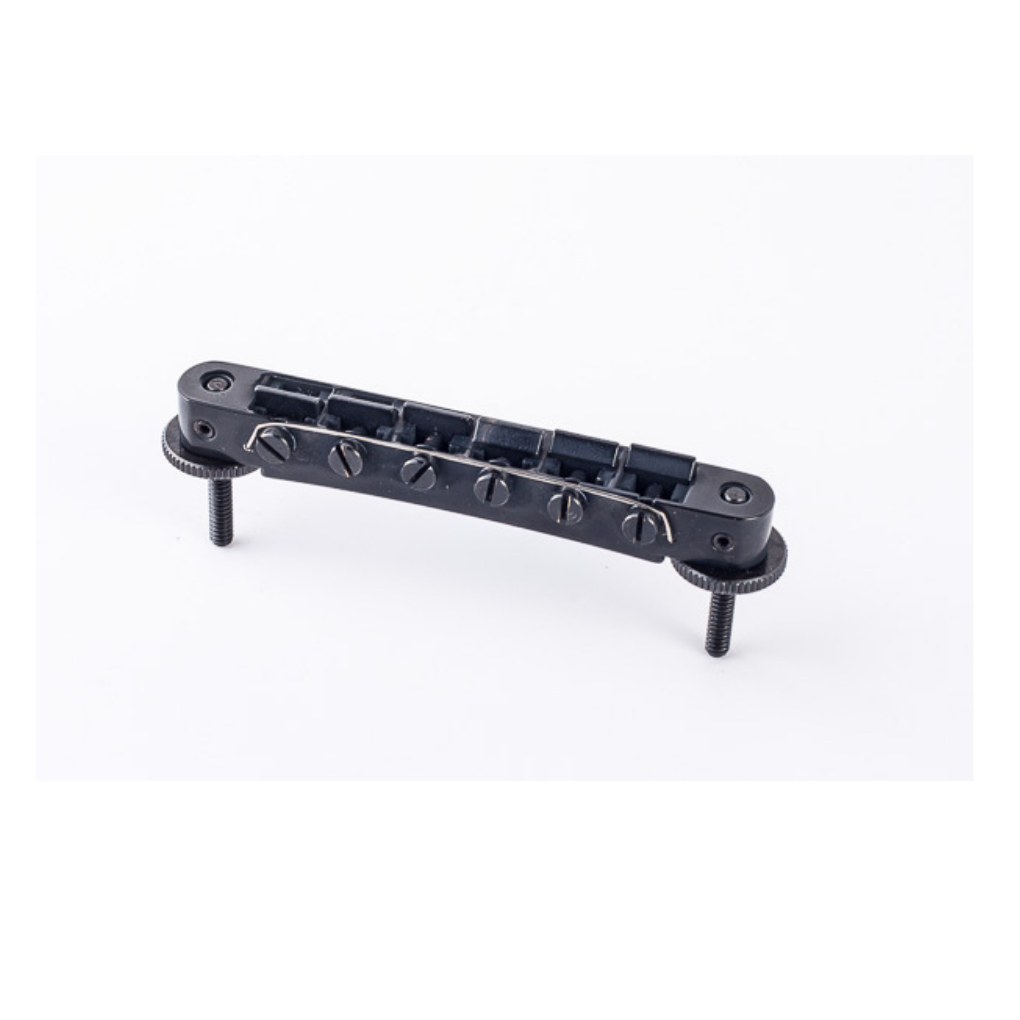
TonePros AVR2-B Tuneomatic Bridge Black ABR-1 Replacement
★★★★★ 4.9 Stars — Over 1,500 Google Reviews
Original price was: $169.95.$153.00Current price is: $153.00.
FAST
Delivery
EASY
Returns
IN HOUSE
Repairs



Pick-up from store - FREE
Free pickup from our Melbourne Store at 4 Drake Boulevard, Altona VIC 3018. Your order will typically be ready by the next business day. We recommend calling us on (03) 8360 7799 beforehand to check it's ready for collection.
International Shipping
Please proceed to checkout to see international rates and avalability.
TonePros AVR2 ABR-1 Vintage Locking Tune-O-Matic Bridge — Brass Saddles, Black (AVR2-B)
The TonePros AVR2 (AVR2-B) is a locking ABR-1 style bridge — the exact replacement for the bridges found on vintage Gibson instruments and vintage reissue guitars originally fitted with ABR-1 style bridges. Built to maintain the complete visual appearance of the original vintage part while adding TonePros' locking system, extended intonation range, and engineered-in solid saddles that prevent the lift and displacement against the retainer wire that original ABR-1 saddles are prone to. Thread specification is 6/32 US (ABR-1 thread), post-to-post spacing 73.75mm, 12-inch radius, Zamak bridge body, brass saddles and brass posts and thumbwheels. Saddles are un-notched — professional saddle notching is required before setup. Extra tight construction eliminates the rattles and resonance loss associated with loose tolerance vintage and budget replacement ABR-1 bridges. A direct retrofit for most vintage and reissued USA guitars without modification.
Angkor Music — ABR-1 vs Nashville Format, and What Makes the AVR2 Different From the Original
Two things matter before selecting any TonePros bridge for a vintage or reissue Gibson. First, ABR-1 vs Nashville format. Gibson has used two distinct bridge post systems across its production history. The ABR-1 format — used on original late 1950s and early 1960s Les Paul, SG, ES-335 and related instruments, and on vintage reissues of those models — uses a 6/32 threaded post that screws into a threaded insert in the guitar body, with the bridge body sitting freely on the posts retained by thumbwheels and string tension. The Nashville format — standard on current production Les Paul and SG models — uses a small-diameter 10/32 threaded post that screws into a different, smaller insert format. The two systems are not interchangeable. The AVR2 is ABR-1 format. The TP6 range is Nashville format. If your guitar was manufactured before the mid-1970s or is a vintage reissue, it almost certainly uses ABR-1 format and the AVR2 is the correct TonePros product. Second, what the AVR2 adds beyond the original ABR-1. The original ABR-1 bridge had several well-known limitations: saddles that could lift against or work free from the retainer wire, limited intonation range that prevented accurate intonation on certain string gauge and scale combinations, loose construction tolerances that produced sympathetic buzzes and rattles, and no mechanical locking of the bridge in position. The AVR2 addresses all four. Saddles are engineered-in solid — they cannot lift against the retainer wire. Intonation range is extended beyond the original. Construction tolerances are tightened to eliminate rattles and improve resonance transfer. The TonePros locking system locks the thumbwheels in position once bridge height is set, preventing the bridge from shifting or rocking. The external appearance is indistinguishable from the original vintage part. At Angkor Music we stock the AVR2 in all four finishes alongside the AVR2G (G Formula saddles) and AVR2P (pre-notched brass saddles) variants.
ABR-1 vs Nashville — Confirming Your Bridge Format
| Specification | ABR-1 Format (AVR2) | Nashville Format (TP6 range) |
|---|---|---|
| Thread | 6/32 US (ABR-1) | 10/32 US (Nashville) |
| Post Spacing | 73.75mm (2.91") | 74mm (2.93") |
| Bridge seating | Sits freely on posts — can lift off | Retained by insert format |
| Locking system | Thumbwheel locking | Post and thumbwheel locking |
| Typical instruments | Pre-mid-70s Gibson, vintage reissues | Current production USA Gibson |
AVR2 Series — Three Saddle Variants
| Model | Saddle Material | Notched | Best For | Finishes |
|---|---|---|---|---|
| AVR2 (this product) | Brass | Un-notched — professional installation | Custom notching, aftermarket saddle compatibility | B, N, C, G |
| AVR2G | G Formula (Nylon 66) | Notched | Vintage late 50s/early 60s saddle tone | B, N, C, G |
| AVR2P | Brass | Pre-notched — ready to install | Brass saddle tone, no professional notching needed | B, N, C, G |
Engineered-In Solid Saddles — Solving the Original ABR-1 Saddle Problem
The original ABR-1 bridge uses a thin wire retainer to keep the individual saddle pieces in the bridge body. This retainer wire holds the saddles in position but does not prevent them from lifting against the wire under string tension — particularly on the wound strings where the saddle slot geometry and string angle can cause the saddle to rise or shift over time. On original vintage instruments, saddle lift and displacement is a known and recurring maintenance issue.
The AVR2's saddles are engineered-in solid — the saddle pieces are designed and toleranced to sit in the bridge body without the ability to lift against the retainer wire. They remain correctly seated under string tension and playing load without periodic adjustment or the risk of saddle displacement during playing. This eliminates one of the most frequent maintenance issues on ABR-1 format bridges while maintaining the complete visual appearance of the vintage part.
Extended Intonation Range
The original ABR-1 bridge has a limited range of saddle travel — the distance each saddle can be moved forward or backward to achieve correct intonation. With heavier string gauges, non-standard scale lengths or worn saddle slots, the original bridge's intonation range can be insufficient to achieve accurate intonation across all six strings.
The AVR2 extends this range beyond the original specification — providing sufficient saddle travel for accurate intonation with a wider range of string gauges and playing setups without requiring modification to the guitar or saddle slots.
Extra Tight Construction — Eliminating Rattles and Improving Sustain
Loose manufacturing tolerances on standard ABR-1 replacement bridges produce sympathetic buzzes and rattles — the bridge body or saddle pieces vibrating at resonant frequencies when the guitar is played. This is both audibly distracting and represents energy loss that should be transferred into the instrument body as sustain.
The AVR2's extra tight construction eliminates gaps and tolerances in the bridge body and saddle seating that produce these resonances. The result is a bridge that transfers string energy into the body without sympathetic vibration — improving sustain and producing a cleaner, more focused tonal response.
TonePros Locking System on ABR-1 Format
The TonePros locking system on the AVR2 operates through the thumbwheels rather than through the posts — appropriate for the ABR-1 format where the bridge body sits freely on the posts and height is adjusted via the thumbwheels. Set screws in the thumbwheels lock them in position once correct bridge height is established. The locked thumbwheels cannot turn, the bridge height cannot shift, and the bridge maintains consistent contact with the body across string changes and playing load. The external appearance of the locked bridge is identical to the original vintage part — the locking set screws are not visible during normal inspection.
Un-Notched Brass Saddles — Professional Installation
The AVR2's brass saddles are supplied un-notched. Professional saddle notching is required before the guitar can be correctly set up. This allows a guitar technician to cut string slots to the precise depth and width for the player's specific string gauge — producing more accurate string seating and intonation than factory pre-notched alternatives. Players who want pre-notched brass saddles ready to install should choose the AVR2P. Players who want vintage Nylon 66 tonal character should choose the AVR2G.
Who Is the TonePros AVR2-B For?
- Players with vintage or reissue Gibson Les Paul, SG, ES-335 and related instruments fitted with ABR-1 format bridges wanting a locking upgrade
- Players experiencing saddle lift, saddle displacement, rattles or limited intonation range on an original or replacement ABR-1 bridge
- Players who want un-notched brass saddles for professional custom notching to their specific string gauge
- Players who want to maintain the exact visual appearance of the original vintage bridge while adding locking performance
- Players with current production Nashville-format Gibsons should choose the TP6 range instead
- Players with chrome hardware choose AVR2-C — nickel choose AVR2-N — gold choose AVR2-G
Specifications
| SKU | AVR2-B |
| Brand | TonePros |
| Model | AVR2 — ABR-1 Vintage Locking Bridge |
| Thread | 6/32 US (ABR-1 thread) |
| Post to Post Spacing | 73.75mm (2.91") |
| Radius | 12 inch |
| Saddles | Brass — un-notched (professional installation required) |
| Bridge Material | Zamak |
| Post / Thumbwheel Material | Brass |
| Locking System | TonePros thumbwheel locking — set screws lock thumbwheels in position |
| Saddle Design | Engineered-in solid — prevents lift against retainer wire |
| Finish | Black |
| Nickel Alternative | AVR2-N |
| Chrome Alternative | AVR2-C |
| Gold Alternative | AVR2-G |
| Pre-Notched Brass Version | AVR2P-B — same bridge, pre-notched brass saddles |
| G Formula Version | AVR2G-B — same bridge, G Formula Nylon 66 notched saddles |
| Nashville Alternative | TP6 range — current production USA Gibson format |
Expert Advice at Angkor Music
At Angkor Music Melbourne we stock all three AVR2 saddle variants across all four finishes. Confirming whether your guitar uses ABR-1 or Nashville format before ordering is essential — contact us with your guitar's make, model and year if you are unsure. Professional installation including saddle notching available through our guitar technician.
★★★★★ 4.9 Stars — Read Our 1,600+ Google Reviews →
Frequently Asked Questions
How do I know if my guitar has an ABR-1 or Nashville bridge?
Look at the bridge posts. ABR-1 posts are larger in diameter, unthreaded at the top where the bridge body sits on them, and the bridge body can be lifted completely off the posts. Nashville posts are smaller diameter and the bridge body is retained differently. Most USA Gibson instruments manufactured before the mid-1970s use ABR-1 format. Most current production USA Gibsons use Nashville format. Vintage reissues vary by model — contact us with your specific make, model and year for confirmation.
What does "engineered-in solid saddles" mean?
On an original ABR-1 bridge, the saddle pieces are held in the bridge body by a thin retainer wire. The saddles can lift against this wire under string tension — particularly the wound strings — causing the saddle to rise out of its correct seating position. TonePros engineers the AVR2 saddles to sit solidly in the bridge body without the ability to lift against the retainer wire, eliminating this recurring maintenance issue while maintaining the correct vintage appearance.
Why are the saddles un-notched and do I need a guitar technician?
Un-notched saddles allow a guitar technician to cut string slots precisely to your specific string gauge — producing more accurate string seating and intonation than factory pre-notched saddles. Yes, a guitar technician is required to notch the saddles before setup. If you prefer pre-notched brass saddles ready to install, choose the AVR2P. We offer professional installation and saddle notching at Angkor Music.
What is the difference between AVR2, AVR2G and AVR2P?
All three use the same ABR-1 format bridge body, locking system and base specifications. The difference is saddle material and notching. AVR2 has brass un-notched saddles for professional custom notching. AVR2G has G Formula Nylon 66 notched saddles that recreate the vintage saddle tone of original late 50s/early 60s instruments. AVR2P has brass pre-notched saddles ready to install without additional saddle work.
Additional information
| Weight | 0.19 kg |
|---|---|
| type | Bridge |
Related Items & Accessories
Related products
-
17% OFF
RRP $359.00
Save $60.00
Sale!
 SKU: 11102-21-Gc
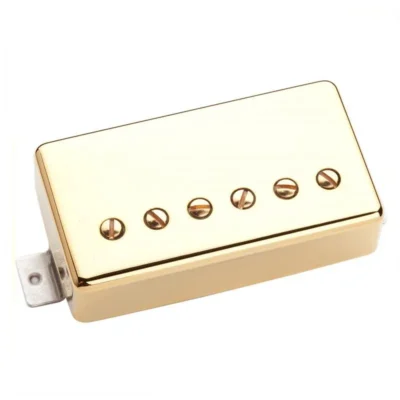
Seymour Duncan SH-6b Distortion Humbucker Gold Cover Bridge Pickup 11102-21-GC
Original price was: $359.00.$299.00Current price is: $299.00.In Stock -
35% OFF
RRP $3,399.00
Save $1,200.00
Sale!
 SKU: 041640
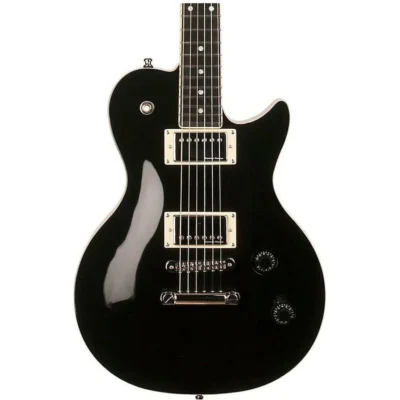
GODIN SUMMIT CLASSIC (CT) HB Black with Gig bag Seymour Duncan Humbuckers
Original price was: $3,399.00.$2,199.00Current price is: $2,199.00.Out of stock -
15% OFF
RRP $2,999.00
Save $440.00
 SKU: 035182
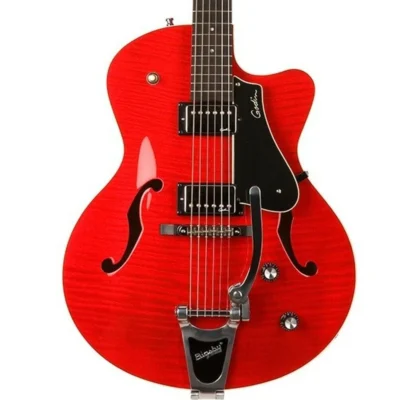
GODIN 5th Avenue Uptown Trans Red GT w/Bigsby Hollow Body Guitar with case
Original price was: $2,999.00.$2,559.00Current price is: $2,559.00.Out of stock -
16% OFF
RRP $269.00
Save $44.00
Sale!
 SKU: 11205-02-W
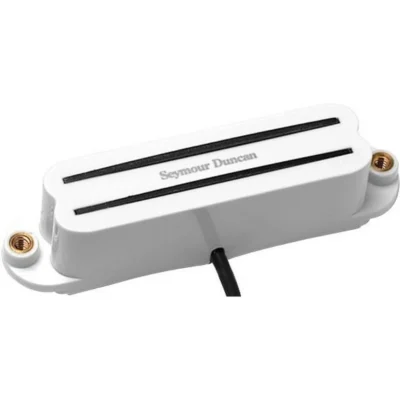
Seymour Duncan SHR-1b Bridge Hot Rails for Strat Guitar Pickup White 11205-02-W
Original price was: $269.00.$225.00Current price is: $225.00.In Stock -
19% OFF
RRP $529.00
Save $100.00
Sale!
 SKU: 11108-21-B
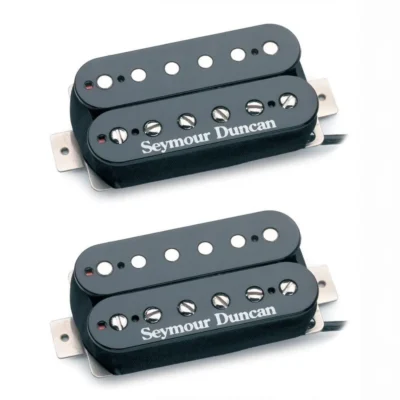
Seymour Duncan Black Distortion Mayhem SH-6b & SH-6n Guitar Humbucker Pickup Set
Original price was: $529.00.$429.00Current price is: $429.00.In Stock