
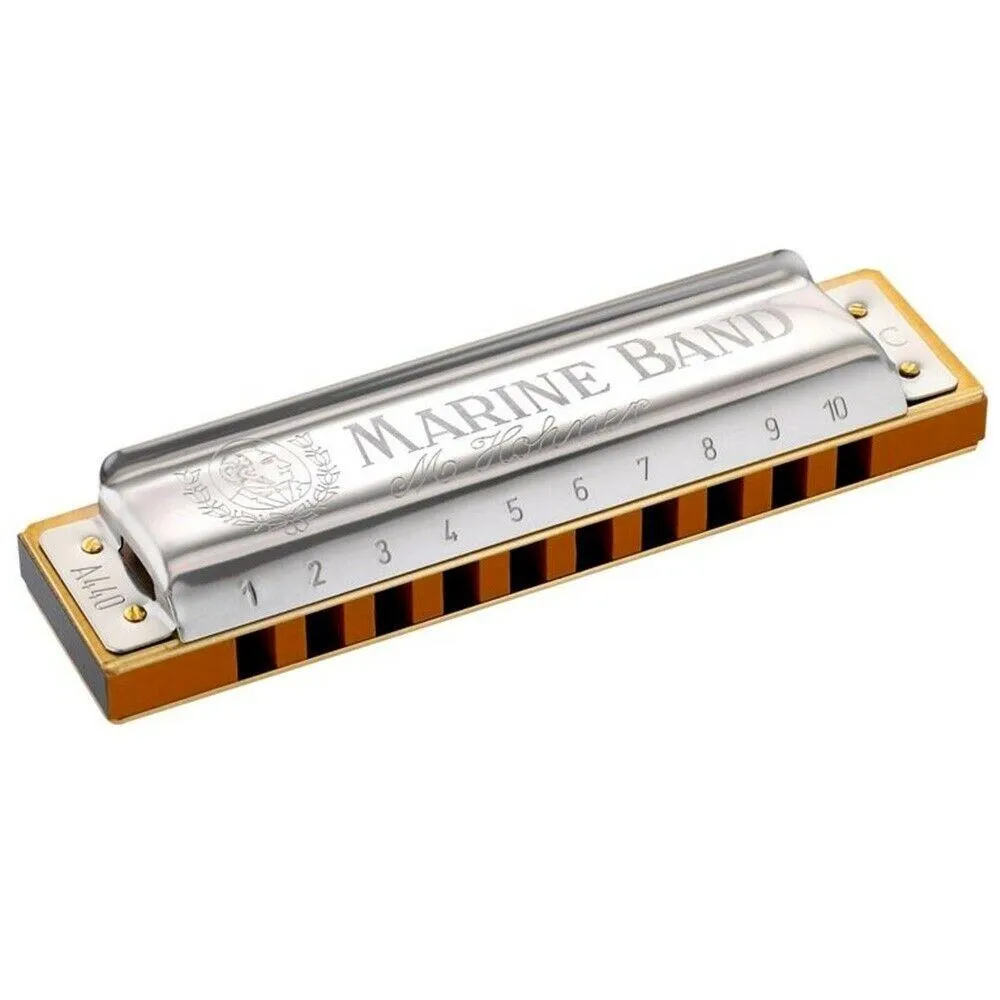
Hohner Marine Band 1896 Harmonica – Key of D Natural Minor
★★★★★ 4.9 Stars — Over 1,500 Google Reviews
Original price was: $119.00.$104.00Current price is: $104.00.
FAST
Delivery
EASY
Returns
IN HOUSE
Repairs



Pick-up from store - FREE
Free pickup from our Melbourne Store at 4 Drake Boulevard, Altona VIC 3018. Your order will typically be ready by the next business day. We recommend calling us on (03) 8360 7799 beforehand to check it's ready for collection.
International Shipping
Please proceed to checkout to see international rates and avalability.
Hohner Marine Band 1896 — D Natural Minor Diatonic Harmonica (M1896436P)
The Hohner Marine Band 1896 (M1896436P) is the Natural Minor tuned variant of one of the most iconic harmonicas ever made — a 10-hole diatonic in D Natural Minor with the traditional pearwood comb, brass reed plates and precision-tuned reeds that have defined the Marine Band since its introduction in 1896. Natural Minor tuning reconfigures the reed tuning to deliver the true natural minor scale in first position without the complex bending techniques that standard diatonic harmonicas require for minor key playing. The result is an instrument that speaks D natural minor directly and expressively — the scale that defines minor-key folk, Celtic, Balkan, klezmer, blues and modal music, available immediately to any player regardless of bending technique. Made in Germany.
Angkor Music — Natural Minor Tuning, the Marine Band Heritage, and Why D Minor Is Such an Important Key
Three things define this instrument. First, Natural Minor tuning. A standard diatonic harmonica is tuned to a major scale — accessing a true natural minor scale on a standard diatonic requires either playing in third position (which gives a Dorian mode rather than a true natural minor scale) or bending specific draw notes to lower them a semitone, a technique that takes considerable time to develop. A Natural Minor tuned harmonica solves this directly — the reeds are factory-retuned so that the natural minor scale is available in first position without any bending. The 3rd, 6th and 7th scale degrees are lowered to give the true natural minor pattern. Players who want to play minor-key music without the years of practice required to bend notes reliably will find a Natural Minor harmonica gives them immediate access to the expressive minor scale that standard diatonic technique cannot deliver without bending. Second, the Marine Band 1896. Introduced in 1896, the Marine Band is the harmonica that shaped popular music across the twentieth century. Bob Dylan, Sonny Terry, Brownie McGhee, Woody Guthrie and countless other defining players chose the Marine Band. Its traditional pearwood comb, brass reed plates and characteristic tone are reference points in harmonica music. The Natural Minor variant brings that heritage and tonal character to players who specifically need the minor scale. Third, D natural minor. D minor is one of the most musically rich and widely used minor keys — the key of countless folk tunes, Celtic and Balkan melodies, klezmer pieces, minor blues and modal compositions. The D natural minor scale (D, E, F, G, A, Bb, C, D) gives access to a vast and expressively varied repertoire. It is also the relative minor of F major, meaning it shares all the same notes — players who know the F major key territory will find D natural minor immediately familiar in melodic and harmonic terms. At Angkor Music we stock the Hohner harmonica range including diatonic, chromatic and natural minor models — contact us if you want advice on whether Natural Minor tuning suits your playing context.
Natural Minor vs Standard Diatonic — What Changes
| Feature | Standard Diatonic (Major Tuning) | Marine Band 1896 Natural Minor |
|---|---|---|
| First position scale | Major scale | Natural minor scale — no bending required |
| Bending requirement for minor scale | Yes — draw bends needed for natural minor | No — minor scale available straight from the comb |
| Natural chord tonality | Major chords | Minor chords — naturally darker, more expressive character |
| Best for | Major key music, blues (with bending), folk, country | Minor key music — folk, Celtic, klezmer, Balkan, minor blues, modal |
D Natural Minor — The Scale and Its Musical Reach
The D natural minor scale — D, E, F, G, A, Bb, C, D — is one of the most musically expressive and widely used minor scales in Western and world music traditions. Understanding what this key gives you illustrates the breadth of the Marine Band 1896 Natural Minor's musical reach:
- Celtic and folk music: A significant portion of Irish, Scottish and Appalachian minor folk tunes are in D minor or A minor. The D natural minor harmonica gives direct first-position access to D minor folk melodies — the Dorian and Aeolian mode tunes that define these traditions
- Klezmer and Eastern European music: D minor is central to klezmer and Balkan musical traditions. The natural minor scale maps directly to the expressive minor vocabulary these styles use, making the D minor Marine Band a natural instrument for players exploring these styles
- Minor blues: Minor blues — a more melancholic and introspective blues form than the standard major-based blues — often sits in D minor or A minor. The natural minor harmonica gives the minor scale directly without the bending technique required on a standard diatonic
- Modal music: D natural minor is the Aeolian mode on D. Players interested in modal music and the expressive qualities of the Aeolian and related modes will find the D minor Marine Band gives direct access to this harmonic territory
- Relative major relationship: D natural minor shares all its notes with F major — a relationship that means players who know the F major key territory will find D natural minor harmonically familiar
The Marine Band 1896 — Pearwood Comb and Traditional Construction
The Marine Band 1896's pearwood comb is what separates it tonally from harmonicas with plastic or metal combs. Pearwood is a dense, fine-grained hardwood that has been used in harmonica construction since the original Marine Band design in 1896. Its tonal contribution is audible and characteristic:
- Warm, organic tone: Wood absorbs some of the higher frequency resonances that plastic and metal combs reflect — producing the rounded, warm tonal character that players and listeners associate specifically with the Marine Band sound
- Natural acoustic character: The slight porosity of wood compared to plastic produces a different interaction with the player's breath and the reed vibration — a quality that experienced harmonica players describe as more alive or responsive than plastic alternatives
- Traditional maintenance consideration: Unlike plastic combs, pearwood can absorb moisture from the player's breath and swell slightly during extended playing sessions. This is a known characteristic of wooden-comb harmonicas and part of their character — most players warm the harmonica in their hands before playing to minimise the initial swell, and the comb stabilises with regular use
The brass reed plates produce the harmonica's notes — brass provides a balance of flexibility and stiffness that gives Hohner's Classic reeds their characteristic quick response and clear articulation.
Over 125 Years of Heritage
The Marine Band was introduced in 1896 and has remained in continuous production — making it one of the longest-running musical instruments in history. It has been played by defining figures across blues, folk, rock and popular music for over a century. The Natural Minor variant applies this established design and construction to the specific need of minor-key playing — the same pearwood comb, the same brass reed plates, the same German manufacturing, tuned specifically for natural minor rather than major scale playing.
Who Is the Hohner Marine Band 1896 D Natural Minor For?
- Players who want to play in D natural minor and find bending technique on a standard diatonic too difficult or not yet developed
- Folk, Celtic and traditional music players whose repertoire sits in D minor and who want the minor scale immediately accessible in first position
- Klezmer, Balkan and Eastern European music players for whom the natural minor scale is central to their style
- Minor blues players who want the expressive minor scale without the bending demands of a standard diatonic
- Players drawn to the warm, organic tone of the traditional pearwood comb Marine Band design
- Players who specifically want the heritage and tonal character of the Marine Band 1896 in a natural minor configuration
- Players who want major key playing should choose a standard Marine Band 1896 or another major-tuned diatonic — the Natural Minor tuning is optimised for minor key contexts and does not perform as a major scale instrument
Specifications
| SKU | M1896436P |
| Brand | Hohner |
| Model | Marine Band 1896 |
| Type | Diatonic Harmonica — Natural Minor Tuning |
| Key | D Natural Minor |
| Scale | D, E, F, G, A, Bb, C, D |
| Holes | 10 |
| Reeds | 20 — brass reed plates, precision-tuned |
| Comb | Pearwood — traditional warm tone |
| Tuning | Natural Minor |
| Series | Marine Band 1896 |
| Manufacture | Made in Germany |
Expert Advice at Angkor Music
At Angkor Music Melbourne we stock the Hohner harmonica range across diatonic, chromatic and natural minor models. If you are deciding between a natural minor harmonica and a standard diatonic — or between different minor keys — contact us for advice specific to your repertoire and playing context.
★★★★★ 4.9 Stars — Read Our 1,600+ Google Reviews →
Frequently Asked Questions
What is Natural Minor tuning and how does it differ from a standard diatonic?
A standard diatonic harmonica is tuned to a major scale. To play a natural minor scale on a standard diatonic, players must either use third position (which gives Dorian mode rather than true natural minor) or bend specific draw notes downward — a technique that takes considerable practice to develop. A Natural Minor harmonica is factory-tuned so the natural minor scale is available in first position without any bending. The 3rd, 6th and 7th notes of the scale are lowered to create the true natural minor pattern. This gives immediate access to the minor scale at any skill level.
Can I still bend notes on a Natural Minor harmonica?
Yes — bending is still available on a Natural Minor harmonica and adds additional expressive depth for experienced players. However unlike on a standard diatonic, bending is not required to access the natural minor scale — it is already there unbent. Bending on a Natural Minor harmonica produces notes outside the natural minor scale, which can be used for ornamentation and expression.
Why does the pearwood comb give a warmer tone?
Wood absorbs some of the higher frequency resonances that plastic and metal combs reflect, producing a rounder, warmer tonal character. The slight porosity of pearwood also creates a different interaction with the player's breath — a quality that experienced players describe as more organic and alive than plastic alternatives. The trade-off is that pearwood can absorb moisture and swell slightly during playing, particularly when new — most players warm the harmonica before extended sessions and the comb stabilises with regular use.
Is this suitable for beginners?
Yes — in fact Natural Minor tuning is in some ways more accessible for beginners who want to play minor-key music, precisely because the minor scale is available without bending technique. A beginner who wants to play Celtic folk tunes, klezmer melodies or minor blues will find the D Natural Minor Marine Band gives immediate access to the scale they need. The Marine Band 1896's pearwood comb requires a little more care than a plastic-comb harmonica, but the instrument itself is straightforward to play.
Will this work for blues playing?
Yes — specifically for minor blues. D natural minor is a common key for minor blues, and the Natural Minor harmonica gives the expressive minor scale directly. For standard major-key blues — the 12-bar blues form most associated with Chicago and Delta blues — a standard major-tuned diatonic is the more traditional choice.
Additional information
| Weight | 0.0000 kg |
|---|---|
| Type | Diatonic Harmonica |
| Bundle Listing | Yes |
| Instrument | harmonica |
| Key | F NATURAL MINOR |
Related Items & Accessories
Related products
-
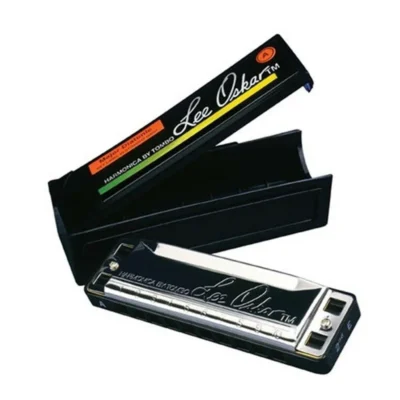 SKU: 1910-F
Lee Oskar by Tombo Major Diatonic Harmonica F major 1910-F Blues Harp
$85.00In Stock -
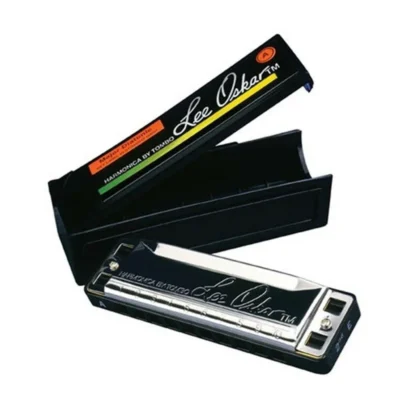 SKU: 1910-B-Flat
Lee Oskar by Tombo Major Diatonic Harmonica Bb major 1910B Flat Blues Harp
$85.00Out of stock -
8% OFF
RRP $84.99
Save $6.99
Sale!
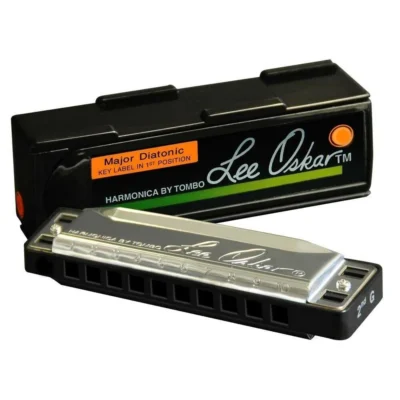 SKU: 1910-HG
Lee Oskar by Tombo Major Diatonic Harmonica High G major 1910HG Blues Harp
Original price was: $84.99.$78.00Current price is: $78.00.In Stock -
10% OFF
RRP $194.00
Save $19.06
Sale!
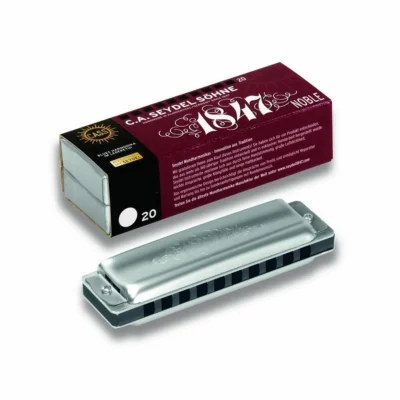 SKU: 1847
SEYDEL Blues Noble 1847 Harmonica Key of F
Original price was: $194.00.$174.94Current price is: $174.94.Out of stock -
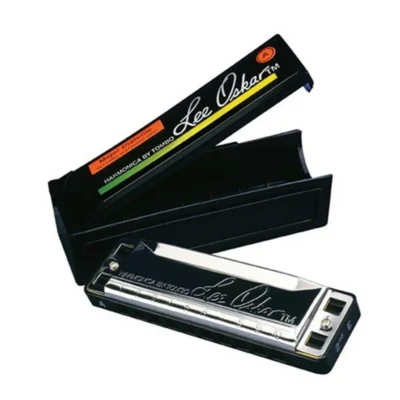 SKU: 1910-D
Lee Oskar by Tombo Major Diatonic Harmonica D major 1910-D Blues Harp
$85.00Out of stock