
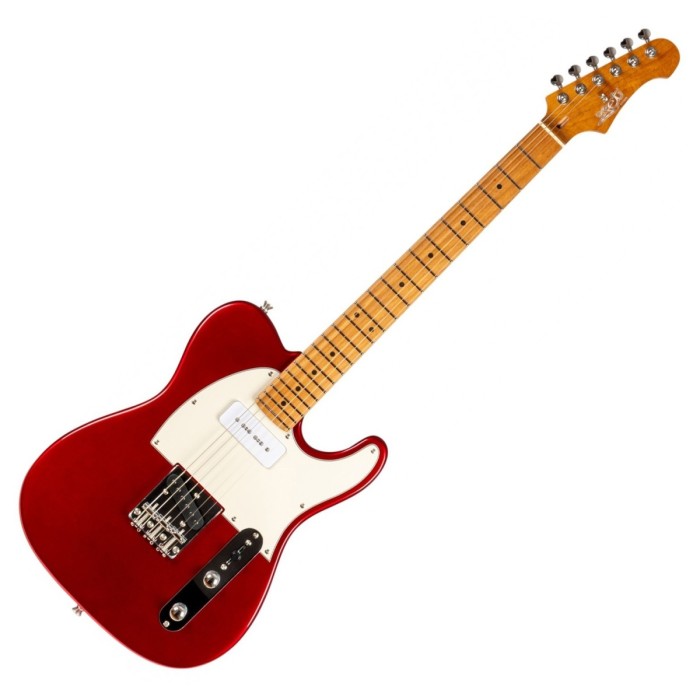
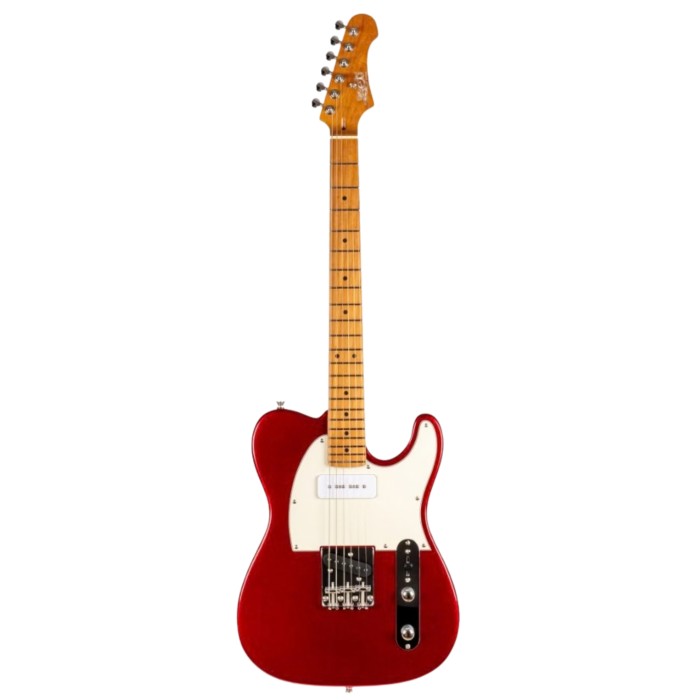
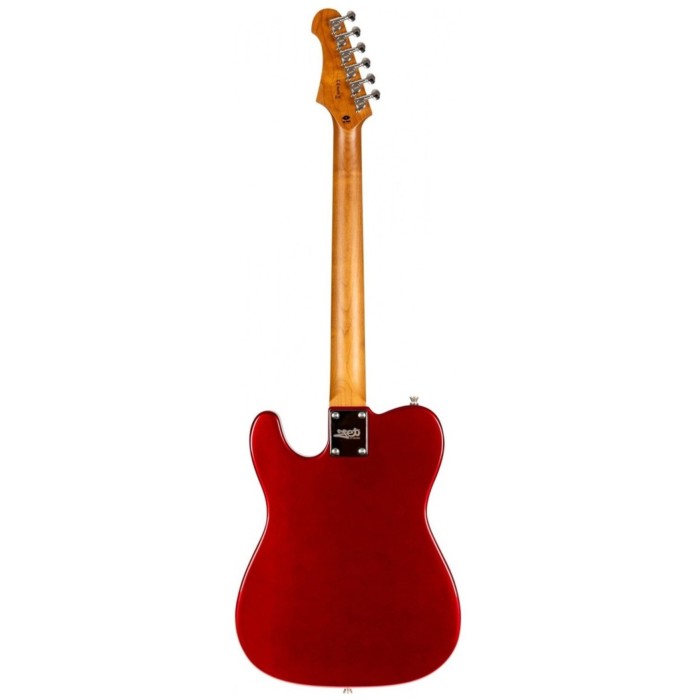
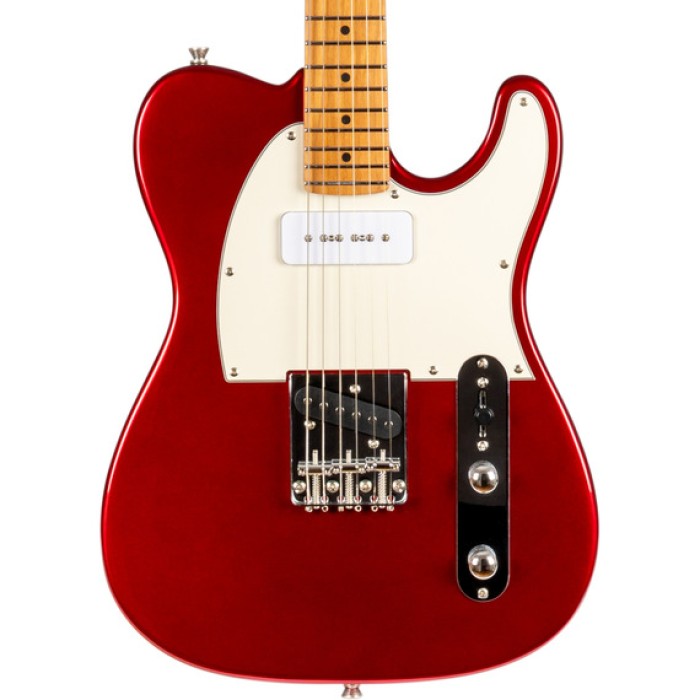
Jet JT-300 Electric Guitar with P90 – Cardinal Red
★★★★★ 4.9 Stars — Over 1,500 Google Reviews
Original price was: $549.00.$449.00Current price is: $449.00.
FAST
Delivery
EASY
Returns
IN HOUSE
Repairs



Check AU Shipping Cost
Pick-up from store - FREE
Free pickup from our Melbourne Store at 4 Drake Boulevard, Altona VIC 3018. Your order will typically be ready by the next business day. We recommend calling us on (03) 8360 7799 beforehand to check it's ready for collection.
International Shipping
Please proceed to checkout to see international rates and avalability.
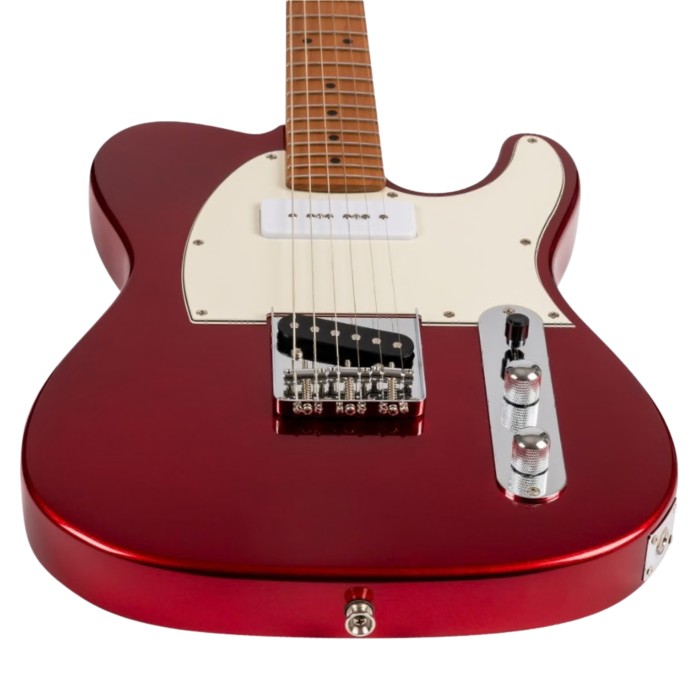
JET JT-300 Electric Guitar — Cardinal Red (S+P90)
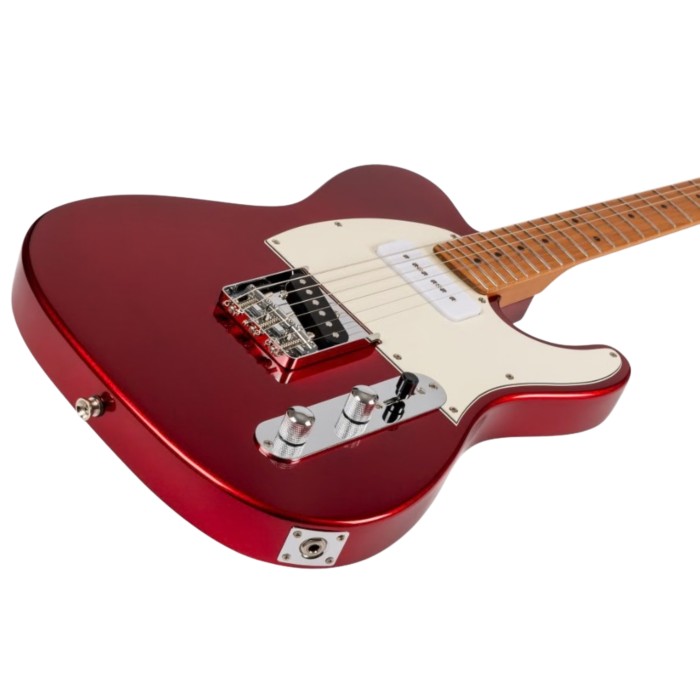
The JET JT-300 Cardinal Red (SKU: JT-300-CAR-P90) takes the JT-300's Telecaster-influenced platform in a distinctly different tonal direction. Where other JT-300 configurations use matched single-coil pairs, this version pairs a bridge single-coil with a neck P90 — a combination that brings together two of the most characterful pickup types in electric guitar history, voiced very differently from each other, and capable of a much broader tonal range than either type alone. The body is roasted poplar, the neck is Canadian roasted maple with a roasted maple fretboard, and the finish is Cardinal Red — a deep, vibrant red with presence on a stage.
Angkor Music — Why the S+P90 Configuration Makes This JT-300 Different
The P90 is one of the most interesting pickup designs in the history of electric guitar — a wide, flat single-coil coil that Gibson introduced in 1946 and which defined the sound of rock and roll, blues, and early rock before humbuckers arrived in 1957. P90s have more midrange presence and output than a standard single-coil, with a gritty, voice-like character that responds expressively to playing dynamics. Pairing a P90 in the neck with a Telecaster-style single-coil in the bridge gives the JT-300 Cardinal Red two very different tonal personalities accessible from the 3-way switch: bright and cutting at the bridge, warm and present at the neck, and a combined position that balances the two. This is a more versatile and tonally interesting configuration than matched single-coils, and it suits blues, indie, alternative, and classic rock particularly well. At Angkor Music we stock JET Guitars. If you want to hear the S+P90 configuration in person or discuss how it compares to other JT-300 variants, come in and play it.
Cardinal Red — A Finish for Players Who Mean It
Cardinal Red is a deep, saturated red — not a candy or metallic finish, but a solid, even gloss that reads clearly under stage lighting. Red is one of the oldest and most iconic guitar finish colours: it appeared on early semi-hollow Gibson ES series instruments and on the first Fender Stratocasters with custom DuPont Fiesta Red and Dakota Red finishes, and it has been associated with confident, expressive playing ever since. On the JT-300 with chrome hardware and a roasted maple neck, Cardinal Red presents a clean, striking look without requiring any additional ornamentation.
Roasted Poplar Body
The JT-300 Cardinal Red's body is roasted poplar — a specification worth unpacking, because roasted poplar as a guitar body material is less familiar than roasted maple necks.
Poplar itself is a well-established guitar body wood. It is a lightweight, fine-grained hardwood with a relatively even, balanced tonal character and consistent grain structure that makes it easy to finish uniformly. Fender and their contractors have used poplar in production guitar bodies for decades; its tonal properties are well understood and suit electric guitar production effectively. It is not a premium exotic wood, but it is a sensible, workmanlike choice.
Roasting the poplar — applying the same heat-treatment process used for roasted maple necks — removes residual moisture from the wood, increases its dimensional stability, and slightly changes its tonal character. Roasted wood is denser than its untreated counterpart because the moisture that occupied the wood's cells has been driven off; this tends to produce a slightly brighter, tighter attack compared to untreated poplar, with improved resonance. Visually, roasting gives the poplar a warmer, slightly amber tone under the Cardinal Red finish's gloss coat, though the finish colour itself is opaque rather than showing the grain.
Roasted poplar as a body specification represents a genuine investment in material quality — the roasting process adds cost and time to production, and its inclusion signals that JET have applied the same material philosophy to the body as to the neck.
Roasted Maple Neck and Fretboard
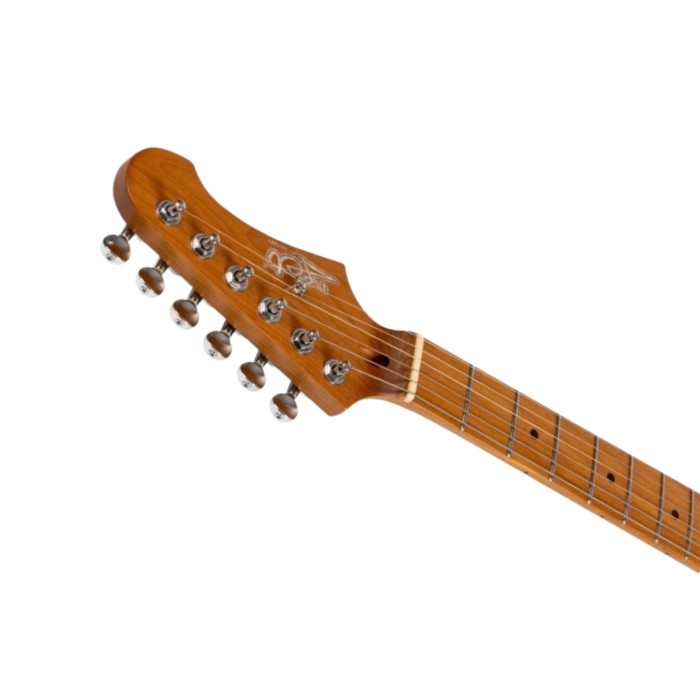
The Canadian roasted maple neck is the same specification as other JT-300 variants: heat-treated for dimensional stability, with a warm amber appearance and a slightly open, matte surface texture that many players find faster and more comfortable than a gloss-finished maple neck. The Modern C profile is a shallow, oval cross-section that suits a broad range of hand sizes — neither thick enough to feel bulky nor flat enough to feel unnatural in the hand.
The roasted maple fretboard continues the neck material's tonal and aesthetic character through to the playing surface. A maple fretboard has a brighter, more articulate attack compared to rosewood or ebony — it accentuates the treble content of each note, which particularly suits the bridge single-coil's position in the tonal spectrum. The 9.5-inch radius is comfortable for chord playing and bends without the extreme flatness of modern shred radii. Twenty-two frets at 25.5-inch scale give the guitar the full range of the Fender format.
The double-action truss rod allows setup adjustment in both directions, and the 1.65-inch nut width is a comfortable, standard dimension for most playing styles.
The P90 Pickup — What It Is and What It Does
The P90 is one of the founding designs in electric guitar history. Gibson engineer Seth Lover introduced it in 1946 as the company's primary pickup design, and it defined the guitar tone on records from the late 1940s through the mid-1950s. When Gibson introduced the humbucker in 1957, the P90 was eventually phased out of their standard production — but it never disappeared, and its tonal character has made it a persistent favourite among players who want something between a standard single-coil and a humbucker.
Physically, a P90 is a single-coil pickup — it uses a single coil of wire wound around magnetic polepieces. But it is wider and flatter than a standard Stratocaster or Telecaster single-coil, and wound with more wire to a higher resistance. This produces a pickup with more output than a standard single-coil, a fuller, more prominent midrange, and a gritty, voice-like character that responds expressively to playing dynamics. At low gain, a P90 is warm and present, with a richness that standard single-coils do not quite match. At edge-of-breakup and mild overdrive settings, it has a raw, organic quality — the characteristic "P90 growl" that has been central to blues-rock, garage rock, and indie guitar tones since the 1950s. Because it is still a single-coil, a P90 does produce hum in electrically noisy environments, though the wider coil geometry produces somewhat less hum than smaller single-coil designs.
In the neck position of the JT-300, the P90 is particularly effective: neck pickups are naturally warmer and fuller than bridge pickups, and a P90's midrange character in the neck position produces a thick, expressive lead tone with excellent sustain and dynamics.
The S+P90 Combination — Two Tonal Personalities
The three-way switch on the JT-300 Cardinal Red offers three distinct tonal settings, each with its own character.
In the bridge position alone, the Telecaster-style single-coil delivers the bright, cutting, articulate attack that defines the bridge pickup sound: tight low-end, prominent attack on each note, and the snap and sparkle associated with Tele-style bridge pickups. This position suits rhythm playing, country chicken-picking, and any context where definition and cut are priorities.
In the neck position alone, the P90 delivers its warmer, fuller, mid-forward character — the pickup that sits most naturally under blues lead playing, single-note melodies that need weight and presence, and any context where brightness gives way to expression and body. The P90 in the neck is the position most associated with classic rock and blues tone from this pickup configuration.
With both pickups selected, the middle position balances the bridge single-coil's brightness against the P90's warmth — a combined sound that has less treble than the bridge alone and less midrange warmth than the neck alone. The result is a broad, even tonal spread that suits rhythm guitar, clean arpeggios, and many other contexts where neither pure brightness nor pure warmth is the priority.
One Volume, one Tone, and the 3-way toggle give straightforward access to all three positions.
Fixed Bridge and Chrome Hardware
The fixed bridge provides stable tuning and direct string-to-body contact for sustain. There is no tremolo system to add setup complexity or tuning instability — a sensible choice for a guitar whose tonal interest lies in its pickup configuration rather than pitch-shifting techniques. Chrome hardware suits the Cardinal Red finish cleanly: the chrome saddles, tuners, and switch tip read as neutral against the red and allow the finish to take visual priority.
Who Is the JET JT-300 Cardinal Red For?
This is the JT-300 for players who want tonal versatility beyond what a matched single-coil pair provides. The S+P90 configuration suits blues, blues-rock, indie, alternative, and classic rock particularly well — styles where the P90's midrange character and dynamic response are natural fits. It is also a strong choice for players who are curious about P90 tone but want the option of a brighter single-coil voice available on the same instrument. The roasted poplar body and roasted maple neck represent genuine material investment at this price. Cardinal Red is for players who are not looking for a guitar that blends into the background.
Specifications
| SKU | JT-300-CAR-P90 |
| Brand / Model | JET JT-300 |
| Colour | Cardinal Red |
| Body | Roasted Poplar |
| Neck | Canadian Roasted Maple — Modern C profile |
| Fingerboard | Roasted Maple |
| Fingerboard Radius | 9.5" |
| Scale Length | 25.5" |
| Frets | 22 |
| Nut Width | 1.65" |
| Nut Material | Polymer Fibre |
| Truss Rod | Double-action |
| Pickups | S+P90 — bridge single-coil, neck P90 |
| Bridge | Fixed |
| Controls | 1 x Volume, 1 x Tone, 3-way toggle switch |
| Hardware | Chrome |
Expert Advice at Angkor Music
At Angkor Music Melbourne we stock JET Guitars including the JT-300 range. If you want to compare the Cardinal Red P90 configuration with other JT-300 variants, discuss what amplifier or setup suits the S+P90 pickup combination, or get advice on strings and setup for this guitar, our team can help.
★★★★★
4.9 Stars — Read Our 1,600+ Google Reviews →
Frequently Asked Questions
What is a P90 pickup and how does it differ from a standard single-coil?
A P90 is a single-coil pickup design introduced by Gibson in 1946. It uses a wider, flatter coil than standard Stratocaster or Telecaster single-coils and is wound to a higher output. The result is a pickup with more midrange presence, more output, and a fuller, grittier tone than a standard single-coil — but without the hum-cancelling of a humbucker. P90s are particularly associated with blues, blues-rock, garage rock, and indie tone: they have a raw, dynamic, voice-like character that responds expressively to picking attack and playing dynamics. Like all single-coil pickups, P90s produce hum in electrically noisy environments.
How does this JT-300 Cardinal Red differ from the JT-300 Butterscotch?
The two guitars share the roasted maple neck and fretboard, Modern C profile, 9.5-inch radius, 25.5-inch scale, fixed bridge, and chrome hardware. The key differences are: the Cardinal Red uses a roasted poplar body (the Butterscotch uses basswood); the Cardinal Red has a polymer fibre nut (the Butterscotch has a bone nut); and most significantly, the Cardinal Red has an S+P90 pickup configuration (bridge single-coil and neck P90) while the Butterscotch has matched ceramic SS single-coils. The S+P90 configuration makes the Cardinal Red more tonally versatile and better suited to blues and rock contexts; the Butterscotch with matched single-coils is a more straightforwardly Telecaster-voiced instrument.
Does the P90 hum, and is this a problem?
Yes — the P90 is a single-coil pickup and produces the electromagnetic hum that is characteristic of all single-coil designs. The wider coil geometry of a P90 produces somewhat less hum than smaller single-coil designs in the same environment, but it is not hum-cancelling like a humbucker. In a home studio, rehearsal room, or live environment with competent power, this hum is typically a minor background presence rather than a problem. In particularly noisy electrical environments — older venues with poor power, environments with fluorescent lighting or certain LED systems — single-coil hum can become noticeable. Players who find single-coil hum problematic in their environment should consider a humbucker-equipped guitar. For the majority of players in typical playing environments, P90 hum is a natural part of the instrument's character and not a significant practical issue.
What styles of music suit the S+P90 pickup configuration?
The bridge single-coil suits bright, cutting styles: country, Telecaster-style rock and roll, clean indie arpeggios, and any context where definition and articulation are priorities. The neck P90 suits warmer, more expressive playing: blues lead, classic rock, garage rock, and single-note melodies that need weight and character. Together, the two pickups in the middle position produce a broad, even tone that suits rhythm guitar across many styles. The overall range of the S+P90 JT-300 is broader than a matched single-coil instrument — it is a naturally versatile guitar.
Is the polymer fibre nut comparable to a bone nut?
Polymer fibre nuts are a quality synthetic nut material — harder and more consistent than basic plastic nuts, with better string-seating properties. Bone nuts are generally considered the reference material for string-seating precision and tonal transfer, and they are the specification found on higher-end and boutique instruments. In practical terms, a well-cut polymer fibre nut is a perfectly functional nut that will perform reliably. If maximum tuning stability and tone transfer from the open strings is a priority, a bone nut replacement is a worthwhile upgrade that any guitar technician can perform at modest cost.
Additional information
| Weight | 6.00 kg |
|---|---|
| Type | Electric Guitar |
Related Items & Accessories
Related products
-
8% OFF
RRP $92.00
Save $7.00
Sale!
 SKU: 14010601 – Ruthenium
Schaller New S Locks (Pair) Ruthenium 14010601 Strap Locks / security Locks
Original price was: $92.00.$85.00Current price is: $85.00.In Stock -
16% OFF
RRP $269.00
Save $44.00
Sale!
 SKU: 11205-02-W
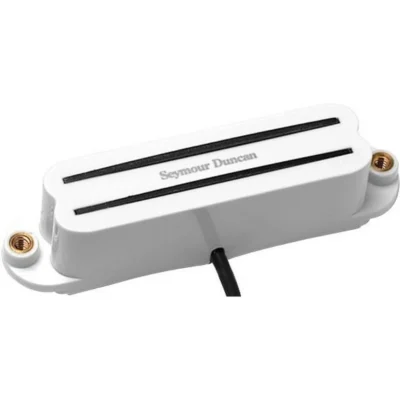
Seymour Duncan SHR-1b Bridge Hot Rails for Strat Guitar Pickup White 11205-02-W
Original price was: $269.00.$225.00Current price is: $225.00.In Stock -
26% OFF
RRP $4,599.00
Save $1,200.00
Sale!
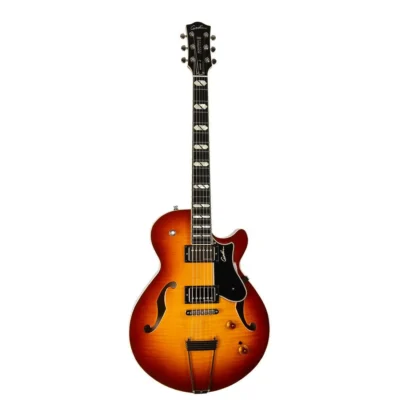 SKU: 04130
Godin Montreal Premiere Supreme Lightburst Flame HG Semi-Hollow Electric Guitar
Original price was: $4,599.00.$3,399.00Current price is: $3,399.00.In Stock -
18% OFF
RRP $3,299.00
Save $600.00
Sale!
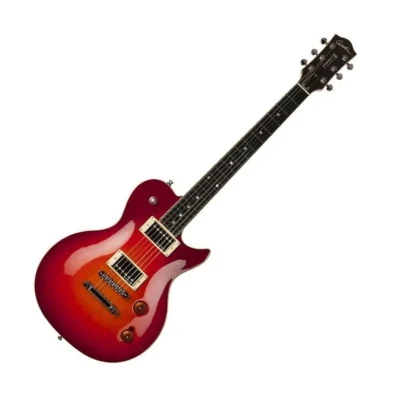 SKU: 041657
GODIN SUMMIT CLASSIC (CT) HB Cherryburst with Gig bag Seymour Duncan Humbuckers
Original price was: $3,299.00.$2,699.00Current price is: $2,699.00.Out of stock -
36% OFF
RRP $4,199.00
Save $1,500.00
Sale!
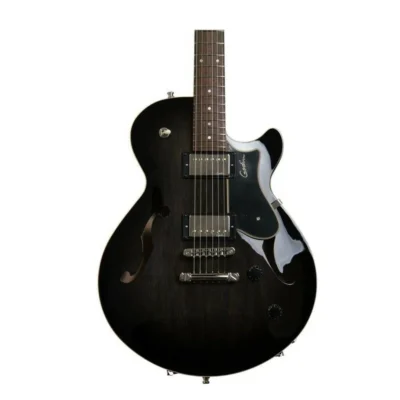 SKU: 036745
GODIN Montreal Premiere HG – Trans Black Semi Hollow Electric Guitar
Original price was: $4,199.00.$2,699.00Current price is: $2,699.00.In Stock