
James Tyler JTG-M1 Black Metallic Electric Guitar
★★★★★ 4.9 Stars — Over 1,500 Google Reviews
Original price was: $3,599.00.$3,249.00Current price is: $3,249.00.
FAST
Delivery
EASY
Returns
IN HOUSE
Repairs



Check AU Shipping Cost
Pick-up from store - FREE
Free pickup from our Melbourne Store at 4 Drake Boulevard, Altona VIC 3018. Your order will typically be ready by the next business day. We recommend calling us on (03) 8360 7799 beforehand to check it's ready for collection.
International Shipping
Please proceed to checkout to see international rates and avalability.
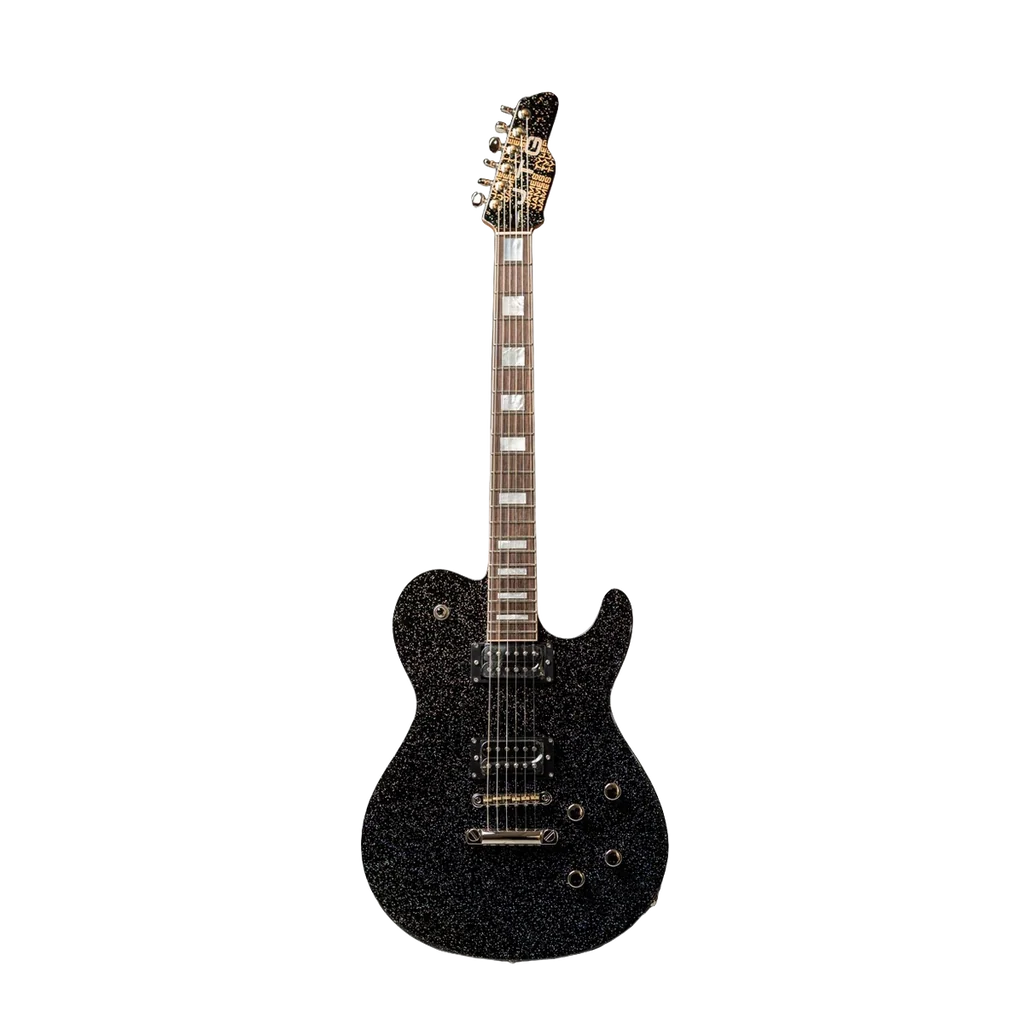
James Tyler JTG-M1 Electric Guitar — Black Metallic
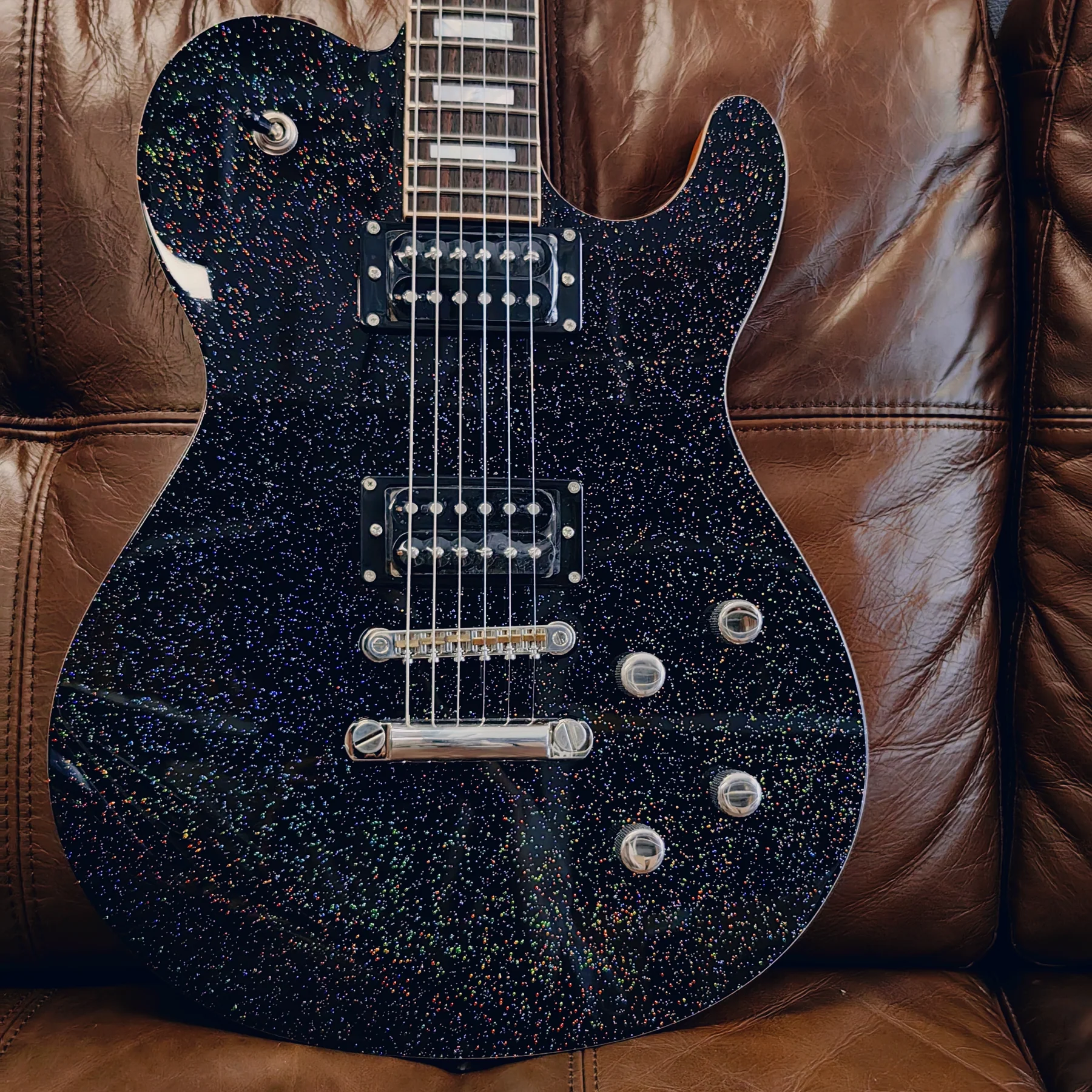
The James Tyler JTG-M1 in Black Metallic (SKU: JTG-M1-BM) is an HH electric guitar built on a 2-piece Okoume body with a 2-piece hard maple top, an Okoume neck with Indian rosewood fretboard and maple fretboard binding, and a specification drawn directly from Tyler's design philosophy: Jescar medium-jumbo frets, a 42mm bone nut, Luminlay luminescent side dots, JTG locking tuners, and a matched hard moulded case included in the package. The pickup configuration pairs a JTG Retro humbucker at the neck with a JTG Super humbucker at the bridge — a deliberate tonal range decision that gives the guitar both vintage warmth and modern output authority. The controls are a full Les Paul-style layout: individual volume and tone for each pickup, 3-way toggle, and CTS 500K pots throughout. The JTG-M1 is a serious player's instrument at an accessible price, designed by Tyler for players who know exactly what they want and are not willing to compromise on the details.
★ Expert Insight — Why Tyler Specifies a Retro Neck + Super Bridge: Tonal Range Across the Pickup Selector
Most entry-to-mid-range HH guitars use two identical pickups — same model, often just labelled "neck" and "bridge." James Tyler specifies different pickups at each position for a deliberate reason: the neck pickup and the bridge pickup serve different musical functions, and a single pickup voice in both positions either compromises one or averages out between the two.
The JTG Retro at the neck is voiced in the vintage PAF tradition — lower output, more open and transparent, with strong midrange warmth and smooth high-frequency response. At the neck position, where string amplitude is highest, this produces the classic full-bodied humbucker clean tone: round, warm, articulate. The JTG Super at the bridge is higher output and more modern voiced — tighter lows, more upper-midrange presence, and the punch and definition that the bridge position demands when string amplitude is lower. The result across the 3-way toggle is three genuinely distinct voices: a vintage-warm neck, a focused bridge, and a combined middle position that blends warmth and definition. This is how well-designed guitars work — Tyler's choice to use different pickups at each position is an indication of a specification driven by musical intention rather than catalogue convenience.
James Tyler — The Brand Behind the JTG
James Tyler Guitars, based in Studio City, California, has built one of the most respected reputations in the boutique electric guitar world. Tyler guitars have been the choice of a roster of professional artists who favour precise neck feel, responsive tone, and uncompromising quality over prestige branding — the instruments have a loyal following among working players, session guitarists, and collectors who have played through enough guitars to know exactly what they prefer. Tyler's design philosophy prioritises the player's experience above aesthetics: neck profiles that feel immediately natural, fret work that is consistent and smooth, pickups voiced with musical intention, and hardware chosen for real-world reliability.
The JTG series is Tyler's decision to extend that philosophy to a broader audience. The guitars are manufactured in China under Tyler's direct supervision, applying the same design decisions and specification standards to a production process that reduces cost through scale rather than compromise. The JTG-M1's specification — bone nut, Jescar frets, Luminlay side dots, locking tuners, CTS pots, scraped binding, included hard case — reflects Tyler priorities at every decision point. These are not the choices of a mass-market instrument; they are the choices of a designer who knows which details actually matter to players.
Okoume Body with Hard Maple Top — Construction and Tone
Okoume is a lightweight African hardwood with tonal characteristics that sit in the same general territory as mahogany: warm, resonant, with a strong fundamental and a smooth midrange character. It is lighter than many mahogany species in production use, which contributes to the JTG-M1's overall weight and balance — a guitar built on okoume typically feels comfortable and well-balanced over long playing sessions. The 2-piece body construction (two halves joined at the centreline) is standard quality practice at this price range; each piece is selected for grain and density.
The 2-piece hard maple top adds the character maple brings to any body pairing: maple is a denser, brighter wood than okoume, and its presence on the top of the body adds upper-midrange articulation, attack clarity, and definition to what would otherwise be a warmer, rounder-only instrument. The okoume-and-maple combination works on the same principle as the classic mahogany-and-maple body used in many respected HH guitars: the warm, resonant core wood provides depth and sustain, while the maple top adds the note definition and bright overtones that keep the sound clear in a mix. The result is a full-bodied but articulate guitar that suits both clean and driven playing without sounding muddy in the low-mid range or harsh in the high end.
The body is rear-routed — the control cavities are accessed from the back of the guitar, keeping the front face clean with no visible routing. Combined with the scraped binding on the body, the JTG-M1 has a refined, finished appearance from the front. Scraped binding is a traditional hand-finishing technique: after the binding strip is fitted around the body edge, it is carefully scraped flush and smooth with the body surface and surrounding finish, producing a clean, level reveal without the step or uneven edge that can appear in less carefully finished instruments. It is a quality indicator at any price point and reflects the craftsmanship attention Tyler brings to the JTG line.
Okoume Neck, 59 Profile, Indian Rosewood Fretboard, and Jescar Frets
The neck is Okoume — the same tonewood as the body — which creates a consistent warmth throughout the instrument rather than the contrast of a bright maple neck on a warm body. The neck profile is specified as "STD 59": a shape referencing the classic 1959 vintage neck profile, with a depth of 0.850 inches at the first fret and 0.980 inches at the twelfth fret. These measurements describe a comfortable, moderately rounded C/D shape that is neither the thin shallow profile of a modern shred-oriented neck nor the thick baseball-bat D of a 1950s vintage original. Players who find thin necks fatiguing over long sessions often prefer a 59-style profile; the slightly fuller depth provides a natural resting position for the thumb and a more secure grip for large chord shapes and hand-intensive rhythm playing. At 0.850 inches in the first position, there is enough depth that the neck does not feel like it disappears in the hand, while at 0.980 inches at the twelfth fret the gradual taper provides extra stability for upper-register lead work.
The Indian rosewood fretboard has a 9.5-inch radius — the most commonly used modern radius, comfortable for both chord playing and bending without notes choking out. The fretboard features maple binding: a strip of maple runs along both edges of the fretboard, visually separating the dark rosewood from the neck and providing a clean aesthetic that complements the guitar's overall finish. White Mother of Pearl inlays mark the fret positions on the face of the fretboard, providing clear position markers with a traditional premium appearance.
The frets are Jescar 51100 — Jescar is an American fret manufacturer known in the guitar industry for consistent, high-quality fretwire. The 51100 gauge is a medium-jumbo: 0.100 inches wide and 0.051 inches tall. This provides a substantial fret height that makes string bending easier (the finger slides under the string cleanly without catching the fret side), allows precise intonation placement, and gives the guitar a comfortable, responsive playing feel for both rhythm and lead work. Jescar fretwire is known for its manufacturing consistency — the size, shape, and surface finish are uniform across every fret, which makes the final fret level and crown work more precise and the playing feel more even across the neck.
The 42mm bone nut is a quality detail. Bone is denser than the plastic or synthetic nuts found on most instruments at this price point, provides better vibration transfer from the string to the neck at the open-string positions, and has natural self-lubricating properties that help string-to-nut friction remain low. At 42mm width, the string spacing is on the slightly narrower side — consistent with a guitar designed for fast, comfortable playing feel rather than an unusually wide spread between strings.
Luminlay Side Dots — Luminescent Fret Markers for Stage and Studio
Luminlay is a Japanese brand specialising in luminescent (phosphorescent, or glow-in-the-dark) side dot fret markers. They are fitted on the side of the neck — the edge the player sees when looking down at their left hand while playing in position. Standard side dots are small white plastic dots; Luminlay dots absorb ambient light and emit it in low-light conditions, making fret position instantly readable on a dark stage without needing to look at the fretboard face. This is a practical, working-musician specification: on a dark stage, under coloured lighting, or during a bridge section where the lights drop, the ability to quickly confirm fret position by glancing at the neck edge without breaking visual focus from the audience or the band is a genuine performance advantage. The fact that Tyler chose to fit Luminlay at the JTG price point is another indication that the JTG specification reflects decisions made for players, not for a spec sheet.
Hardware, Controls, and Moulded Hard Case
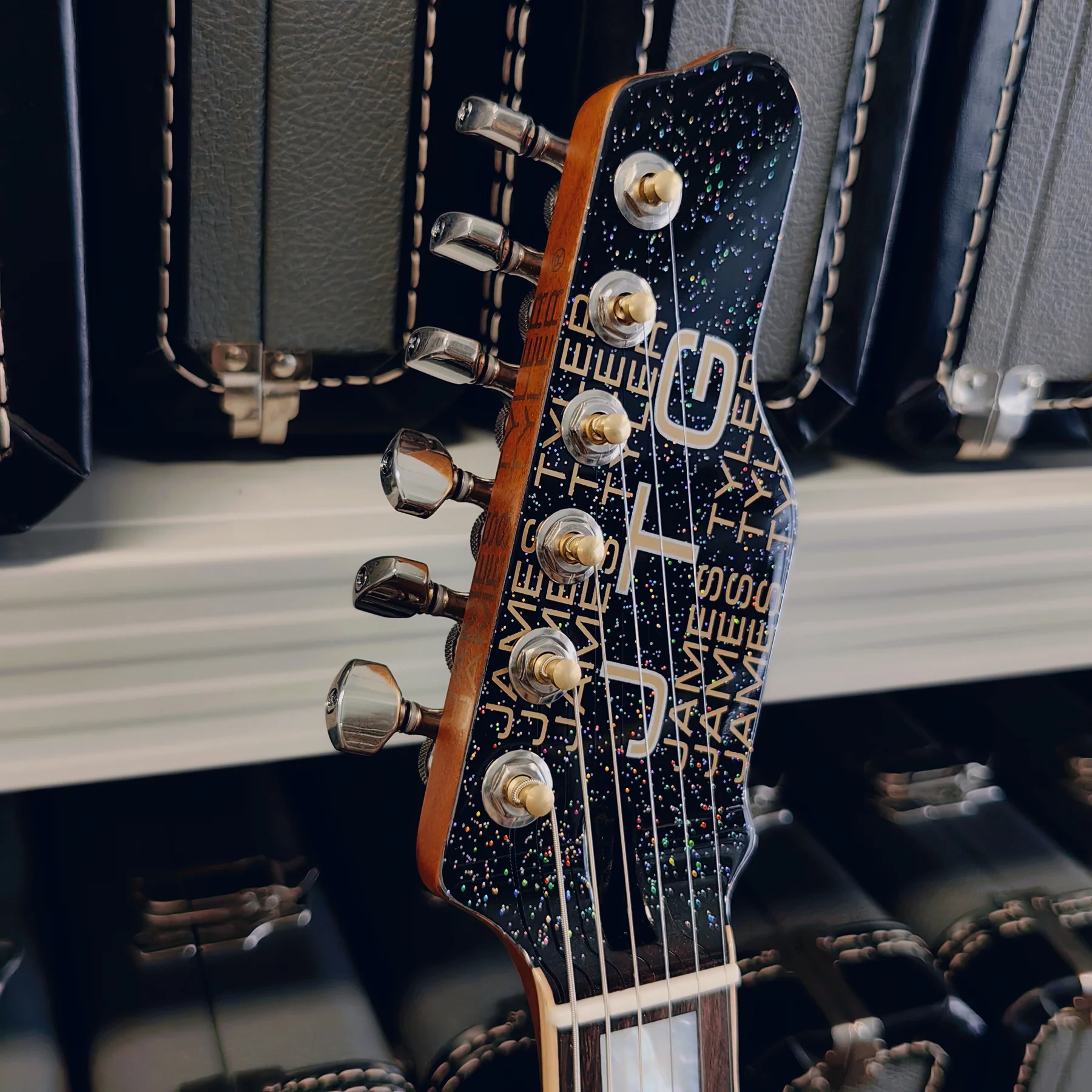
The Tune-O-Matic bridge is the classic fixed-bridge design for HH guitars: individual saddle height and intonation adjustment per string, stable string anchoring, and reliable string-to-body coupling for sustain. The JTG locking tuners hold tuning across string bends, tremolo-free playing, and temperature changes — once a string is locked, it cannot slip at the headstock end. This is a meaningful specification for a guitar that will be played on stage or in rehearsal environments where retuning between songs is inconvenient.
The control layout is a full Les Paul-style four-knob configuration: individual volume and tone controls for each pickup (CTS 500K pots throughout), and a 3-way toggle switch for neck/both/bridge pickup selection. CTS is an American potentiometer manufacturer whose 500K pots are the standard choice for HH guitars — their quality and consistency exceed the imported pots typically found on instruments at this price point. The dome knobs are a visual detail consistent with the guitar's vintage-influenced aesthetic. The 500K value is correct for humbuckers: lower-value pots (like 250K, more common on single-coil guitars) would roll off the high frequencies of a humbucker prematurely, making the tone duller than the pickup intends.
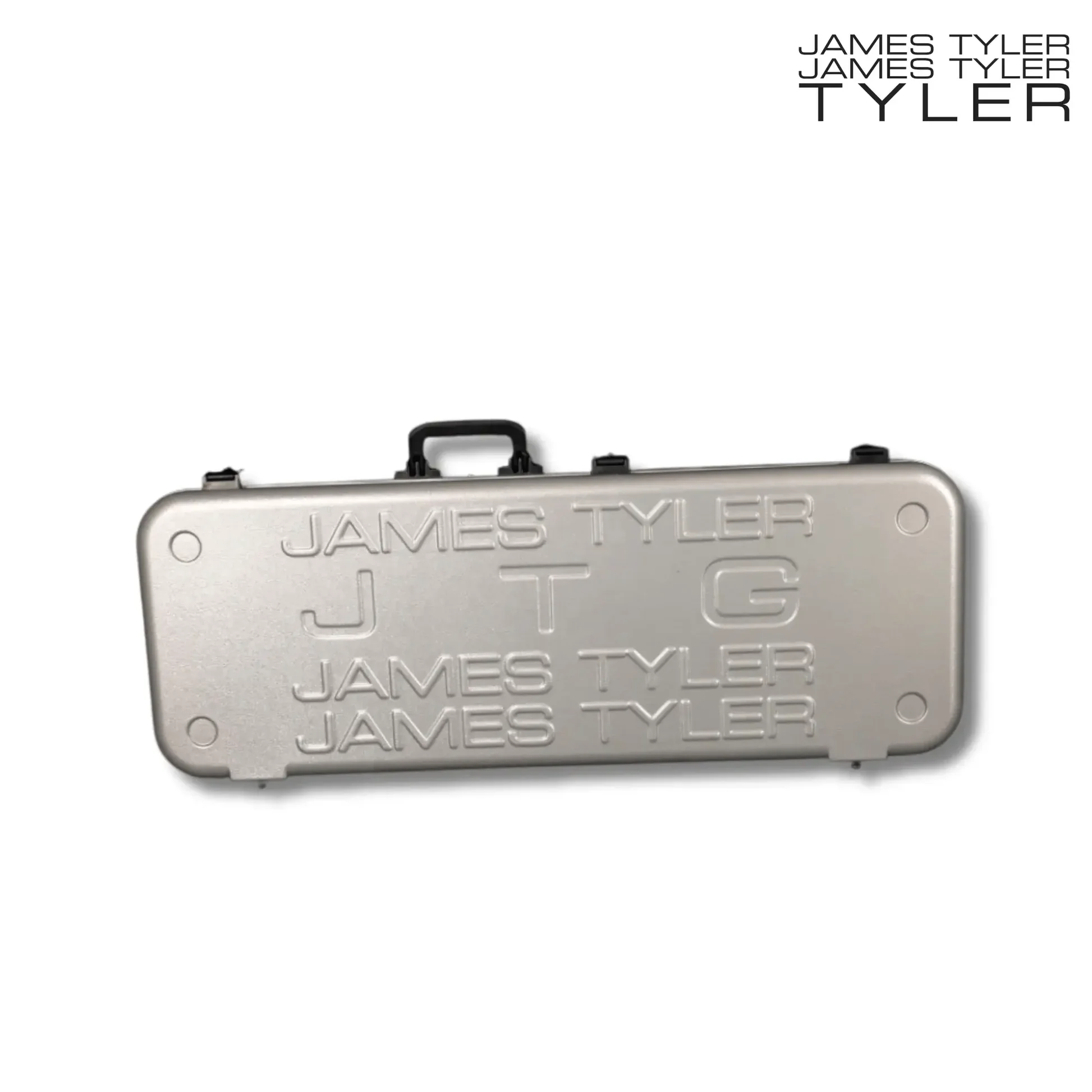
The JTG moulded hard case is included with the guitar — a significant value inclusion. A moulded hard case provides proper structural protection for transport and storage, with shaped foam interior that holds the guitar securely. At most comparable price points, guitars ship with a gig bag (soft fabric, minimal structural protection) or no case at all. The inclusion of a hard case in the JTG-M1 package is a direct expression of Tyler's approach to the JTG line: the customer receives a complete, properly protected instrument from day one, without additional accessory purchases required.
D'Addario 10-46 strings are fitted from the factory — a medium gauge well-suited to the guitar's standard tuning and Tune-O-Matic setup, providing clear tone and comfortable resistance across all playing styles.
Who Is the JTG-M1 For?
The JTG-M1 is for intermediate to advanced players who know exactly what they want from a guitar and are looking for professional specification at an accessible price. Players familiar with the James Tyler name who have wanted a Tyler without the custom shop price, players who have played enough guitars to recognise the difference that Jescar frets, bone nut, and CTS pots make in the playing experience, and working musicians who need a stage-reliable instrument with practical details (Luminlay dots, locking tuners, hard case) will all find the JTG-M1 delivers at every specification point. The okoume-and-maple construction covers a wide tonal range across styles — rock, blues, pop, and fusion all suit the Retro/Super pickup pairing. The 59 neck profile is comfortable for extended playing, chord-heavy rhythm work, and leads across the full range of the neck.
Specifications
| Feature | Specification |
|---|---|
| SKU | JTG-M1-BM |
| Model | James Tyler JTG-M1 |
| Colour | Black Metallic |
| Body | 2-Piece Okoume with 2-Piece Hard Maple Top |
| Body Routing | Rear Rout |
| Body Binding | Scraped Binding |
| Neck | Okoume |
| Neck Profile | STD 59 — .850" @ 1st fret / .980" @ 12th fret |
| Fretboard | Indian Rosewood with Maple Binding |
| Fretboard Radius | 9.5" |
| Frets | Jescar 51100 — .100" × .051" (Medium-Jumbo) |
| Nut | Bone, 42mm |
| Fretboard Inlays | White Mother of Pearl (face) / Luminlay (side dots) |
| Neck Pickup | JTG Retro Humbucker |
| Bridge Pickup | JTG Super Humbucker |
| Controls | 2× Volume + 2× Tone — CTS 500K / 3-Way Toggle / Dome Knobs |
| Bridge | Tune-O-Matic |
| Tuners | JTG Locking |
| Strings | D'Addario 10-46 |
| Case | JTG Moulded Hard Case (Included) |
Questions About the JTG-M1 or the James Tyler Range?
Come in to Angkor Music in Altona and play the JTG-M1 through one of our amplifiers. We can walk you through the differences between the JTG line and Tyler's USA instruments, compare the JTG-M1 with other HH guitars in the range, and help you find the right instrument for your playing style and expectations. We set up every guitar before it leaves the store.
Frequently Asked Questions
Is the JTG-M1 a hand-built California James Tyler guitar?
No. The JTG-M1 is part of James Tyler's JTG series — built in China under James Tyler's direct supervision and specification standards. James Tyler Guitars also builds hand-made instruments at their Studio City, California workshop; those instruments carry a significantly higher price and are made individually by Tyler's own team. The JTG series is Tyler's authorised, fully endorsed line for players who want the Tyler design sensibility and specification quality at an accessible price point. The JTG-M1 uses the same design decisions Tyler applies to his California instruments — Jescar frets, bone nut, Luminlay side dots, CTS pots, scraped binding — but manufactured in a production environment that reduces cost through scale. It is not a shortcut instrument; it is a deliberate design choice to extend Tyler's reach. If you are specifically looking for a California-made Tyler, please speak with our staff about the USA instruments we can source.
What is Okoume and how does it affect the sound?
Okoume is a lightweight African hardwood that has been used in guitar construction for decades, particularly as a mahogany substitute or complement. Its tonal character sits in similar territory to mahogany: warm, resonant, with a strong fundamental note and a smooth midrange. It is typically lighter than mahogany, which contributes to a comfortable, well-balanced instrument weight for extended playing sessions. On the JTG-M1, okoume is used for both the body and the neck, creating tonal consistency throughout — the guitar's warmth comes from the okoume structure, while the hard maple top adds attack definition and upper-midrange clarity. The okoume/maple pairing on this guitar functions on the same tonal principle as the classic mahogany/maple combination found in many respected HH guitars: a warm, resonant core capped with a brighter, denser wood that adds note articulation and presence.
What is a "59" neck profile and what does it feel like?
The "59" profile refers to the classic 1959 vintage neck shape — broadly a C to D contour that is moderately rounded without being either extremely thin or extremely thick. On the JTG-M1, the depth measurements are 0.850 inches at the first fret and 0.980 inches at the twelfth fret. To put that in context: a modern "fast" shred-oriented neck might be 0.780–0.800 inches at the first fret, while a vintage-spec 1950s neck can be 0.900–0.950 inches at the first fret. The JTG-M1's 0.850 inches is in the comfortable middle territory — enough depth that the neck fills the hand naturally and provides a secure grip for large chord shapes, while remaining slim enough that fast single-note runs and position shifts feel easy. Players who find super-thin necks uncomfortable after extended sessions, or who prefer a neck that "feels like something" in the hand, typically prefer a 59-style profile.
What are Luminlay side dots and when do they matter?
Luminlay is a Japanese brand making luminescent (phosphorescent) side dot fret markers. They look like normal white side dots in regular light, but in low-light conditions they emit a visible glow — absorbing ambient light and releasing it slowly in darkness. On a performance stage, Luminlay side dots let you read your fret position by glancing at the neck edge without needing stage lighting to illuminate the fretboard face. For darker stage environments, coloured lighting, or any performance situation where the standard white dot markers would be difficult to see, Luminlay dots make position orientation reliable and immediate. This is a working-musician specification detail — the kind of thing that matters most to players who actually gig — and its inclusion on the JTG-M1 is consistent with Tyler's player-first design approach.
Does the hard case offer genuine protection, or is it just a display case?
The JTG moulded hard case included with the JTG-M1 is a functional protective case for transport and storage. It has a rigid moulded outer shell and a shaped foam interior that holds the guitar securely in position. It provides structural protection against impacts during transport that a gig bag (soft fabric, padded) cannot offer. For air travel, posting, or any situation involving physical handling or stacking of bags and cases, a hard case is significantly more protective than a gig bag. The inclusion of a moulded hard case in the JTG-M1 package means the instrument arrives with proper long-term protection from day one — no additional case purchase required.
Playing your James Tyler JTG-M1? We'd love to hear from you.
Leave us a Google Review — it helps other musicians find the right instrument.
Additional information
| Weight | 0.0000 kg |
|---|---|
| type | Electric Guitar |
| String Configuration | 6 String |
| Body Type | Solid-body |
| Dexterity | Right-Handed |
Related Items & Accessories
Related products
-
10% OFF
RRP $749.00
Save $74.00
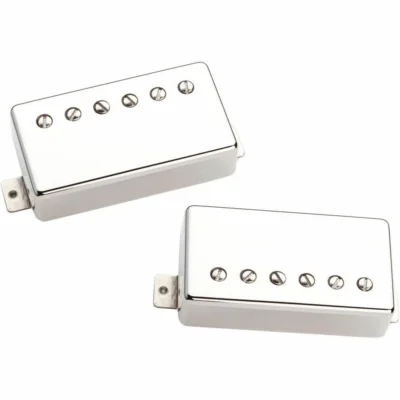 SKU: 11108-49-NC
Seymour Duncan Pearly Gates Humbucker Pickup Set – Nickel Bridge/Neck set
Original price was: $749.00.$675.00Current price is: $675.00.Out of stock -
17% OFF
RRP $299.00
Save $50.00
Sale!
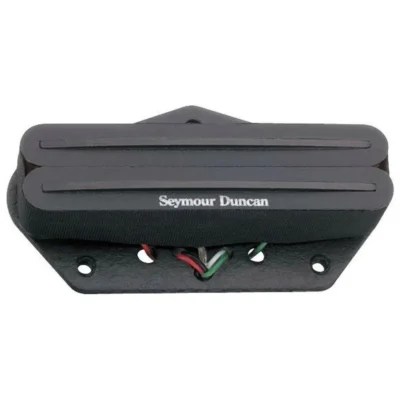 SKU: 11205-03
Seymour Duncan STHR-1b Hot Rails Lead for Tele Guitar Bridge Pickup Black
Original price was: $299.00.$249.00Current price is: $249.00.In Stock -
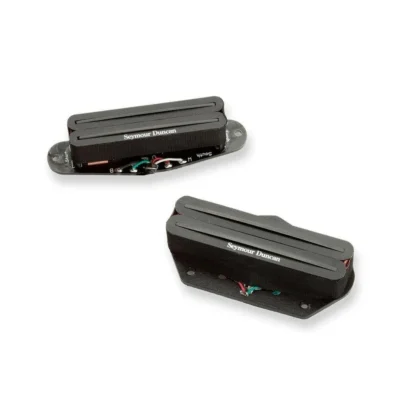 SKU: 11208-03
Seymour Duncan STHR-1 Hot Rails Tele Guitar Pickup Set – Black
$569.00In Stock -
 SKU: 11103-13-B
Seymour Duncan TB-4 JB Model Trembucker Bridge Humbucker Black Pickup 11103-13-B
$269.00In Stock -
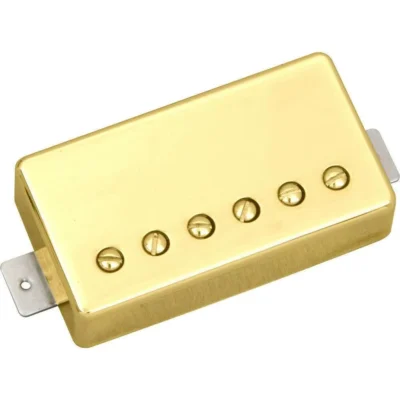 SKU: 11102-01-Gc
Seymour Duncan SH-2n Jazz Neck Model Humbucker Guitar Pickup Gold
$359.00In Stock