
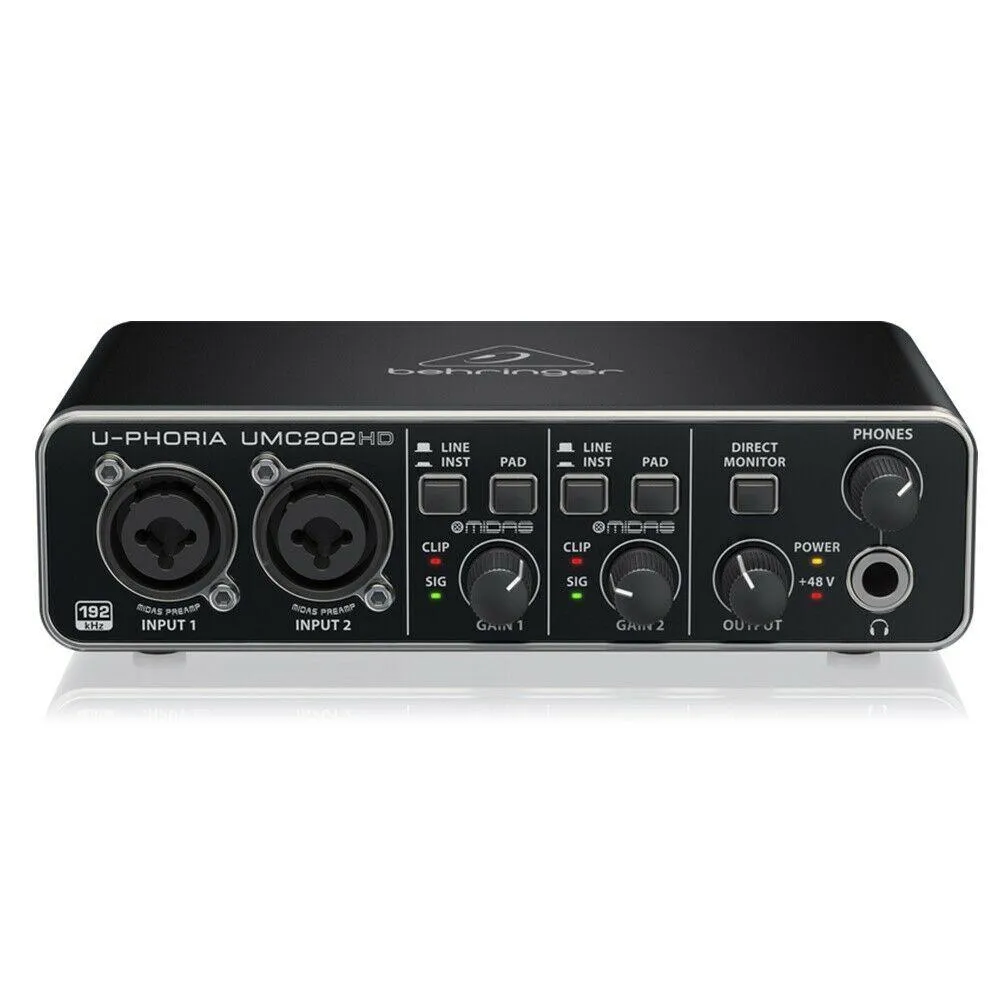
Behringer U-Phoria UMC202HD USB Audio Interface 24-bit/192kHz, 2-channel USB
★★★★★ 4.9 Stars — Over 1,500 Google Reviews
$185.00
FAST
Delivery
EASY
Returns
IN HOUSE
Repairs



Check AU Shipping Cost
Pick-up from store - FREE
Free pickup from our Melbourne Store at 4 Drake Boulevard, Altona VIC 3018. Your order will typically be ready by the next business day. We recommend calling us on (03) 8360 7799 beforehand to check it's ready for collection.
International Shipping
Please proceed to checkout to see international rates and avalability.
Behringer U-Phoria UMC202HD USB 2.0 Audio Interface
The Behringer U-Phoria UMC202HD is a 2-channel USB audio interface that brings genuine MIDAS microphone preamplifier technology to home recording at an accessible price. With two combo XLR/TRS inputs, 24-bit/192kHz resolution, +48V phantom power, zero-latency direct monitoring and compatibility with Mac, Windows and iPad, the UMC202HD is the complete home recording starting point for singer-songwriters, guitarists, podcasters and anyone building their first recording setup. Includes Tracktion DAW and 150 downloadable instrument and effects plug-ins.
Angkor Music — The UMC202HD as a First Interface
The most common question we answer about home recording is where to start. For most singer-songwriters and home recording beginners the answer is a two-channel interface — enough inputs to record a microphone and a guitar or two microphones simultaneously, with preamp quality good enough that the interface is not the limiting factor in the recording. The UMC202HD delivers genuine MIDAS preamp technology at a price that makes it accessible as a first purchase. If you are setting up your first home recording space or recording setup, this interface gives you a solid foundation to build on.
MIDAS Preamps — Why They Matter at This Price Point
MIDAS is a British professional audio company with a decades-long reputation for producing some of the world's finest live sound consoles — their mixing desks are found at the front-of-house positions of major concert tours and in the world's largest venues. The quality of a MIDAS preamp is a well-established benchmark in professional audio.
Behringer's parent company Music Tribe acquired MIDAS, and the UMC202HD benefits directly from that relationship — the preamp circuitry in this interface is based on genuine MIDAS technology. For a home recording interface at this price point, that is an extraordinary specification. The practical result is clean, quiet, detailed microphone preamplification with plenty of headroom — the characteristic that makes a good preamp immediately apparent when recording vocals, acoustic instruments or anything where the natural character of the sound needs to come through clearly.
Both inputs include +48V phantom power — required for condenser microphones, which are the standard choice for studio vocal and acoustic instrument recording. Switchable input pads accommodate hot signals from line-level sources without clipping.
24-bit/192kHz Resolution — What It Means in Practice
The UMC202HD records at up to 24-bit/192kHz resolution — exceeding the CD standard (16-bit/44.1kHz) and matching the specification of professional studio recording. The practical benefits:
- 24-bit depth: Greater dynamic range — the difference between the quietest and loudest sounds the interface can capture accurately. More headroom for recording, less noise floor, more natural sounding results especially in the quiet passages of a recording.
- 192kHz sample rate: Captures audio at more than four times the CD rate — important for professional work and for recording instruments with significant high-frequency content. Most home recording is done at 44.1kHz or 48kHz, but the ability to record at higher rates gives the UMC202HD more capability than the typical home studio will ever need to use.
Zero-Latency Direct Monitoring
Latency — the delay between making a sound and hearing it back through headphones or monitors while recording — is one of the most practically disruptive problems in computer-based recording. If you cannot hear yourself with a low enough delay, your performance suffers — it is difficult to sing or play in time when your monitoring is even slightly behind your performance.
The UMC202HD's Direct Monitor function routes the input signal directly to the headphone output without passing through the computer — bypassing the latency of the USB connection and the audio software entirely. The result is truly zero-latency monitoring — you hear exactly what you are recording with no delay at all. The mix control balances the direct monitoring signal against the playback from the computer, allowing you to monitor your live input while hearing the backing tracks from your DAW simultaneously.
Connectivity — Two Inputs, Multiple Output Options
The UMC202HD provides the connections that cover the majority of home recording scenarios:
- 2 x XLR/TRS Combo inputs: Each input accepts an XLR microphone connection or a 1/4-inch TRS instrument or line-level connection in the same socket. Connect a microphone in one input and a guitar or bass directly in the other — or two microphones simultaneously for acoustic performances, podcasting with two hosts or recording an instrument with multiple microphones.
- 2 x 1/4-inch outputs: For connection to studio monitors or a stereo amplifier.
- 1 x Headphone output with level control: For direct monitoring and playback.
- USB 2.0: Connects to Mac and Windows computers. Also compatible with iPad — see iPad section below.
iPad Compatibility
The UMC202HD is compatible with iPad — the interface is recognised as a standard external sound card by iOS and works with any iOS audio recording app. Popular compatible apps include:
- GarageBand for iOS: Free, user-friendly and comes with built-in multi-track recording — an excellent starting point for iOS recording.
- Logic Pro for iPad: Apple's professional DAW suite — subscription-based, the iPad version of the industry-standard Logic Pro.
- Cubasis 3: Steinberg's powerful mobile touch-optimised DAW — familiar to Logic and Cubase users.
- BandLab: Free cloud-based social recording app — useful for quick recording and collaboration.
iPad Phantom Power Note: When using the UMC202HD with an iPad, phantom power (+48V for condenser microphones) may not function correctly without a powered USB hub — the iPad may not supply enough bus power to run the interface at full specification with phantom power active. Dynamic microphones and instruments do not require phantom power and will work without issue. If you need to use a condenser microphone with the UMC202HD on iPad, a powered USB hub is recommended. Contact us if you have questions about your specific setup.
Included Software — Tracktion DAW and 150 Plug-ins
The UMC202HD includes Tracktion DAW — a full-featured digital audio workstation for recording, editing, mixing and producing music on Mac or Windows. For a first-time home recording setup, having a capable DAW included removes one of the major initial decisions and costs from getting started. The included 150 downloadable instrument and effects plug-ins provide a complete toolkit for music production without requiring additional software purchases.
Who Is the UMC202HD For?
- Singer-songwriters: Record vocals and acoustic guitar simultaneously, or a microphone and a DI'd electric guitar.
- Guitarists and bassists: Connect directly to the interface via the instrument input for recording without a microphone.
- Podcasters: Two microphone inputs allow two-host podcasting in one recording session.
- First-time home recorders: A complete starting point — interface, preamps, phantom power, monitoring and software all in one package.
- Bedroom producers: A reliable, clean interface for production work in any genre.
Specifications
| SKU | UMC202HD |
| Brand | Behringer |
| Model | U-Phoria UMC202HD |
| Computer Connectivity | USB 2.0 |
| Compatibility | Mac, Windows, iPad |
| Form Factor | Desktop |
| Simultaneous I/O | 2 x 2 |
| Preamps | 2 x MIDAS-designed Microphone Preamps |
| Phantom Power | +48V (powered USB hub may be required for iPad use) |
| Resolution | 24-bit / 192kHz |
| Analog Inputs | 2 x XLR/TRS Combo |
| Analog Outputs | 2 x 1/4" (Monitor), 1 x 1/4" (Headphone) |
| Direct Monitoring | Yes — Zero Latency |
| Input Pad | Switchable |
| Included Software | Tracktion DAW + 150 downloadable instrument and effects plug-ins |
| Manufacturer Part Number | UMC202HD |
Expert Advice at Angkor Music
At Angkor Music Melbourne we work regularly with musicians setting up their first home recording space. If you have questions about the UMC202HD — which microphone to pair it with, which studio monitors suit your budget, or whether it is the right interface for your specific recording goals — our team is happy to advise.
★★★★★
4.9 Stars — Read Our 1,600+ Google Reviews →
Frequently Asked Questions
What is a MIDAS preamp and why does it matter for home recording?
MIDAS is a British professional audio company known for producing some of the world's finest live sound mixing consoles — used at major concert tours and large venues worldwide. The MIDAS preamp characteristic is clean, quiet and detailed with substantial headroom — professional attributes that make a genuine difference when recording vocals and acoustic instruments. The UMC202HD uses preamp circuitry based on genuine MIDAS technology, which is an extraordinary specification for an interface at this price point.
Does the UMC202HD work with an iPad?
Yes — the UMC202HD is recognised as a standard external sound card by iOS and works with any iOS audio recording app including GarageBand, Logic Pro for iPad, Cubasis 3 and BandLab. Note that phantom power for condenser microphones may not function correctly on iPad without a powered USB hub, as the iPad may not supply sufficient bus power. Dynamic microphones and instruments work without issue.
Can I record guitar directly into the UMC202HD without a microphone?
Yes. The combo inputs accept a standard 1/4-inch instrument cable — plug a guitar or bass directly into either input and the instrument-level signal is captured cleanly by the MIDAS preamp. Many home recording setups use a combination of direct guitar recording and amp simulation plug-ins in the DAW for a complete recorded guitar tone without needing to microphone an amplifier.
What is zero-latency direct monitoring?
Direct monitoring routes your input signal directly to the headphone output without passing through the computer — bypassing the USB connection and audio software entirely. The result is no detectable delay between your performance and what you hear in your headphones. This is important for recording vocals and instruments where even a small monitoring delay makes performance difficult. The UMC202HD's mix control balances the direct input signal against the playback from your DAW so you can hear both simultaneously.
Do I need to buy a DAW separately?
No — the UMC202HD includes Tracktion DAW for Mac and Windows, which is a capable full-featured recording application. 150 downloadable instrument and effects plug-ins are also included. For a first recording setup this is sufficient to start recording and producing music immediately without additional software cost. As your needs develop you can explore other DAW options — the interface works with any major DAW including Logic Pro, Ableton Live, Pro Tools, GarageBand, Cubase and Reaper.
What microphone should I use with the UMC202HD?
The UMC202HD suits both dynamic and condenser microphones. For vocal recording in a home environment a large-diaphragm condenser microphone is the standard recommendation — the +48V phantom power required by condenser microphones is built into the UMC202HD. For recording in a louder environment or for podcasting a dynamic microphone is a practical alternative. Contact us and our team can recommend a microphone to suit your recording goals and budget.
Additional information
| Weight | 0.0000 kg |
|---|---|
| type | Audio Interface |
Related Items & Accessories
Related products
-
25% OFF
RRP $1,799.00
Save $450.00
Sale!
 SKU: RME-BABTFACEPROFS
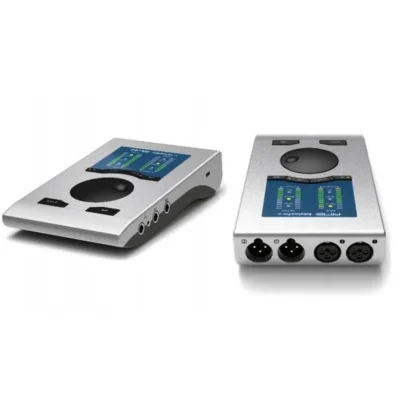
RME Babyface Pro FS 24-channel USB Audio Interface 12-in/12-out Bus-powered
Original price was: $1,799.00.$1,349.00Current price is: $1,349.00.Out of stock -
11% OFF
RRP $189.00
Save $20.00
Sale!
 SKU: MDB-1P
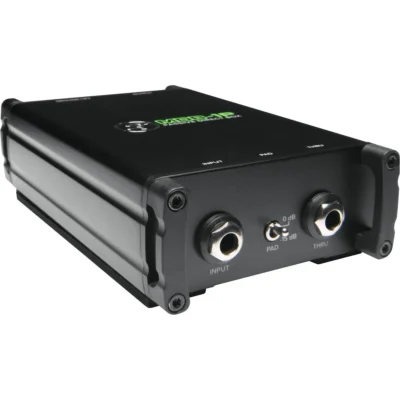
Mackie MDB-1P 1-Channel Passive Direct Box
Original price was: $189.00.$169.00Current price is: $169.00.Out of stock -
60% OFF
RRP $499.00
Save $300.00
Sale!
 SKU: ONYX-PROD-2-2
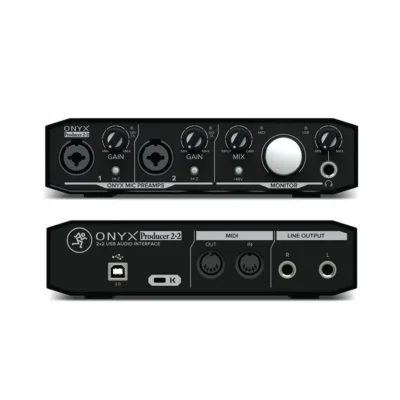
Mackie Onyx Producer 2-2 USB Audio Interface 2-in-2-out USB 2.0 ONYX-PROD-2-2
Original price was: $499.00.$199.00Current price is: $199.00.Out of stock -
34% OFF
RRP $249.00
Save $85.72
Sale!
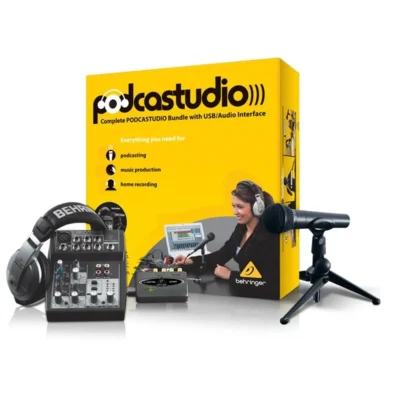 SKU: BEPODCASTUSB
Behringer Podcast Studio USB Studio / Recording Pack with Interface and Mixer
Original price was: $249.00.$163.28Current price is: $163.28.Out of stock -
39% OFF
RRP $295.00
Save $115.73
Sale!
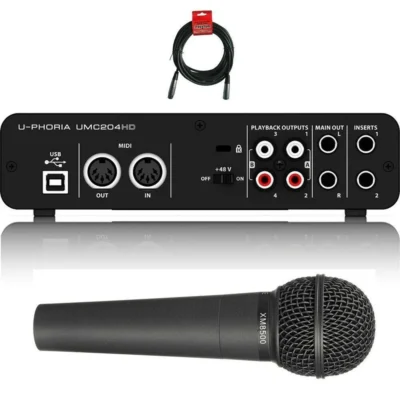 SKU: BEH-UMC204HD-XM8500
Behringer U-PHORIA UMC204HD USB 2.0 Audio Recording Interface + XM8500 Mic & xlr
Original price was: $295.00.$179.27Current price is: $179.27.Out of stock