
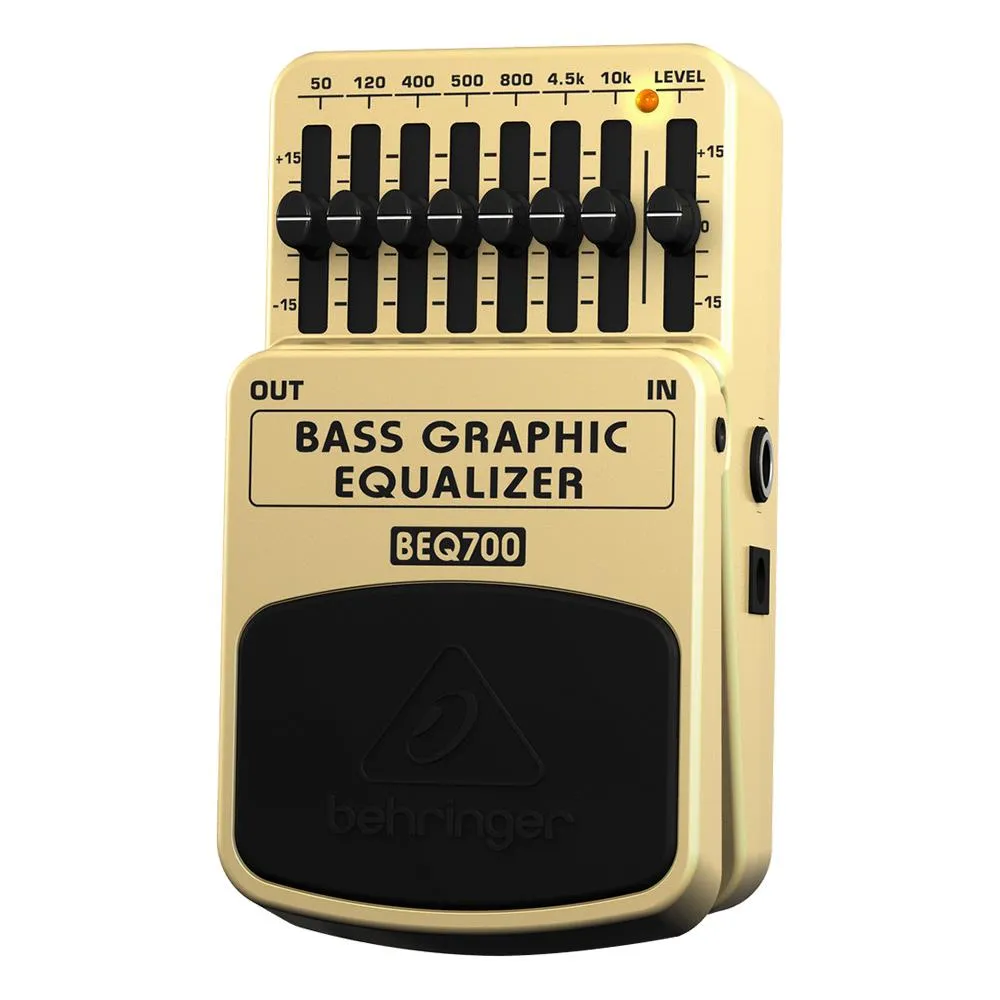
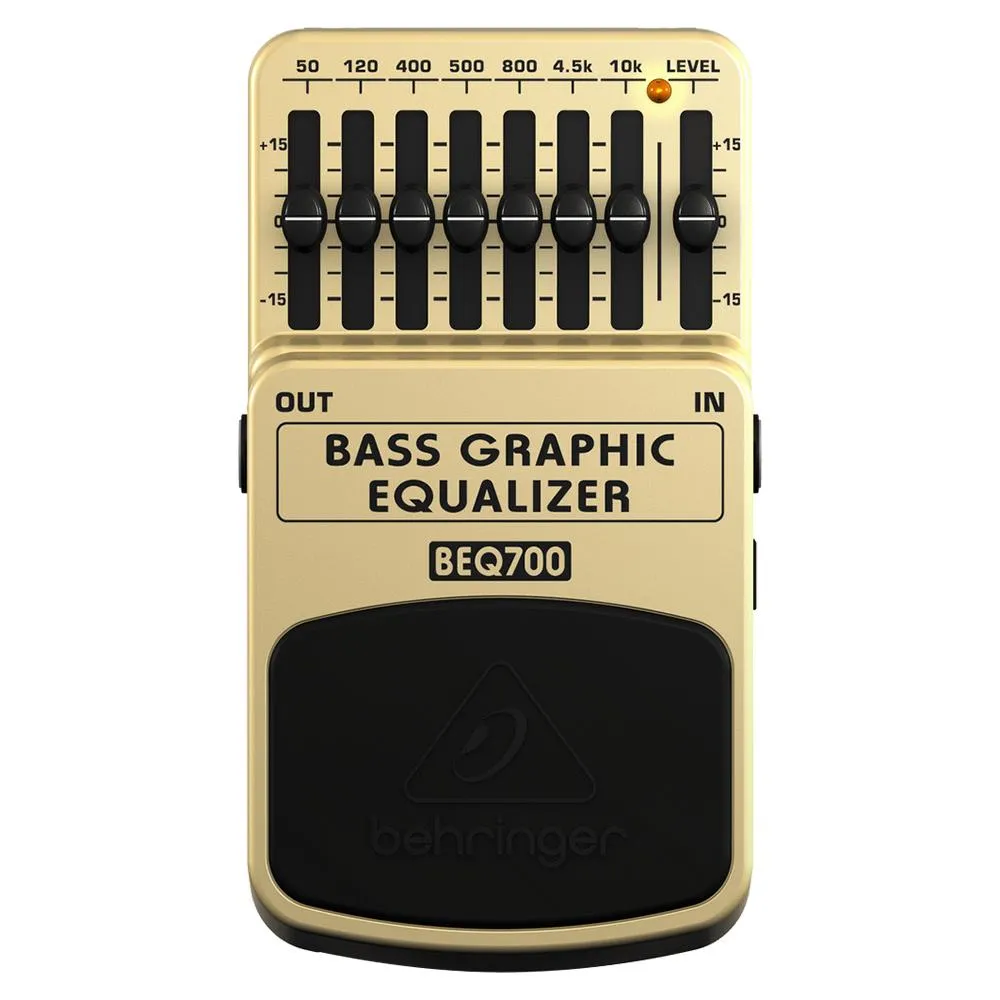
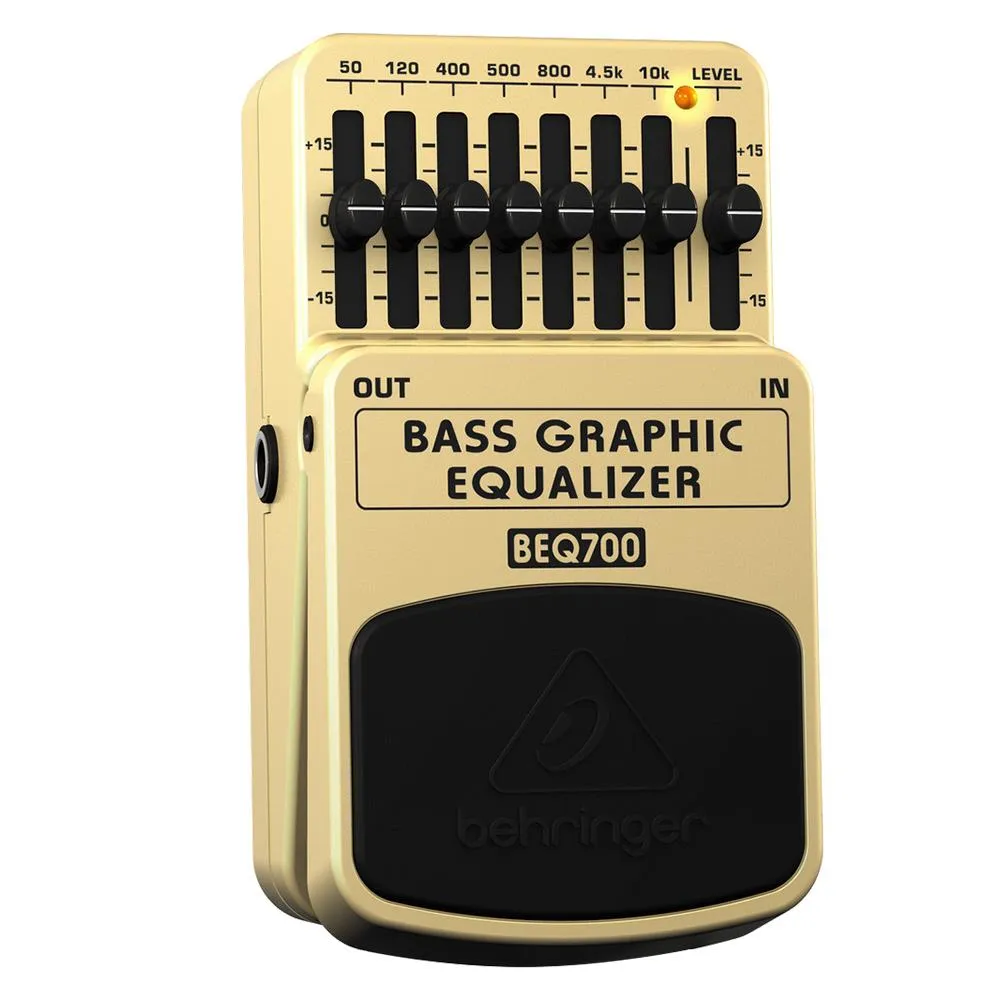
Behringer Ultimate 7-Band Wide-Frequency BEQ700 Bass Graphic Equializer
★★★★★ 4.9 Stars — Over 1,500 Google Reviews
Original price was: $69.00.$55.00Current price is: $55.00.
FAST
Delivery
EASY
Returns
IN HOUSE
Repairs



Check AU Shipping Cost
Pick-up from store - FREE
Free pickup from our Melbourne Store at 4 Drake Boulevard, Altona VIC 3018. Your order will typically be ready by the next business day. We recommend calling us on (03) 8360 7799 beforehand to check it's ready for collection.
International Shipping
Please proceed to checkout to see international rates and avalability.
Behringer BEQ700 Bass Graphic Equalizer — 7-Band EQ Pedal
The Behringer BEQ700 is a 7-band graphic equalizer pedal designed specifically for bass guitar. It covers a frequency range from 50 Hz to 10 kHz with ±15 dB of boost or cut available at each band — enough range to dramatically reshape tone, surgically remove problem frequencies, or compensate for the acoustic characteristics of a room or venue. A graphic EQ pedal gives the bass player hands-on, visual control of their frequency response in a format that works on a pedalboard rather than requiring access to an amplifier's rear panel or a rack-mounted EQ unit. For players who gig across different rooms, different backline setups, or who want tone shaping control that travels with them rather than staying with a fixed amp, the BEQ700 is a practical and direct solution.
Angkor Music — Why Bass Players Use a Dedicated Graphic EQ Pedal
Many bass amplifiers offer EQ controls — bass, mid, treble, sometimes a sweepable mid — but the BEQ700 provides a fundamentally different kind of control. A graphic EQ shows you exactly where each fader sits in the frequency spectrum, and lets you boost or cut seven specific points simultaneously. This matters for bassists in a few key situations: when playing through backline you do not own and cannot fully trust, a graphic EQ in your signal chain restores your ability to set your own tone regardless of the amp's EQ character; when playing rooms with difficult acoustic properties — a muddy stage, a boomy small venue — specific bands can be pulled down to clean up problem frequencies rather than cutting broad strokes with a bass/mid/treble control; and when needing to switch between distinctly different sounds on the fly, the BEQ700 can be engaged and disengaged as a tone-change footswitch. At Angkor Music we stock EQ pedals, bass effects and bass accessories. Contact us if you want to discuss how to integrate an EQ into your bass signal chain.
7-Band Graphic EQ — What Each Band Controls
A graphic equalizer divides the audible frequency spectrum into a set of fixed frequency bands, each controlled by its own slider. The BEQ700's 7 bands span from 50 Hz to 10 kHz — a range chosen specifically for bass guitar's useful frequency content:
- 50 Hz region: The fundamental low end — the sub-bass weight and thump that gives bass its physical presence. Boosting here adds depth and floor-shaking low end; cutting it reduces boominess in rooms where the low end builds up excessively.
- 120–400 Hz region: The body and warmth of the bass tone. This range contains most of the fundamental notes across the bass guitar's range. Boost here for fullness; cut to reduce muddiness or clean up a mix where bass and kick drum are competing.
- 500–800 Hz region: The lower midrange — where bass punch and presence live. This is the range that determines whether the bass cuts through a mix or sits underneath it. Boosting adds attack and definition; cutting produces a more scooped, smooth character.
- 4.5–10 kHz region: The upper range — string noise, fret click, pick attack and harmonics. Boosting here adds brightness, bite and articulation; cutting smooths out an aggressive-sounding instrument or tames a harsh room.
The ±15 dB range at each band is substantial — enough for corrective work (removing a problematic room resonance at a specific frequency) and creative shaping (building a heavily scooped slap tone or a mid-forward fingerstyle sound) from the same unit.
Why a Bass-Specific EQ Matters
Guitar EQ pedals and bass EQ pedals cover different frequency ranges. A guitar EQ optimised for 6-string frequency content — which typically starts rolling off below 100 Hz and focusses its bands in the midrange and upper frequencies — does not serve a bass player well. The lowest audible string on a standard-tuned 4-string bass produces a fundamental of approximately 41 Hz; on a 5-string with a low B string that drops to approximately 31 Hz. The BEQ700's lowest band at 50 Hz sits in the heart of the bass guitar's working frequency range — it is present and relevant for bass in a way that a guitar EQ's lowest band often is not. The full span from 50 Hz to 10 kHz gives the bass player access to both the deep subterranean low end of the instrument and the high-frequency articulation details, in one unit designed for the purpose.
Feedback Elimination — Using EQ to Control Problem Frequencies
Feedback on bass guitar occurs when the amplified signal is picked up by the instrument and re-amplified in a loop, typically at a specific resonant frequency determined by the room, the stage, the amp placement and the instrument. The most effective tool for eliminating feedback is identifying the frequency at which it occurs and cutting that band. A graphic EQ with seven bands and ±15 dB range gives the bassist the ability to locate and cut a feedback frequency surgically — reducing or eliminating the problem without broadly thinning the tone the way a simple bass or treble cut would. The BEQ700's visual slider layout makes this intuitive: as soon as a problem frequency is identified, the corresponding fader is pulled down.
Pedalboard Integration — A Practical Tool That Travels With You
The BEQ700 is built in Behringer's compact stompbox format — it sits on a standard pedalboard, connects with standard patch cables and operates from a standard 9-volt power supply or battery. Its footswitch allows the EQ settings to be bypassed entirely when not needed, making it usable as a tone-change switch (engage it for a mid-boosted solo tone, disengage it for the standard clean bass tone) as well as a permanent signal-shaping tool. For players who gig frequently or move between different venues and backline setups, having tone control that lives on your pedalboard rather than an amp rack means your baseline sound travels with you.
Who Is the BEQ700 For?
- Bass players who gig regularly across different venues and need consistent tone control regardless of backline or room acoustics
- Players who use rental backline or shared amplifiers and want their own EQ in the signal chain
- Players experiencing feedback issues who need a targeted frequency-specific solution rather than broad EQ adjustment
- Players who want to build a scooped slap bass tone, a mid-forward fingerstyle sound or other specific frequency-shaped voices without adjusting the amplifier
- Bassists who want to compensate for the acoustic characteristics of a specific instrument — a bass that is too bright, too boomy or lacks midrange presence in a live mix
Specifications
| SKU | BEQ700 |
| Brand | Behringer |
| Model | BEQ700 Ultimate Bass Graphic Equalizer |
| EQ Bands | 7-band graphic EQ |
| Frequency Range | 50 Hz – 10 kHz |
| Boost/Cut Per Band | ±15 dB |
| Instrument | Bass Guitar |
| Format | Compact stompbox pedalboard format |
Expert Advice at Angkor Music
At Angkor Music Melbourne we stock bass effects, bass amplifiers and bass accessories. If you want to discuss how to position an EQ pedal in your signal chain, which bands to target for common bass tone problems, or how the BEQ700 compares to other EQ options in our range, our team can help.
★★★★★
4.9 Stars — Read Our 1,600+ Google Reviews →
Frequently Asked Questions
Where in my signal chain should I place the BEQ700?
The most common placement is between your bass and your amplifier — or between a preamp pedal and a power amp. Placed before the amp, the BEQ700 shapes the signal going into the amp's input, effectively setting your baseline tone before the amplifier's own EQ. Some players place it in an effects loop (between the amp's preamp and power amp sections) when the amplifier has one, which can produce a different result in how the EQ interacts with the amp's tone shaping. Either approach works — the right choice depends on your amp's design and how you use your signal chain. Contact us if you want to talk through the options.
Can I use the BEQ700 to boost the bass for a solo or specific song?
Yes. The BEQ700's footswitch allows it to be engaged and bypassed during performance. With the EQ set to a boosted midrange or overall volume-lift position, you can switch it on for a solo or a section that needs extra presence, then disengage it to return to your standard tone. This is one of the most practical uses of a graphic EQ pedal on a live pedalboard — it gives you a programmable tone change without requiring a channel switch on the amplifier.
Will the BEQ700 work with a 5-string or 6-string bass?
Yes, though the lowest band at 50 Hz is the relevant consideration. A 5-string bass with a low B string produces fundamentals down to approximately 31 Hz — below the BEQ700's lowest band. The 50 Hz band still affects the low B string's overtones and contributes to its perceived weight and presence. For players whose tone management on the low B is critical, a graphic EQ with a band at 30–40 Hz would provide more precise control of that string's fundamental. For most live playing purposes, the BEQ700's 50 Hz band is adequate for shaping the overall low-end character of a 5-string or 6-string instrument.
What is the difference between a graphic EQ and the tone controls on my amplifier?
Amplifier tone controls (bass, mid, treble) adjust broad, overlapping frequency ranges simultaneously — turning the bass knob affects a wide portion of the low-frequency range rather than a single precise band. A graphic EQ provides narrower, more precise control at specific points in the frequency spectrum: cutting or boosting at 50 Hz affects primarily 50 Hz and its immediate surroundings, without broadly altering the 120 Hz or 400 Hz regions. This precision is what makes a graphic EQ useful for feedback control (targeting one specific problem frequency) and for fine-grained tonal adjustment that a three-knob tone stack cannot achieve.
Can the BEQ700 be used with guitar as well as bass?
The BEQ700 is voiced for bass guitar — its lowest band starts at 50 Hz, which is relevant to bass but below the fundamental range of most electric guitar playing. It will work in a guitar signal chain, but the lowest bands will have limited practical effect for standard guitar use. For guitar EQ, a unit with bands centred in the midrange (around 200 Hz to 6 kHz) is more appropriate. The BEQ700's frequency range is specifically chosen for bass guitar's working range.
Additional information
| Weight | 0.33 kg |
|---|---|
| type | effects pedals |
Related Items & Accessories
Related products
-
10% OFF
RRP $208.26
Save $20.83
Sale!
 SKU: EBS-SC
EBS Stanley Clarke Signature Bass Wah-Wah, Tone Filter and Volume Pedal
Original price was: $208.26.$187.43Current price is: $187.43.Out of stock -
9% OFF
RRP $169.00
Save $15.00
Sale!
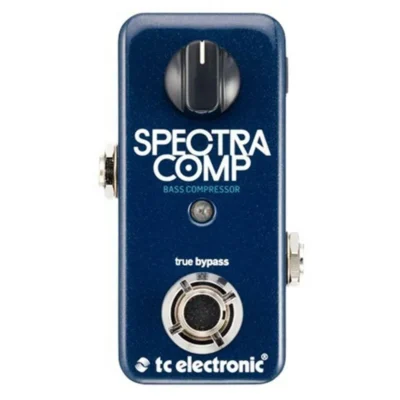 SKU: TCE-SPECTRA
TC Electronic SpectraComp Bass Compressor Pedal Effects Pedal Spectra Comp
Original price was: $169.00.$154.00Current price is: $154.00.Out of stock -
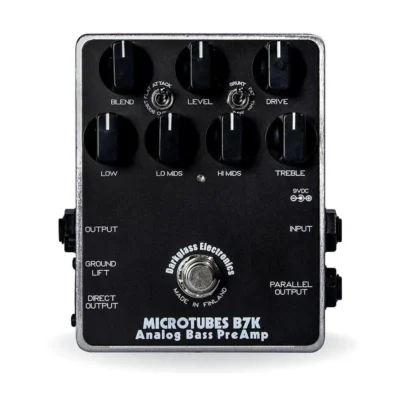 SKU: AGLR-TONE-HAMMER
Darkglass Microtubes B7K Guitar Effects Pedal Analog Bass Preamp
$462.80Out of stock -
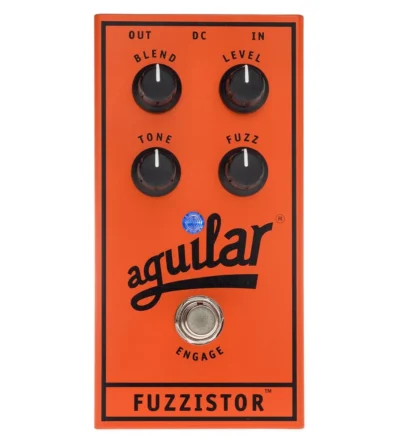 SKU: AGLR-FUZZISTOR
Aguilar FUZZISTOR Bass Fuzz Bass Guitar Effects Pedal
$273.05Out of stock -
6% OFF
RRP $249.00
Save $14.00
Sale!
 SKU: NRS1
ULBRICK NRS Model 1 Noise Reduction System 5.5k – 6.5k
Original price was: $249.00.$235.00Current price is: $235.00.Out of stock