
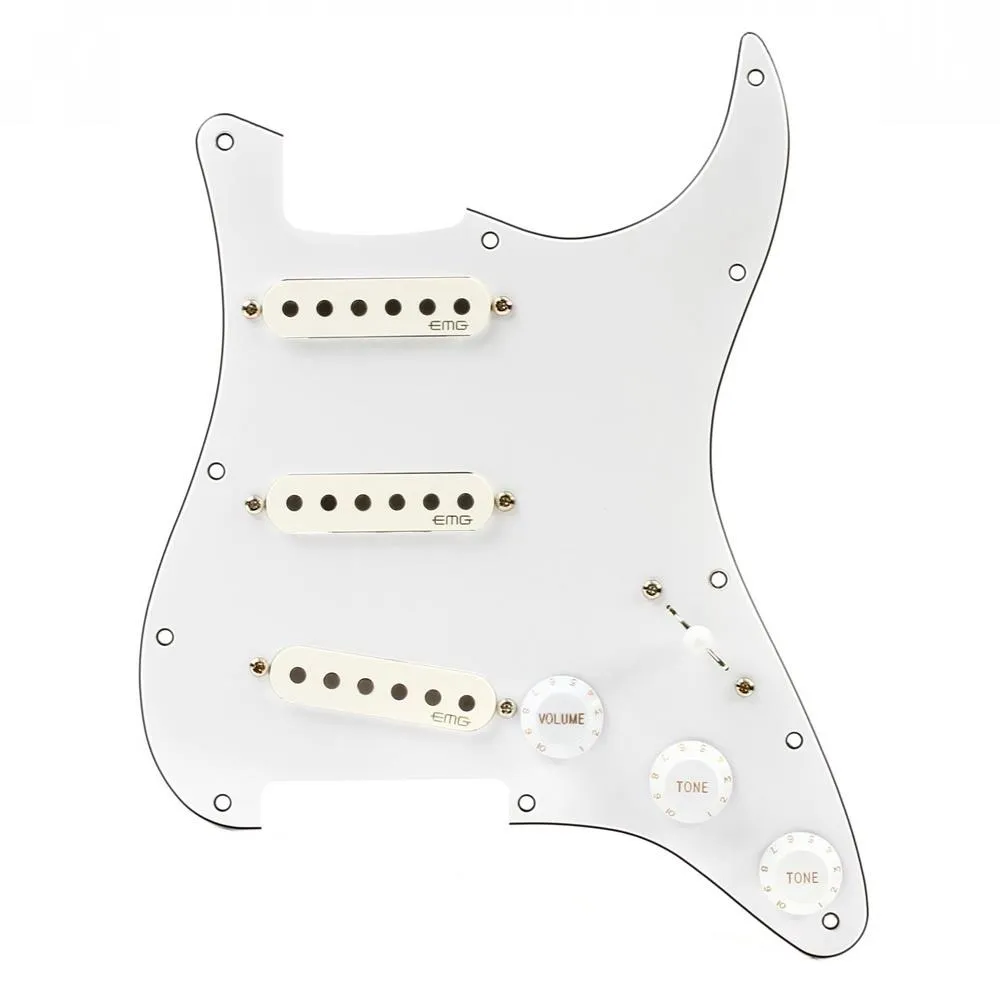
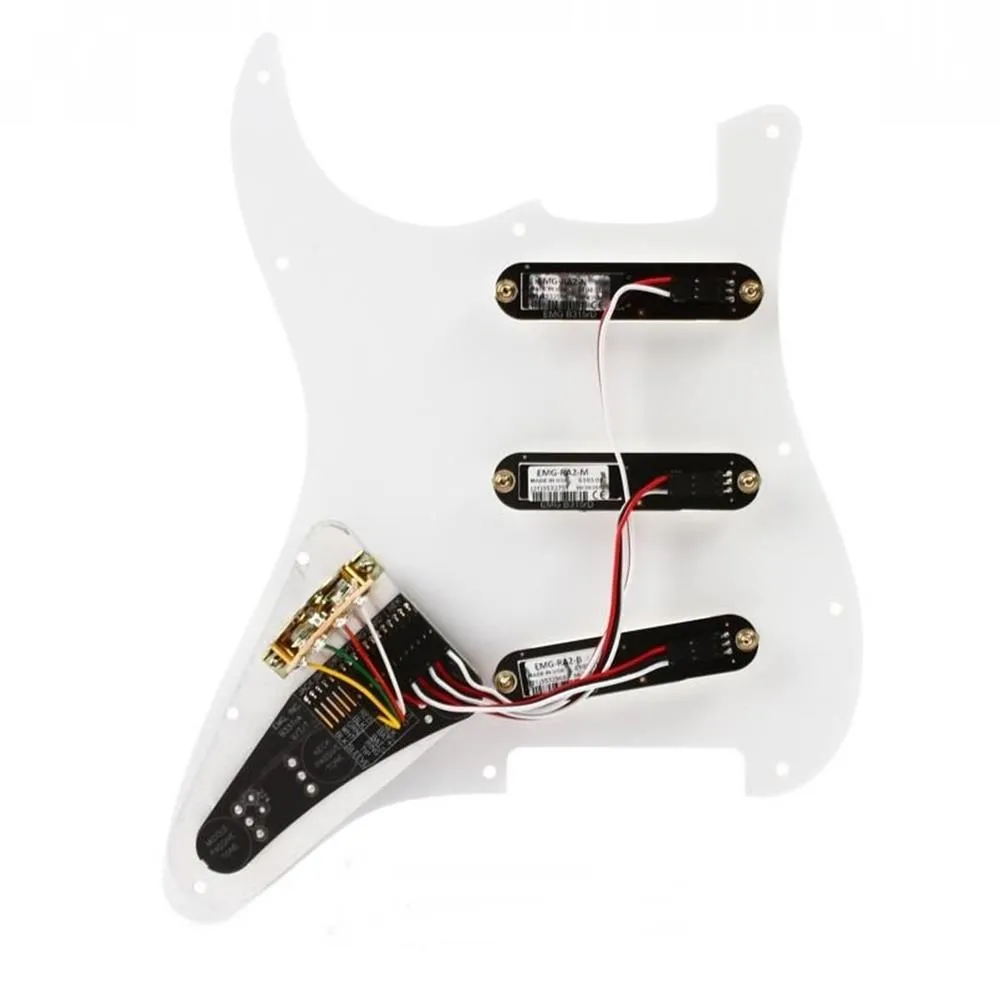
EMG RA-5 Pro Retro Active Strat Style Pre-wired Pickguard S/S/S – White
★★★★★ 4.9 Stars — Over 1,500 Google Reviews
Original price was: $559.00.$489.00Current price is: $489.00.
FAST
Delivery
EASY
Returns
IN HOUSE
Repairs



Pick-up from store - FREE
Free pickup from our Melbourne Store at 4 Drake Boulevard, Altona VIC 3018. Your order will typically be ready by the next business day. We recommend calling us on (03) 8360 7799 beforehand to check it's ready for collection.
International Shipping
Please proceed to checkout to see international rates and avalability.
EMG RA-5 Pro Retro Active Pre-Wired Stratocaster Pickguard — White (S/S/S)
The EMG RA-5 Pro Retro Active (SKU: EMGRA5) is a complete pre-wired Stratocaster pickguard loaded with three Maverick Five active single-coil pickups in S/S/S configuration — voiced for the classic surf tones of Dick Dale, The Chantays and The Surfians, without the 60-cycle hum that makes passive single-coil pickups problematic in reverb-heavy contexts. Alnico V magnets, an active onboard preamp, 3kΩ DCR coils, and EMG's solderless quick-connect installation system are all included. The pickguard is white. This is not a passive pickup set disguised as active — it is EMG's Retro Active design philosophy applied to surf: active technology engineered to produce vintage tonal character, not modern high-output character.
Angkor Music — What "Retro Active" Actually Means
Most players associate EMG with the high-output active humbuckers used in metal — the 81 and 85 that define the sound of James Hetfield and Zakk Wylde. The Retro Active series is a different design philosophy: active pickups engineered to produce vintage, passive-sounding tone, not high-output modern tone. The RA-5 uses active electronics to eliminate hum while using Alnico V magnets and surf-specific voicing to produce a bright, clean, articulate tone that references the classic single-coil Stratocaster character. The active preamp is the delivery mechanism, not the tonal identity. At Angkor Music we stock EMG pickups and can advise on whether the RA-5 or another EMG model suits your guitar and playing style.
Surf Tone — The Musical Context
Surf music emerged in California in the early 1960s as an instrumental genre built around a specific guitar sound: a Fender Stratocaster played clean and bright, drenched in spring reverb, often played with aggressive tremolo picking and palm muting at the bridge. The defining figure was Dick Dale — the "King of the Surf Guitar" — who played a Stratocaster through a Fender Showman amplifier with outboard reverb, developing a style that was physically intense, melodically simple and sonically distinctive. The Chantays' "Pipeline" (1963) and the Surfaris' "Wipe Out" (1963) are canonical examples of the genre's tonal character.
The Stratocaster was central to surf tone for specific reasons: its three single-coil pickups produced the bright, clear, slightly glassy top end that reverb processes most effectively; its bridge pickup in particular had the attack and articulation that made tremolo picking patterns intelligible at high reverb levels; and its output level was low enough that a valve amplifier could be pushed toward the edge of breakup without losing the clean attack that defined the style.
The problem with single-coil pickups in reverb-heavy contexts is electromagnetic interference. 60-cycle hum — caused by single-coil pickups picking up electrical interference from mains wiring, lighting and other sources — is amplified alongside the signal and made more audible by reverb. In a live environment with stage lighting and other electrical equipment, single-coil hum can be significant. Active pickups eliminate this problem by design. The EMG RA-5 delivers the tonal character associated with the original Stratocaster surf sound without the hum that made that sound difficult to reproduce reliably in live contexts.
Retro Active — How Active Pickups Produce Vintage Tone
Standard passive pickups generate signal through electromagnetic induction: a coil of wire wound around a magnetic core produces voltage as the string vibrates in the magnetic field. The coil's output is relatively high-impedance and susceptible to capacitive loading from cable length and pickup switching. This is why passive pickups sound different through different cables, volume controls and amplifier input impedances.
EMG's active pickups add a low-impedance onboard preamplifier inside the pickup housing — a small circuit powered by a 9V battery that buffers the pickup's signal before it reaches the cable. The preamp isolates the coil from the downstream impedance variables, which means the pickup sounds consistent regardless of cable length or volume control position. More importantly for the Retro Active design: the preamp allows the coil itself to be wound fewer times than a passive pickup (hence the 3kΩ DCR, which would indicate very low output in a passive pickup) while still delivering usable output, because the preamp makes up the difference. Fewer windings means less high-frequency roll-off and less noise — the coil is more sensitive and less capacitively loaded by its own inductance.
The Retro Active voicing takes this design and uses Alnico V magnets with a specific EQ profile and frequency response to produce the tonal character of a vintage single-coil, but delivered through the low-noise, consistent-impedance active signal path. The result is a pickup that sounds like a bright, vintage Strat but does not behave like one in terms of noise, cable sensitivity or impedance loading.
3kΩ DCR — Why This Number Is Not What It Appears
When assessing passive pickups, DC resistance (DCR) is a rough proxy for output level — more windings = higher DCR = higher output. A passive single-coil at 3kΩ would be very low output. The RA-5's 3kΩ DCR is not a low-output passive reading: it is the coil resistance before the onboard preamp. The preamp's output level is not reflected in the DCR figure. Active pickup DCR numbers are not comparable to passive pickup DCR numbers and should not be used to assess output level. The RA-5's output is governed by the preamp circuit, not the coil resistance.
Solderless Installation — What This Means in Practice
EMG's solderless quick-connect system replaces the solder joints in a standard pickup installation with pre-terminated connectors that plug directly into a wiring harness. The RA-5 Pro arrives as a complete pre-wired pickguard: the three pickups are already installed and wired to the controls; the installer connects the output jack and battery connector using the included quick-connect cables, drops the pickguard into the Stratocaster body, and the installation is complete.
No soldering is required for a standard installation. This makes the RA-5 accessible to players who do not have soldering skills or equipment, and reduces installation time significantly compared to a conventional pickup replacement. The trade-off is that any modification to the wiring harness — a different capacitor value, non-standard switching, a blend pot — requires working within the EMG quick-connect system or converting to conventional solder wiring.
The pickguard is configured for a standard Stratocaster with three pickups and five-way switching. It is designed to drop into a standard Stratocaster routing; confirm your guitar's pickguard screw pattern and control cavity routing match the standard Stratocaster specification before purchase.
Who Is the EMG RA-5 For?
- Players who want classic surf and clean single-coil Stratocaster tone without 60-cycle hum in reverb-heavy live or recording contexts
- Guitarists upgrading a Stratocaster for stage use where electrical interference from lighting rigs, PA systems or monitor speakers causes pickup noise problems
- Players who want a complete drop-in pickguard replacement rather than individual pickup installation — the solderless system makes this a straightforward fit for players without soldering experience
- Surf, indie, clean-tone and ambient players who need the tonal character of a bright, Alnico V single-coil delivered through an active, low-noise signal path
- Players who already use active pickups elsewhere in their setup and want a consistent active impedance for their pedalboard and amplifier input
Specifications
| SKU | EMGRA5 |
| Brand | EMG |
| Model | RA-5 Pro Retro Active |
| Configuration | S/S/S — pre-wired Stratocaster pickguard |
| Pickup type | Maverick Five — active single-coil |
| Active / Passive | Active (9V battery required) |
| Magnet | Alnico V |
| DC Resistance | 3kΩ (coil resistance — not indicative of output level; active preamp governs output) |
| Conductors | 2 wire plus battery |
| Covering | Covered |
| Colour | White |
| String count | 6-string |
| Instrument | Stratocaster (standard routing) |
| Installation | EMG solderless quick-connect system — no soldering required |
| Manufacturer Part Number | 6073.00 |
Expert Advice at Angkor Music
At Angkor Music Melbourne we stock EMG pickups across the active and Retro Active ranges. If you want advice on whether the RA-5 suits your Stratocaster's routing, how active pickups interact with your existing effects chain, or which EMG model is the right starting point for your playing style, our team can help.
★★★★★
4.9 Stars — Read Our 1,600+ Google Reviews →
Frequently Asked Questions
What does "Retro Active" mean — is this the same as EMG's standard active pickups?
No. EMG's standard active pickups — the 81, 85 and related models — are voiced for high output, tight low-end and modern high-gain character. The Retro Active series is a separate design philosophy: active electronics used to deliver vintage tonal character. The RA-5 uses the same active preamp technology to eliminate hum and maintain consistent impedance, but it is voiced to produce the bright, clean, articulate sound of a vintage Alnico V single-coil Stratocaster pickup rather than the compressed, high-output character of a metal-oriented active humbucker. The technology is the same; the voicing goal is completely different.
Does the RA-5 require a battery? Where does it fit in a Stratocaster?
Yes — active pickups require a 9V battery to power the onboard preamp. The RA-5 Pro includes a battery connector as part of its wiring harness. A standard Stratocaster body does not have a dedicated battery compartment; the battery is typically housed in the control cavity. EMG's solderless system includes a battery clip that mounts inside the cavity. Some players route a separate battery compartment in the body back for easier access, but this requires a luthier's modification. Confirm your control cavity has adequate space for the battery before installation.
Will the RA-5 pickguard fit my Stratocaster?
The RA-5 is designed for a standard Stratocaster body with standard pickguard screw positions and S/S/S pickup routing. Most Stratocaster-format guitars from Fender and other manufacturers follow this standard. The points to check are: the number and position of pickguard screws (standard Strat uses 11 screws), the pickup routing depth and width for single-coil pickups, and the control cavity depth for the battery. Non-standard bodies — those with humbucker-sized bridge routing, different screw patterns or modified cavities — may require adjustment. Contact us if you're unsure whether your guitar is standard-spec.
Can I use the RA-5 with passive pedals and a passive volume pot chain?
Active pickups present a low output impedance to the guitar's electronics. This means they are less affected by cable length and passive volume control loading than passive pickups — but it also means some passive devices designed for high-impedance passive pickups (certain vintage-style pedals, wah circuits, passive blenders) may interact differently with active pickups than they do with passive ones. In practice, the RA-5 will work with the majority of standard pedals and amplifier inputs without issue. The key exception is that vintage fuzz circuits designed to see the guitar's pickup impedance directly (rather than through a buffer) may not respond the same way to an active pickup's buffered low-impedance output.
How does the RA-5 compare to a noiseless passive Stratocaster pickup like the Fender Noiseless range?
Both the RA-5 and noiseless passive pickups (Fender Noiseless, Kinman, DiMarzio Area series and similar) aim to eliminate single-coil hum while preserving the tonal character of a standard single-coil. They achieve this through different means. Noiseless passive pickups typically use a stacked coil design — two coils wound in opposite directions stacked vertically — which cancels hum without requiring a battery. Active pickups like the RA-5 use a genuine single-coil winding with an onboard preamp that maintains a low noise floor through its electronics rather than its coil geometry. The tonal differences are real but subtle: many players find active Retro Active pickups feel more open and dynamic than stacked passives, while stacked passives avoid the battery requirement entirely. Both are valid solutions to the same problem.
Additional information
| Weight | 1.50 kg |
|---|---|
| type | Humbucker |
| To Fit Guitar | Electric Guitar |
| Active/passive | Active |
Related Items & Accessories
Related products
-
36% OFF
RRP $4,199.00
Save $1,500.00
Sale!
 SKU: 036745
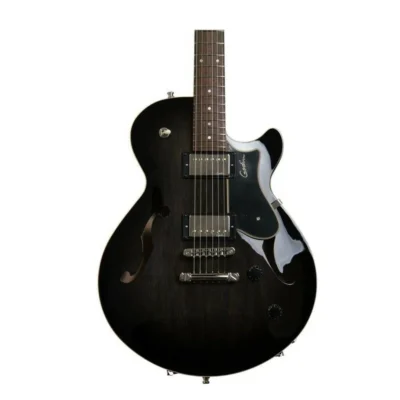
GODIN Montreal Premiere HG – Trans Black Semi Hollow Electric Guitar
Original price was: $4,199.00.$2,699.00Current price is: $2,699.00.In Stock -
17% OFF
RRP $359.00
Save $60.00
Sale!
 SKU: 11102-21-Gc
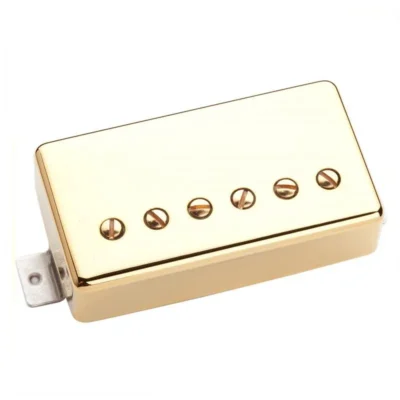
Seymour Duncan SH-6b Distortion Humbucker Gold Cover Bridge Pickup 11102-21-GC
Original price was: $359.00.$299.00Current price is: $299.00.In Stock -
10% OFF
RRP $749.00
Save $74.00
 SKU: 11108-49-NC
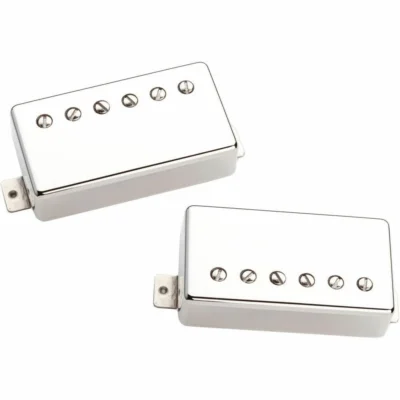
Seymour Duncan Pearly Gates Humbucker Pickup Set – Nickel Bridge/Neck set
Original price was: $749.00.$675.00Current price is: $675.00.Out of stock -
56% OFF
RRP $7,999.00
Save $4,500.00
Sale!
 SKU: 04135
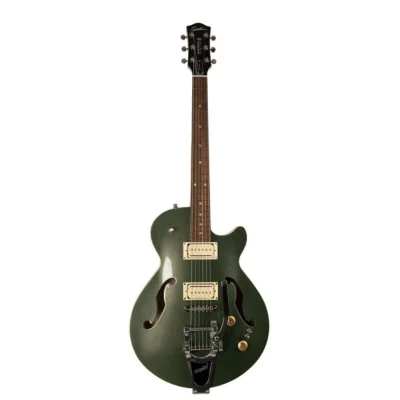
Godin Montreal Premiere Limited Desert Green w/Bigsby Archtop Electric Guitar
Original price was: $7,999.00.$3,499.00Current price is: $3,499.00.Out of stock -
16% OFF
RRP $269.00
Save $44.00
Sale!
 SKU: 11205-02-W
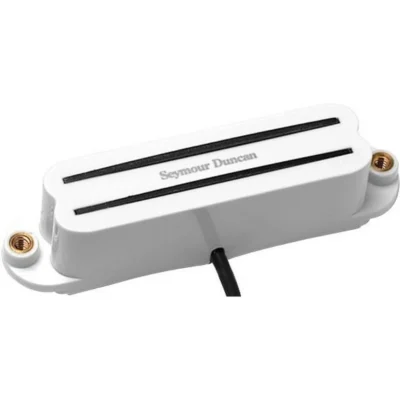
Seymour Duncan SHR-1b Bridge Hot Rails for Strat Guitar Pickup White 11205-02-W
Original price was: $269.00.$225.00Current price is: $225.00.In Stock