
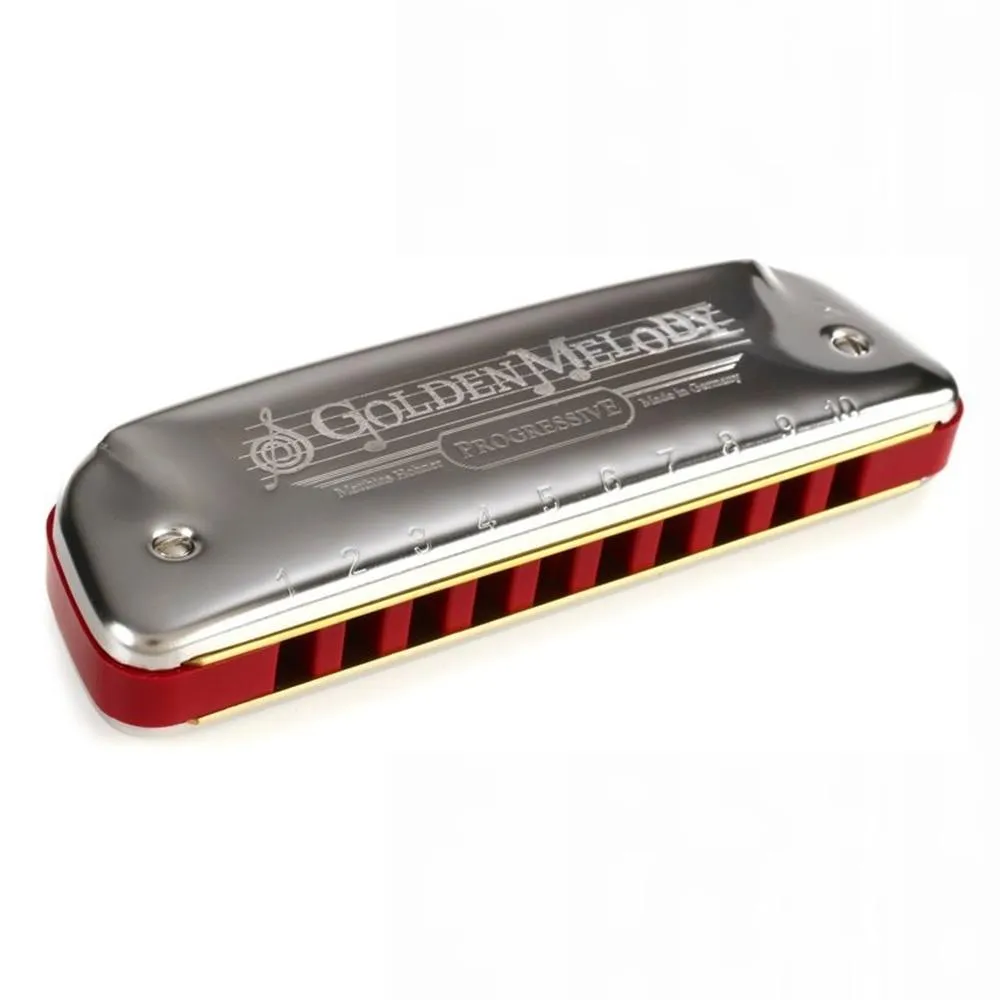
Hohner Golden Melody Harmonica – Key of Ab with Equal-tempered Tuning for Melody Playing
★★★★★ 4.9 Stars — Over 1,500 Google Reviews
Original price was: $119.00.$105.00Current price is: $105.00.
FAST
Delivery
EASY
Returns
IN HOUSE
Repairs



Pick-up from store - FREE
Free pickup from our Melbourne Store at 4 Drake Boulevard, Altona VIC 3018. Your order will typically be ready by the next business day. We recommend calling us on (03) 8360 7799 beforehand to check it's ready for collection.
International Shipping
Please proceed to checkout to see international rates and avalability.
Hohner Golden Melody Progressive — Diatonic Harmonica, Key of Ab (542Ab)
The Hohner Golden Melody Progressive (542Ab) is a professional diatonic harmonica in the key of Ab — equal temperament tuning, ergonomic stainless steel covers with Torx countersunk screws, polished ultraglide mouthpiece, improved airtightness, Hohner Classic precision-milled brass reeds.
Angkor Music — Equal Temperament vs Standard Diatonic Tuning: Why This Is the Most Important Harmonica Specification Most Players Don't Know About
The single most important thing to understand about the Golden Melody Progressive is its equal temperament tuning — and why it matters for certain players and not others. Most diatonic harmonicas, including the Hohner Special 20, Marine Band, Rocket and virtually every other standard diatonic model, use a tuning compromise sometimes called just intonation or compromised tuning. In this system, certain notes are deliberately tuned slightly sharp or flat of equal temperament to make the chords that diatonic harmonicas naturally produce — the draw chord and blow chord — sound more harmonically pure and resonant. This tuning approach works beautifully for blues players who use the harmonica as a chord instrument and who bend notes to produce the blues scale, because the slightly adjusted tuning adds to the harmonica's raw character. It is also fine for players who play the harmonica as a solo instrument without other musicians. The problem arises the moment a melody player tries to play single notes in tune with a piano, guitar, fiddle or any other instrument tuned to standard equal temperament — because the harmonica's compromised tuning means certain natural notes are measurably out of tune with the other instruments. The 4-draw note on a standard Marine Band in C, for example, is tuned to a just intonation B that is noticeably flat against a piano's equal temperament B. For a blues player this barely matters. For a melody player trying to play a simple folk song with a guitarist, it is immediately audible. The Golden Melody Progressive solves this by tuning every note to equal temperament — the same tuning standard used by every piano, guitar, violin, flute and orchestral instrument. Every note on the Golden Melody Progressive is in exactly the right position to play in tune with any other instrument at standard pitch. This is why Hohner describes it as their instrument for single note melody players, and why it has found a place in folk, classical, pop, jazz and any musical context where melodic accuracy matters. If you are a blues player who bends and uses the harmonica as a chord instrument, a standard diatonic like the Special 20 or Marine Band is the correct choice. If you are a melody player who wants to play in tune with other instruments, the Golden Melody Progressive is the correct choice. We stock all 12 keys at Angkor Music.
Equal Temperament vs Standard Diatonic Tuning — Who Each Suits
| Playing Style | Standard Diatonic Tuning | Golden Melody Equal Temperament |
|---|---|---|
| Blues — bending, chords, raw character | ✅ Excellent — chord tuning adds resonance and character | Fine but not optimised |
| Folk/classical melody with other instruments | Certain notes noticeably out of tune | ✅ Excellent — every note in tune with other instruments |
| Pop/jazz single note melody | Intonation issues on key notes | ✅ Excellent — equal temperament matches all other instruments |
| Solo harmonica, no other instruments | ✅ Fine — tuning compromise is inaudible solo | ✅ Fine |
The Progressive Redesign — What Changed
The Golden Melody Progressive represents a significant update from the previous Golden Melody design. Every aspect of the physical instrument has been reconsidered:
Stainless steel covers — ergonomic redesign:
The covers are now ergonomically formed to fit more naturally in the hands and around the lips. The improved shape increases stability during playing — the harmonica is less likely to shift position during a performance — and the stainless steel material resists the corrosion that brass covers can develop over time from contact with moisture.
Torx countersunk screw attachment:
The cover plates are attached using Torx countersunk screws rather than the standard slotted or Phillips screws used on most harmonicas. Torx screws are more secure, less likely to strip when removed for maintenance, and sit flush against the cover plate surface — contributing to the cleaner profile of the instrument and reducing the risk of screw head damage during normal use or when servicing the reed plates.
Polished ultraglide mouthpiece:
The mouthpiece surface is polished to reduce friction between the lips and the harmonica during playing. For melody players who move rapidly across the harmonica's range in single-note playing, this lower friction surface makes fast passages significantly more comfortable. The rounded outer edges reduce pressure points during extended playing sessions.
Improved airtightness and volume:
The new comb and cover design improves the seal between the comb, reed plates and covers — reducing air leakage and producing more volume and projection from the same breath effort. A tighter instrument responds more easily and delivers more sound with less physical effort.
Hohner Classic precision-milled brass reeds:
The reeds — the small metal strips that vibrate to produce each note — are Hohner Classic brass, precision-milled to consistent dimensions. Reed quality is the most fundamental determinant of tone and response in a harmonica. Consistent reed dimensions mean consistent response and tone across all holes.
Specifications
| SKU | 542Ab |
| Brand | Hohner |
| Model | Golden Melody Progressive |
| Type | Diatonic Harmonica |
| Key | Ab |
| Tuning | Equal Temperament |
| Covers | Ergonomic stainless steel — Torx countersunk screw attachment |
| Mouthpiece | Polished ultraglide — rounded outer edges |
| Reeds | Hohner Classic precision-milled brass |
| Level | Professional |
| Keys Available | All 12 major keys — see individual product pages |
Expert Advice at Angkor Music
At Angkor Music Melbourne we stock the Golden Melody Progressive in all 12 keys alongside the full Hohner diatonic range. If you are deciding between the Golden Melody Progressive and another Hohner model, contact us — the right choice depends on your playing style and whether equal temperament tuning matters for your musical context.
Hohner Golden Melody Progressive — Diatonic Harmonica, Key of Ab (542AB)
The Hohner Golden Melody Progressive (542AB) is a professional diatonic harmonica in the key of Ab — equal temperament tuning, ergonomic stainless steel covers with Torx countersunk screws, polished ultraglide mouthpiece, improved airtightness, Hohner Classic precision-milled brass reeds.
Angkor Music — Key of Ab: Jazz, Classical and Second Position Eb
Ab is primarily a jazz and classical harmonica key, chosen by players who need to play in Ab major or who want second position access to Eb. In first position, Ab major is a commonly used key in jazz standards and some classical repertoire — the home key of certain Chopin pieces, a number of jazz standards and some gospel music. In second position, an Ab harmonica plays in Eb — which as noted on the Eb product page is a key central to R&B, soul and jazz involving alto saxophone and Eb clarinet. In third position, Ab gives Bb minor. The Ab key is not a common first harmonica for most players — it is typically selected by players who have a specific repertoire need or ensemble context that demands it. The Golden Melody Progressive's equal temperament tuning is particularly valuable in jazz contexts where Ab is used, as the equal temperament accuracy required to play in tune with piano accompaniment in Ab is unachievable on a standard just intonation diatonic harmonica. For full information on equal temperament see the 542C product page.
Key of Ab — Position Playing Guide
| Position | Key Played | Musical Context |
|---|---|---|
| First Position | Ab major | Jazz standards, some classical, gospel in Ab |
| Second Position | Eb | R&B, soul, jazz in Eb — plays with alto sax |
| Third Position | Bb minor | Jazz and classical minor key contexts |
Specifications
| SKU | 542AB |
| Key | Ab |
| Tuning | Equal Temperament |
| Covers | Ergonomic stainless steel — Torx countersunk screws |
| Mouthpiece | Polished ultraglide — rounded edges |
| Reeds | Hohner Classic precision-milled brass |
| Level | Professional |
Additional information
| Weight | 0.0000 kg |
|---|---|
| type | Diatonic Harmonica |
| Instrument | harmonica |
| Key | G#/Ab |
Related Items & Accessories
Related products
-
 SKU: 1910-A
Lee Oskar by Tombo Major Diatonic Harmonica A major 1910A Blues Harp
$85.00In Stock -
 SKU: 1910-B-Flat
Lee Oskar by Tombo Major Diatonic Harmonica Bb major 1910B Flat Blues Harp
$85.00Out of stock -
10% OFF
RRP $54.61
Save $5.46
Sale!
 SKU: 1910MM-D
TOMBO Folk Blues Mark-II 10 holes Diatonic harmonica Blues Harp Key of F On Sale
Original price was: $54.61.$49.15Current price is: $49.15.Out of stock -
29% OFF
RRP $409.94
Save $119.21
Sale!
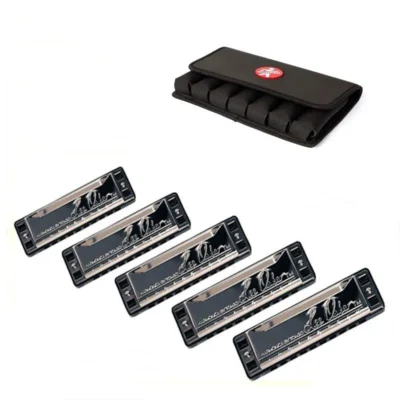 SKU: 1910-MM-5P
Lee Oskar Melody Maker Harmonica 5-Pack with Case Keys G, A, C, D, E
Original price was: $409.94.$290.73Current price is: $290.73.Out of stock -
23% OFF
RRP $74.99
Save $16.99
Sale!
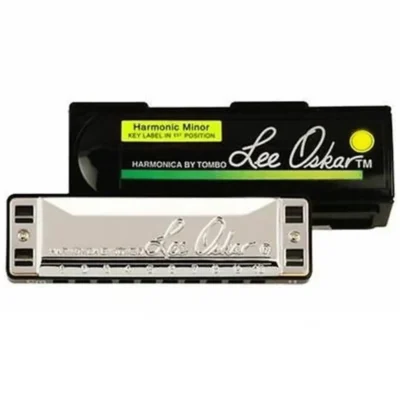 SKU: 1910H-Gm
Lee Oskar by Tombo Harmonic Minor Harmonica 1910H-G Blues Harp G Minor
Original price was: $74.99.$58.00Current price is: $58.00.Out of stock