
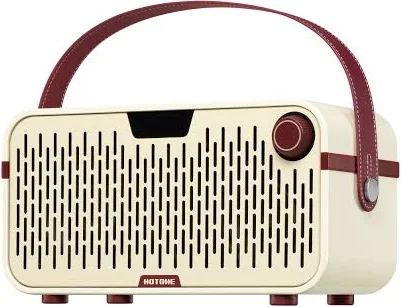
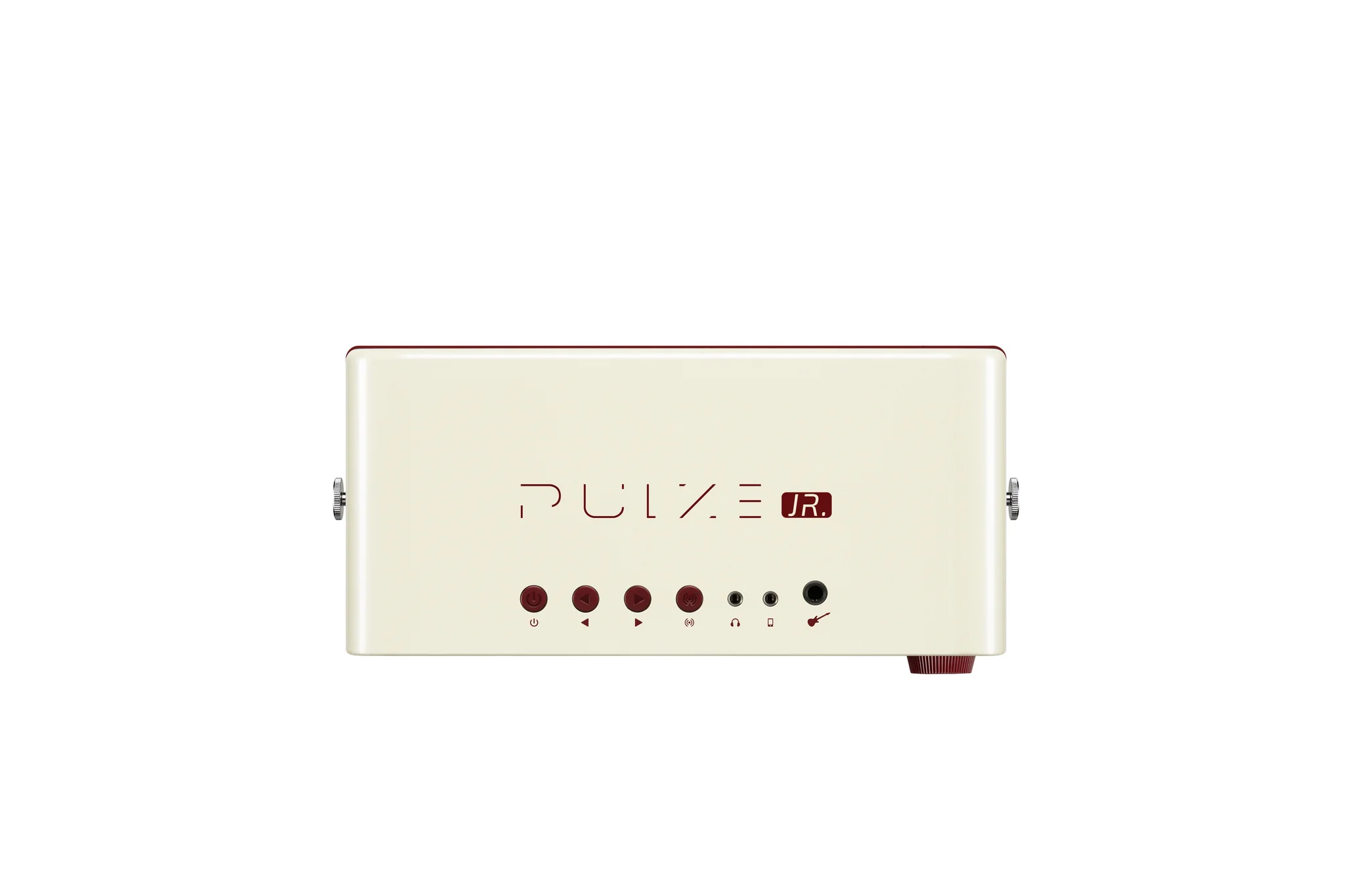
Hotone Pulze Junior – Modelling Amp – White – 20W of Stereo Output
★★★★★ 4.9 Stars — Over 1,500 Google Reviews
Original price was: $599.00.$499.00Current price is: $499.00.
FAST
Delivery
EASY
Returns
IN HOUSE
Repairs



Pick-up from store - FREE
Free pickup from our Melbourne Store at 4 Drake Boulevard, Altona VIC 3018. Your order will typically be ready by the next business day. We recommend calling us on (03) 8360 7799 beforehand to check it's ready for collection.
International Shipping
Please proceed to checkout to see international rates and avalability.
Hotone Pulze Jr. Portable Stereo Modelling Guitar Amplifier
The Hotone Pulze Jr. (SKU: PULZE_JR_W) is a battery-powered stereo modelling amplifier for electric guitar, bass and acoustic instruments — built around Hotone's CDCM HD and F.I.R.E. modelling technology, with 52 amp models, 48 cabinet models, 191 effects, user IR loading, Sound Clone and Neural Amp Modeler (NAM) support, and 200 preset locations in a compact portable format. Dual 3-inch speakers deliver 20 watts of stereo output. The built-in rechargeable battery provides approximately 8 hours of continuous playback at medium volume, making the Pulze Jr. a genuinely portable instrument amplifier rather than a desktop practice amp that happens to have a battery option.
Angkor Music — What Makes the Pulze Jr. Different from a Standard Practice Amp
A standard practice amp is a single speaker delivering a fixed amplifier character at low volume. The Pulze Jr. is a different category of product: a full modelling platform — amp, cabinet and effects processing — in a portable, battery-powered stereo enclosure. NAM (Neural Amp Modeler) support and user IR loading put the Pulze Jr. in a different tier from conventional modelling practice amps, because they open the instrument to the growing community of professionally captured amp profiles and custom cab simulations. This is the kind of feature set more commonly associated with desktop modellers or floorboard units — delivered in an amp format that works on battery. At Angkor Music we can advise on how the Pulze Jr. compares to other modelling platforms and whether it suits your playing, practice and recording workflow.
Modelling Technology — CDCM HD and F.I.R.E.
Hotone's CDCM HD (Circuit Dynamic Chip-based Modelling HD) is the amp and effects simulation engine driving the Pulze Jr.'s 52 amp models and 191 effects. Rather than simply mapping input to output curves, circuit dynamic modelling attempts to simulate the actual behaviour of the components in an amplifier circuit — how a valve's response changes as the signal level changes, how capacitors and transformers behave under different load conditions, and how those dynamic interactions produce the non-linear response that makes amplifier tone feel responsive and alive. This is a different design approach from static convolution-based modelling, and it is what Hotone attributes the dynamic feel of the amp models to.
F.I.R.E. (Finite Impulse Response Engine) is Hotone's cabinet simulation processing system. Cabinet simulation is responsible for the tonal shaping and frequency response of each modelled cabinet — how the speakers, cabinet dimensions and materials colour the signal after it leaves the amp model. The F.I.R.E. engine handles both the built-in 48 cabinet models and the user-loadable impulse responses (IRs) that allow the Pulze Jr. to simulate any cabinet for which an IR file has been created.
Neural Amp Modeler (NAM) and Sound Clone — What These Are
NAM (Neural Amp Modeler) is an open-source machine learning framework for creating highly accurate digital profiles of physical amplifiers. An NAM profile is created by playing a specific test signal through a real amplifier, recording the output, and using the NAM software to train a neural network model that replicates that amplifier's response. The resulting profile captures the amp's full dynamic behaviour — its response to pick attack, its compression characteristics, its harmonic content at different gain levels — rather than just its frequency curve. NAM profiles are shared freely within a large and growing online community, meaning the Pulze Jr. can run hundreds of community-created profiles of specific real-world amplifiers that would otherwise be inaccessible.
NAM support elevates the Pulze Jr. significantly beyond the scope of its built-in 52 amp models. Instead of being limited to Hotone's own modelled characters, a player with NAM can load a profile of a specific vintage Plexi, a Princeton Reverb, a Dumble, a Vox AC30 — any amp that someone in the community has captured — and run it through the Pulze Jr.'s speaker system with the cab simulation of their choice.
Sound Clone is Hotone's own amp capture system, operating on similar principles to NAM but within Hotone's proprietary framework. Together, NAM and Sound Clone give the Pulze Jr. access to both open-source community profiles and Hotone's own capture ecosystem.
User IR Loading — Custom Cabinet Simulation
Impulse responses (IRs) are short audio recordings of a cabinet's acoustic character, captured by playing a test signal through the cabinet and recording the result. When a cabinet IR is convolved with the output of an amp model, the result is a cabinet simulation that replicates the frequency response and spatial character of that specific cabinet. The Pulze Jr.'s user IR loading allows players to upload their own IR files — from the large libraries of free and commercial IRs available online — rather than being limited to the 48 built-in cabinet models.
In practice this means a player can use an IR of a specific vintage Celestion-loaded 4×12, a Jensen-loaded open-back combo, a Greenback 2×12, or any other cabinet for which an IR exists. Combined with NAM amp profiles, this gives the Pulze Jr. a degree of tonal flexibility that goes well beyond what its built-in model count suggests.
Stereo Output — Why It Matters in a Portable Amp
The Pulze Jr. has two 3-inch speakers driven by 20 watts of total stereo power. In a modelling amp, stereo output changes how several effects categories sound and feel. Stereo chorus, stereo delay (ping-pong), stereo reverb and stereo modulation effects — such as flanger, phaser and tremolo with stereo spread — produce an audibly different result through two speakers than through a single speaker. The stereo image in chorus and reverb is particularly significant: a mono reverb fills the sound; a stereo reverb places the sound in a space with a perceptible width that a single speaker cannot replicate.
For a practice amplifier, this is not a trivial feature. Most practice amps and many budget modelling amps are mono. Players who use modulation-heavy or reverb-heavy signal chains — ambient, shoegaze, clean tone players as much as metal players — benefit measurably from hearing effects in stereo rather than collapsed to mono.
Effects — 191 Types, 7 Simultaneous, Editable Chain Order
The Pulze Jr. offers 191 effect types spanning drive, dynamics, filter, modulation, delay, reverb and acoustic simulation — with up to 7 effect modules running simultaneously. The editable effects chain order is a meaningful feature: the position of effects in the signal chain (distortion before or after modulation, for instance) produces different tonal results, and the ability to reorder the chain manually allows players to build signal paths that reflect how they would connect pedals on a pedalboard, rather than being locked to a fixed order.
Acoustic simulation effects extend the Pulze Jr.'s range beyond standard electric guitar applications. Players with a solid body electric who want to approximate acoustic guitar tone — for a setlist that moves between electric and acoustic material — can do so without a separate instrument.
The 200 preset locations give players enough storage for complete tone setups per song, venue or playing context.
Battery and Portability
The Pulze Jr.'s built-in rechargeable battery delivers approximately 8 hours of continuous playback at medium volume. This is enough for a full practice session, a band rehearsal, or outdoor playing without access to mains power. Battery-powered operation at 20 watts of stereo output is a practical proposition for busking, travel, camping, teaching and any context where mains power is unavailable or inconvenient.
The dual 3-inch speaker configuration in a compact enclosure is a deliberate design choice for portability: two small speakers in stereo rather than one larger speaker in mono. The trade-off is low-frequency extension — 3-inch speakers do not move the air that a 12-inch speaker does — but the stereo imaging and overall volume output are sufficient for the use cases a portable battery-powered amp is designed for.
Who Is the Pulze Jr. For?
- Players who want a complete modelling platform — amp, cab, effects — in a portable, battery-powered format for practice, travel and outdoor use
- Guitarists interested in NAM and Sound Clone amp capture, who want access to the community-created amp profile ecosystem in an amp format rather than a desktop or pedalboard unit
- Players who use IR-based cabinet simulation and want to run their own IR library through a portable amp
- Ambient, shoegaze and effects-heavy players who need stereo output to hear modulation and reverb effects properly without committing to a full stereo rig
- Multi-instrumentalists who need one amplifier that covers electric guitar, bass and acoustic instrument applications
- Teachers and students who need a self-contained, portable practice solution with professional-quality tone options
Specifications
| SKU | PULZE_JR_W |
| Brand | Hotone |
| Model | Pulze Jr. |
| Output power | 20W stereo |
| Speakers | Dual 3-inch stereo |
| Modelling technology | CDCM HD + F.I.R.E. |
| Amp models | 52 |
| Cabinet models | 48 |
| Effects | 191 types, including Global EQ |
| Simultaneous effects | Up to 7 modules |
| Effects chain order | User-editable |
| Preset locations | 200 |
| NAM support | Yes — Neural Amp Modeler profiles |
| Sound Clone | Yes — Hotone amp capture |
| User IR loading | Yes |
| Power | Built-in rechargeable battery — approx. 8 hours at medium volume |
| Suitable instruments | Electric guitar, bass, acoustic (with acoustic simulation) |
Expert Advice at Angkor Music
At Angkor Music Melbourne we stock Hotone products. If you want to discuss how the Pulze Jr. fits your practice and recording setup, how NAM and IR loading work in practice, or how it compares to other portable modelling options, our team can help.
★★★★★
4.9 Stars — Read Our 1,600+ Google Reviews →
Frequently Asked Questions
What is NAM and how do I use it on the Pulze Jr.?
NAM (Neural Amp Modeler) is an open-source machine learning framework for creating digital profiles of real amplifiers. The NAM community has produced hundreds of free profiles of specific real-world amps — vintage Marshalls, Fenders, Boogies, boutique amps and more — which are shared freely at sites such as ToneHunt and NeuralDSP's community pages. To use NAM on the Pulze Jr., you download a profile file from the community library and load it into the Pulze Jr. via its app or file transfer method (refer to Hotone's current documentation for the exact process). Once loaded, the NAM profile runs alongside the Pulze Jr.'s own cab and effects chain, replacing or supplementing the built-in amp models with the captured character of the real amp the profile was created from.
What is user IR loading and where do I get IR files?
An impulse response (IR) is a short audio file that captures the frequency response of a specific guitar cabinet and microphone combination. The Pulze Jr. can load custom IR files to use as cabinet simulations in place of its 48 built-in cabinet models. Free and commercial IR libraries are widely available online — from brands like OwnHammer, Celestion, Two Notes and many independent creators, as well as free community packs. IR files are typically in .wav format and are loaded into the Pulze Jr. via Hotone's app or file transfer. User IRs work alongside any amp model, including NAM profiles, so a player can combine a community-created amp profile with a custom IR of their preferred cabinet.
Can the Pulze Jr. be used as a recording interface?
This depends on connectivity features not detailed in the current specification. Contact us for the latest information on the Pulze Jr.'s USB audio and direct recording capabilities. Many modelling amps in this category include USB audio output for direct recording into a DAW; we recommend confirming this before purchase if direct recording is a primary requirement.
How loud is 20W from dual 3-inch speakers — is it enough for rehearsal or performance?
The 20W stereo rating covers the combined output of both speakers. For home practice and personal monitoring, dual 3-inch speakers at 20W is more than adequate — it will be louder than most players need for quiet practice. For open rehearsal with a drummer, or for performing without amplifier support, the speaker size is the limiting factor rather than the wattage: 3-inch drivers do not project low-frequency content or overall volume at the level of a 10- or 12-inch cabinet. The Pulze Jr. is designed for practice, travel, busking (outdoor close-proximity use) and direct/DI recording applications, not as a main stage amplifier. For any application where a player needs to be heard over a drum kit without DI support, a larger amp is the practical choice.
What instruments can the Pulze Jr. be used with?
The Pulze Jr. is designed for electric guitar, bass and acoustic instruments. The acoustic simulation effects allow an electric guitar to approximate acoustic guitar character through the Pulze Jr.'s speakers. Bass use is confirmed in the product specification; the 3-inch speakers will handle bass at practice volumes, though the low-frequency extension is limited by driver size — bass players who need significant low-frequency output will find a larger cabinet or direct output more effective.
Additional information
| Weight | 0.0000 kg |
|---|---|
| type | Head |
| Amplifier Type | Head |
Related Items & Accessories
Related products
-
15% OFF
RRP $2,999.00
Save $440.00
 SKU: 035182
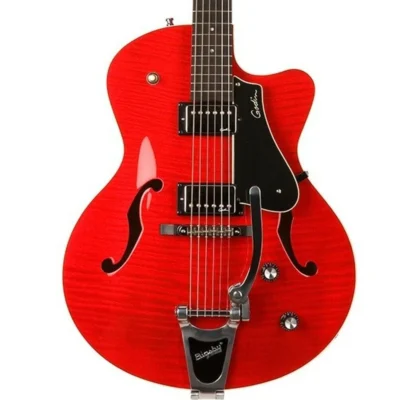
GODIN 5th Avenue Uptown Trans Red GT w/Bigsby Hollow Body Guitar with case
Original price was: $2,999.00.$2,559.00Current price is: $2,559.00.Out of stock -
8% OFF
RRP $299.00
Save $24.00
 SKU: 1101-05-B4c
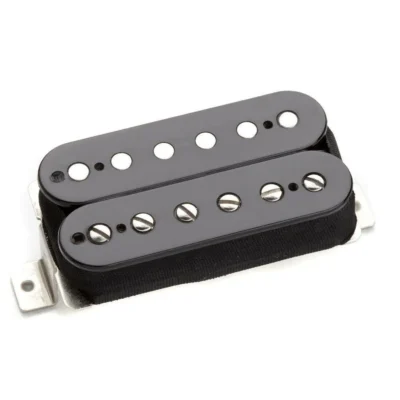
Seymour Duncan SH-1b ’59 Model 4-Conductor electric Guitar Pickup – Black Bridge
Original price was: $299.00.$275.00Current price is: $275.00.Out of stock -
18% OFF
RRP $3,299.00
Save $600.00
Sale!
 SKU: 041657
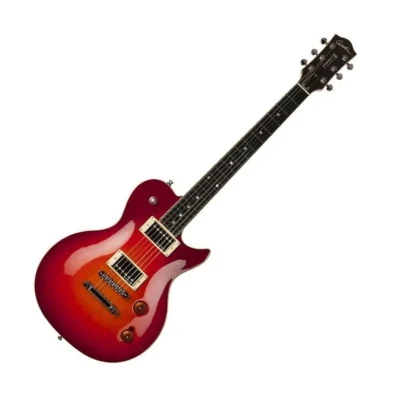
GODIN SUMMIT CLASSIC (CT) HB Cherryburst with Gig bag Seymour Duncan Humbuckers
Original price was: $3,299.00.$2,699.00Current price is: $2,699.00.Out of stock -
17% OFF
RRP $299.00
Save $50.00
Sale!
 SKU: 11205-03
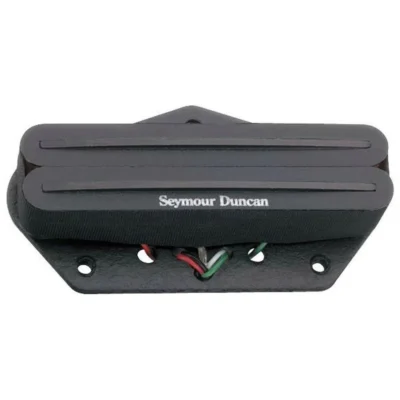
Seymour Duncan STHR-1b Hot Rails Lead for Tele Guitar Bridge Pickup Black
Original price was: $299.00.$249.00Current price is: $249.00.In Stock -
8% OFF
RRP $92.00
Save $7.00
Sale!
 SKU: 14010601 – Ruthenium
Schaller New S Locks (Pair) Ruthenium 14010601 Strap Locks / security Locks
Original price was: $92.00.$85.00Current price is: $85.00.In Stock