
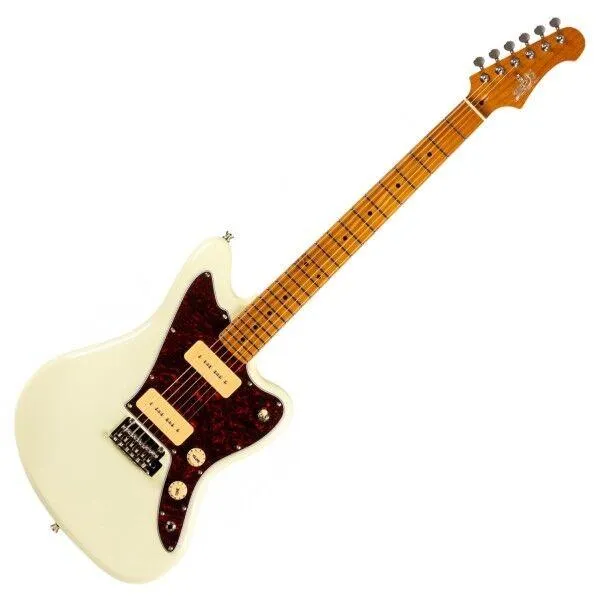
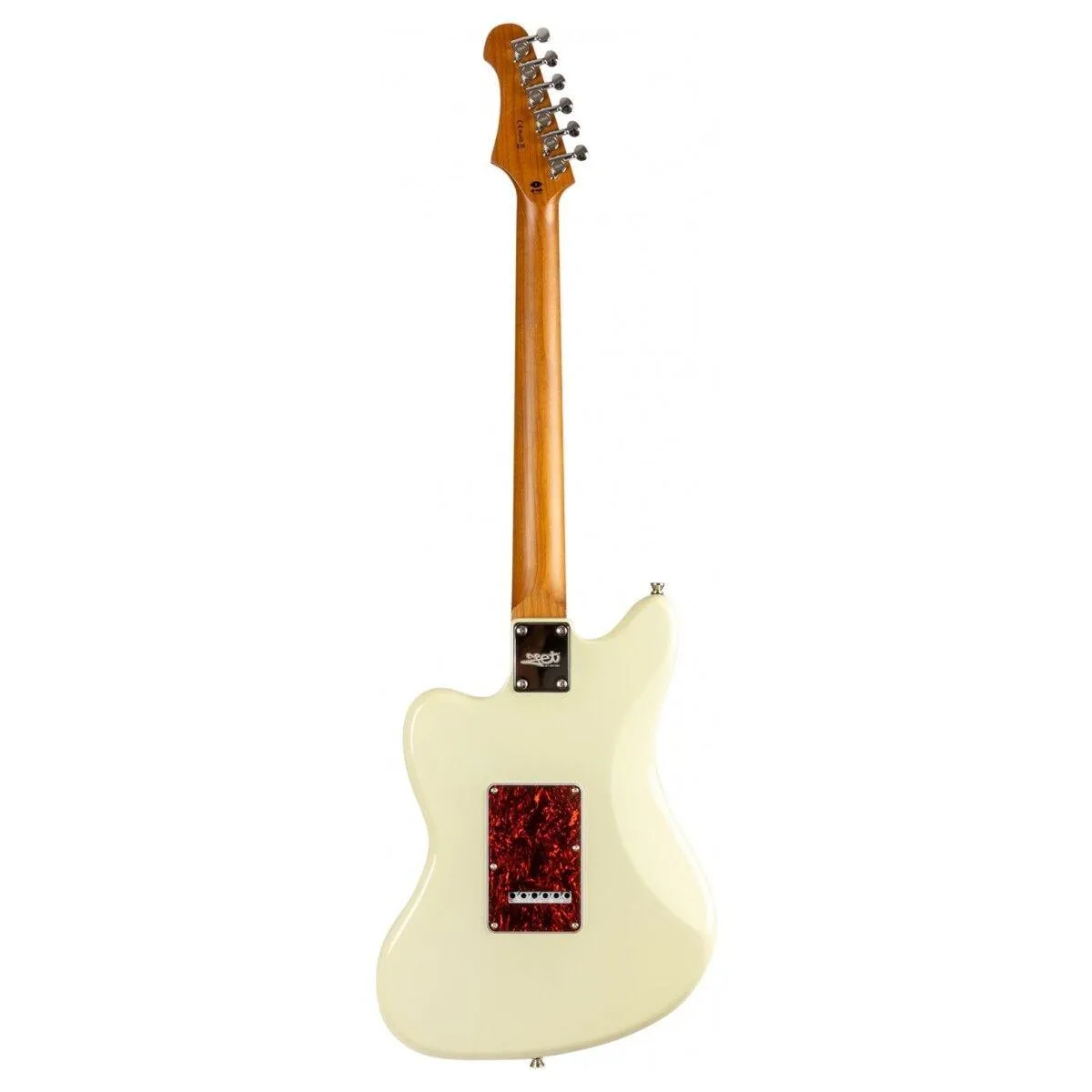
JET JJ-300 P90 Electric Guitar – Roasted Maple, Olympic White
★★★★★ 4.9 Stars — Over 1,500 Google Reviews
Original price was: $659.00.$539.00Current price is: $539.00.
FAST
Delivery
EASY
Returns
IN HOUSE
Repairs



Check AU Shipping Cost
Pick-up from store - FREE
Free pickup from our Melbourne Store at 4 Drake Boulevard, Altona VIC 3018. Your order will typically be ready by the next business day. We recommend calling us on (03) 8360 7799 beforehand to check it's ready for collection.
International Shipping
Please proceed to checkout to see international rates and avalability.
Jet JJ-300 P90 Electric Guitar — Olympic White
🎨 Important — Olympic White is Not Pure White
Olympic White is a vintage-spec finish with a distinctive character. Fresh from the factory, it is a solid off-white with very subtle cream or grayish-blue undertones — noticeably warmer and softer than Arctic White or pure bright white. It does not show wood grain through the finish.
Over time, guitars finished in Olympic White under a clear nitrocellulose topcoat will naturally age toward a creamy, yellowish-amber tone — this is normal and expected for the finish, and is part of the classic vintage guitar aesthetic it references. If you are expecting a stark, bright white, please note that this finish is intentionally off-white by design. The colour in product photos represents the finish accurately; screen calibration can affect perception.
The Jet JJ-300 P90 in Olympic White (SKU: JJ-300-P90-OW) is a 22-fret electric guitar built on a roasted poplar body with a Canadian roasted maple neck and roasted maple fretboard, anchored by a fixed bridge and driven by a pair of P90 pickups. The P90 is the instrument's defining voice — a wide-coil single-coil design that sits in a tonal territory of its own, delivering the warmth and midrange body that standard Stratocaster-style single-coils lack, without the compressed, smooth character of a humbucker. Combined with the fixed bridge's stability and sustain, it is a genuinely musical and versatile instrument that suits indie, blues, garage rock, and beyond.
★ Expert Insight — P90 Pickups: Why They Sound Different from Standard Single-Coils and Humbuckers
Most players are familiar with the two dominant pickup families: the bright, articulate character of Stratocaster-style single-coils, and the warm, compressed, hum-free character of humbuckers. The P90 occupies a third position that is distinct from both. Introduced by Gibson in 1946, the P90 is technically a single-coil pickup — it uses one coil, not two — but it has a significantly wider and flatter coil geometry than a Stratocaster single-coil. This wider coil captures a larger section of the string's vibration, producing a thicker, more midrange-forward tone with more output than a standard single-coil.
The result is a pickup with single-coil transparency and note-to-note clarity, but with a fuller low-mid foundation and more natural compression when pushed. Clean tones from a P90 are warm and three-dimensional; at the edge of breakup they develop a characteristic gritty growl that many players describe as the most musical dirt in electric guitar. P90s do retain the inherent hum of single-coil design — they are not hum-cancelling — which some players consider part of the authentic P90 character, though it is worth noting if you play in electromagnetically noisy environments. For indie, blues, garage rock, and classic rock tones, the P90 is frequently the pickup that experienced players reach for.
Olympic White — The Finish in Detail
Olympic White is one of the original custom colour finishes introduced by Fender in the late 1950s, and it remains one of the most recognisable electric guitar finishes in the world. Its specific character sets it apart from other white or near-white finishes, and understanding it makes the colour easier to evaluate before purchase.
Fresh finish character. When factory-fresh, Olympic White is a solid, clean, non-transparent off-white. The colour sits between pure white and cream — not as cold and stark as Arctic White, and not as warm and yellow as a standard cream or vintage white. Some describe it as having very subtle grayish-blue undertones when new; others perceive a slight warmth. At close range in good light, the difference from pure white is visible. Under stage lighting or in photographs, it can read as simply white.
Ageing over time. Historically, Fender applied Olympic White over a nitrocellulose lacquer topcoat that yellowed as it aged. This natural ageing process turned vintage Olympic White guitars to a noticeably creamy or amber tone over decades of use. This aged appearance is now widely seen on relic and vintage-spec instruments, which has created a widespread association between Olympic White and a deeper cream colour. Factory-fresh Olympic White guitars — including this JJ-300 P90 — are considerably whiter than aged examples. The finish will develop its own character with age, but it will not arrive looking like a 1960s relic.
How it differs from related finishes. Arctic White is typically a stark, cold, bright white — the whitest white on most production guitars. Pearl White adds a shimmery, opalescent quality to a white base. Olympic White sits between Arctic White and cream: warmer than Arctic White, flatter and more solid than Pearl White, and lighter than a standard cream. On the JJ-300 P90, the chrome hardware contrasts cleanly against the off-white body, reinforcing the classic vintage aesthetic.
P90 Pickups and 3-Way Switching
Two P90 pickups are mounted in the neck and bridge positions on the JJ-300 P90, controlled by a 3-way switch that selects neck alone, both pickups together, or bridge alone. This is a simple, direct layout that keeps tonal control intuitive and fast — no complexity mid-performance, just three distinct voices and a volume and tone knob to shape them.
The neck P90 delivers the warmest and fullest voice on the guitar — a round, mid-forward tone with clean definition at low gain and a smooth, full overdrive when pushed. This position is well suited to rhythm playing, clean chord work, and lead lines where warmth and body are priorities. The bridge P90 is the more aggressive of the two — tighter, brighter, with more attack and the characteristic single-coil bite that makes P90s cut through a mix. At lower gain it has crisp clarity; pushed into breakup it develops the gritty, focused growl the P90 format is associated with. With both pickups combined in the middle position, the character shifts — the bridge's attack softens slightly against the neck's warmth, the two signals combining into a broader, more complex tone with less midrange peak than either pickup alone.
The 1V/1T control layout is deliberately minimal. Volume controls output level across all three switch positions; the tone control rolls off high-frequency content to shape the character from bright and cutting to warm and rounded. At full tone, the P90s deliver their natural, lively character; rolling back the tone takes the edge off for smoother, more rounded sounds without changing the fundamental P90 character underneath. It is a setup designed for players who want to s
Canadian Roasted Maple Neck and Fretboard
Both the neck and fretboard are Canadian roasted maple — the same material on both surfaces, so the hand moves from the back of the neck to the playing surface with a consistent feel. Canadian hard maple is denser and more resistant to wear than soft maple, making it well suited to a guitar neck used regularly over years. The roasting process heat-treats the maple at high temperature in a low-oxygen environment, removing residual moisture from the wood cells more completely than standard kiln drying. The result is a neck that is more stable against humidity and temperature changes over time, with a slightly warmer visual appearance (the natural wood sugars caramelise during roasting, shifting the colour toward a honey brown) and a slightly different tonal character — often described as more complex and lively than untreated maple.
The satin finish on the neck back provides a low-friction surface suited to fast playing and position shifts. The Modern C neck profile is a comfortable, moderately rounded shape that works for thumb-behind-the-neck technique and a more wrapped thumb position — versatile for different playing styles and hand sizes. The 9.5-inch fretboard radius is the classic Fender Stratocaster specification: rounded enough that chord shapes feel natural and secure across the lower frets, flat enough to avoid string-fretting when bending at the upper positions across the full 22-fret range.
Roasted Poplar Body and Fixed Bridge
The body is roasted poplar — a heat-treated version of a consistently used production body tonewood. Poplar has a balanced, mid-forward tonal character and a comfortable weight, similar in many ways to alder, with even grain and a smooth surface under finish. The roasting process applies the same heat treatment as the neck wood: improved dimensional stability, reduced sensitivity to humidity changes, and a subtly warmer cell structure. The result is a body that is both resonant and consistent over time. Combined with the P90 pickups, the roasted poplar body contributes a lively, responsive fundamental that suits the P90's natural character well.
The fixed bridge anchors the strings directly to the body without a spring mechanism — no tremolo, no floating pivot. This direct coupling adds sustain and stability: the strings transfer their vibration into the body more efficiently than through a floating bridge, and the tuning is not affected by incidental contact with the bridge arm or by spring tension shifts. For players focused on rhythm work, tight riffing, and clean intonation over long sets, a fixed bridge is typically the more reliable and consistent platform. It is easier to intonate precisely and stays in tune under aggressive playing that might affect a floating tremolo setup.
Who Is the Jet JJ-300 P90 For?
The JJ-300 P90 is for players who want the specific tonal character that only P90 pickups deliver — that midrange-forward warmth and gritty breakup character that sits between clean Strat tone and full humbucker density. It suits indie, blues, garage rock, classic rock, and soul players who want a guitar that sounds distinct from the standard single-coil or humbucker market. The fixed bridge makes it a focused, reliable instrument for players who don't use the tremolo and want the tuning stability and sustain that a hardtail provides. The roasted maple neck, roasted poplar body, and simple 3-way control layout make it an easy, intuitive guitar to pick up and play — well suited to beginners who want something beyond the standard SSS entry-level spec, and intermediate players who want a P90 instrument without paying boutique prices. No case or gig bag is included; a padded bag or hard case purchased separately is recommended.
Specifications
| Feature | Specification |
|---|---|
| SKU | JJ-300-P90-OW |
| Model | Jet JJ-300 P90 |
| Colour | Olympic White |
| Body | Roasted Poplar |
| Neck | Canadian Roasted Maple, Modern C |
| Fretboard | Roasted Maple |
| Fretboard Radius | 9.5" |
| Scale Length | 25.5" |
| Frets | 22 |
| Nut | Polymer Fibre |
| Nut Width | 1.65" (41.9mm) |
| Truss Rod | Double Action |
| Pickups | 2× P90 (Neck, Bridge) |
| Bridge | Fixed |
| Controls | 1 × Volume / 1 × Tone / 3-Way Switch |
| Machine Heads | Chrome |
| Hardware | Chrome |
| Included | No case or gig bag |
Want to Hear What a P90 Actually Sounds Like?
Come in to Angkor Music in Altona and try the JJ-300 P90 through one of our demo amps. P90 tone is one of those things that makes more sense the moment you hear it — we're happy to put it next to an SSS Strat or a humbucker guitar so you can hear the difference directly. We set up every guitar before it leaves the store.
Frequently Asked Questions
What is a P90 pickup and how does it sound compared to a standard single-coil or a humbucker?
A P90 is a single-coil pickup with a wider, flatter coil than a Stratocaster-style single-coil. This wider coil captures a broader section of the string's vibration, producing a thicker, more midrange-forward tone with more output than a standard single-coil — but without the compression and warmth of a full humbucker. The result sits in a tonal space of its own: more body and grunt than a Stratocaster-style single-coil, more transparency and note-to-note clarity than a PAF-style humbucker. Clean P90 tones are warm and three-dimensional; at the edge of breakup they develop a characteristic gritty, slightly raw growl that many players consider one of the most musical sounds in electric guitar. If you've heard the guitar tones on classic indie, blues, early rock and roll, or garage rock recordings and wondered where that mid-focused, slightly ragged character comes from, the answer is usually a P90.
Do P90 pickups hum?
Yes — P90 pickups are single-coil pickups, and like all single-coil designs they are susceptible to electromagnetic interference that manifests as a background hum, particularly under fluorescent lighting, near computer monitors, or in other electromagnetically busy environments. This is a characteristic of the single-coil format, not a defect. Many players consider the slight hum part of the authentic P90 character, and in a live playing environment with an amp running it is usually not noticeable. If you play regularly in a studio recording environment where silence between takes matters, or in a venue with strong lighting interference, it is worth being aware of. The hum-cancelling positions available on an SSS Strat (positions 2 and 4 on the 5-way) are not available on this 2-pickup P90 configuration — all three switch positions involve single-coil pickups in this design.
What is the advantage of a fixed bridge over a tremolo?
A fixed bridge anchors the strings directly to the body, with no springs or floating pivot mechanism. This direct coupling allows string vibration to transfer into the body more efficiently, which generally adds sustain — particularly noticeable on longer notes and when playing with clean or light overdrive tones. It also eliminates the tuning variables that come with a floating tremolo: a blocked or floating tremolo system can go out of tune when a string breaks, when the spring tension shifts with temperature changes, or when the arm is used aggressively. With a fixed bridge, changing one string does not affect the tuning of the others, and there is no bridge arm to manage. For players who don't use the tremolo — which is a large proportion of guitar players, particularly in blues, indie, and rhythm-focused styles — a fixed bridge is typically the more consistent and low-maintenance platform.
Is Olympic White a bright, pure white or more of a cream colour?
Olympic White sits between pure bright white and cream — it is neither. When factory-fresh, it is a solid off-white with very subtle cream or grayish-blue undertones. It is noticeably warmer and softer than Arctic White (which is a stark, cold bright white), but considerably lighter and cleaner than a traditional cream or vintage white. Over time, guitars with nitrocellulose topcoats will develop a natural amber-cream patina — this is part of the finish's heritage — but factory-fresh Olympic White guitars arrive much closer to white than aged examples. If you need to match it to a specific shade, it is worth viewing the guitar in person before purchase.
Does the Jet JJ-300 P90 come with a case or gig bag?
No — the JJ-300 P90 does not include a case or gig bag. For transport and storage, we recommend purchasing a padded gig bag at minimum. A hard case gives better protection for regular travel or if the guitar will be transported in a car boot or checked on a flight. We stock a range of bags and cases at Angkor Music; ask our team when you purchase the JJ-300 P90 and we can point you to a good fit for the body shape.
Playing your Jet JJ-300 P90? Let us know how it's going.
Leave us a Google Review — it helps other musicians find the right instrument.
Additional information
| Weight | 3.55 kg |
|---|---|
| type | Electric Guitar |
Related Items & Accessories
Related products
-
 SKU: 11102-13-Z
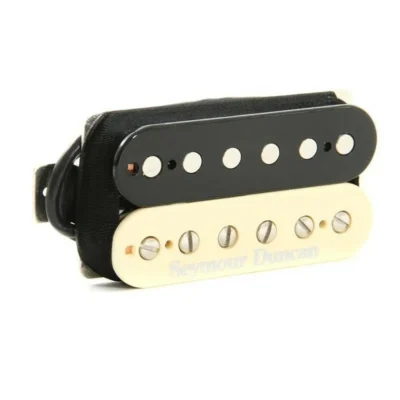
Seymour Duncan SH-4 JB Model Zebra Humbucker Bridge Pickup
$269.00In Stock -
 SKU: 11103-13-B
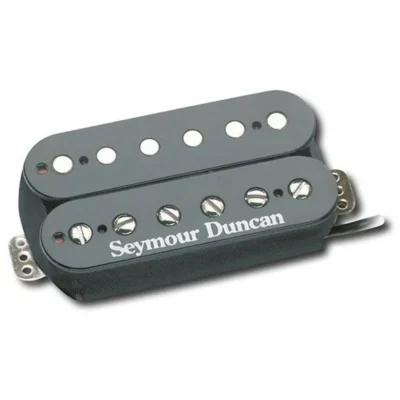
Seymour Duncan TB-4 JB Model Trembucker Bridge Humbucker Black Pickup 11103-13-B
$269.00In Stock -
17% OFF
RRP $359.00
Save $60.00
Sale!
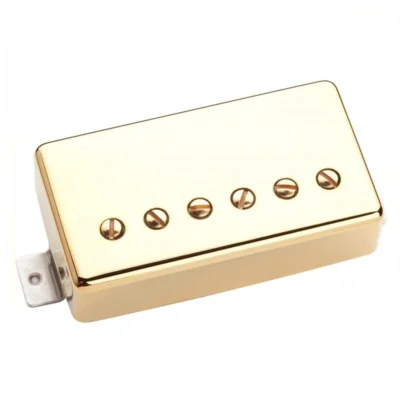 SKU: 11102-21-Gc
Seymour Duncan SH-6b Distortion Humbucker Gold Cover Bridge Pickup 11102-21-GC
Original price was: $359.00.$299.00Current price is: $299.00.In Stock -
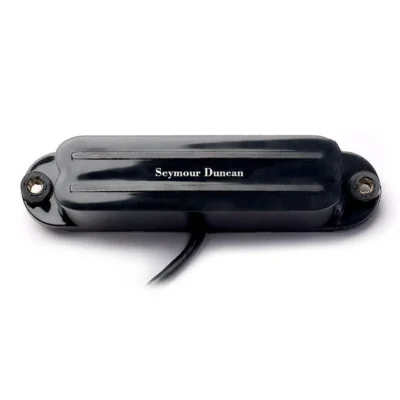 SKU: 11205-02-B
Seymour Duncan SHR-1b Hot Rails for Strat Guitar Pickup in Black Bridge
$269.00In Stock -
16% OFF
RRP $329.00
Save $54.00
Sale!
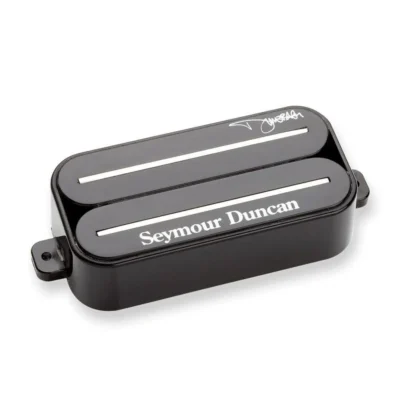 SKU: 11102-82-B
Seymour Duncan SH-13 Dimebucker Humbucker Guitar Pickup – Black
Original price was: $329.00.$275.00Current price is: $275.00.In Stock