
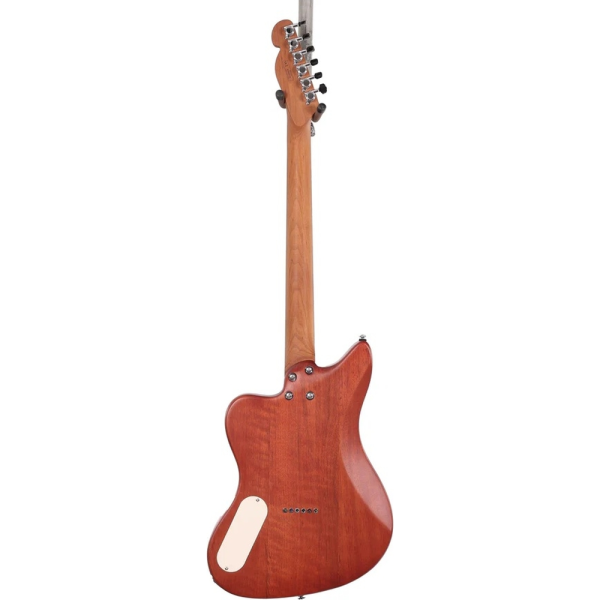
PJD St John “Origin” Pro Electric Guitar – Original Burst
★★★★★ 4.9 Stars — Over 1,500 Google Reviews
Original price was: $1,699.00.$1,399.00Current price is: $1,399.00.
FAST
Delivery
EASY
Returns
IN HOUSE
Repairs



Check AU Shipping Cost
Pick-up from store - FREE
Free pickup from our Melbourne Store at 4 Drake Boulevard, Altona VIC 3018. Your order will typically be ready by the next business day. We recommend calling us on (03) 8360 7799 beforehand to check it's ready for collection.
International Shipping
Please proceed to checkout to see international rates and avalability.
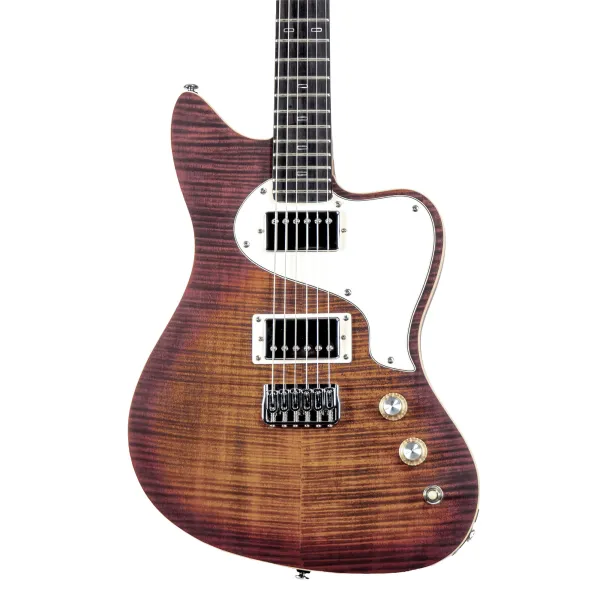
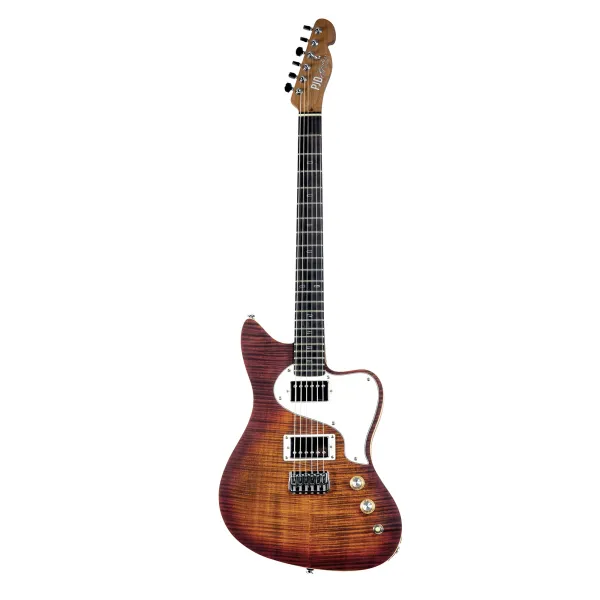
PJD St John Origin Pro — Original Burst Electric Guitar
The PJD St John Origin Pro is a UK-designed single-cut electric guitar manufactured in Indonesia, positioned above the Origin Standard in PJD's Origin Series. It shares the fundamental construction of the Standard — solid mahogany body, bolt-on maple neck, Indian rosewood fingerboard, fixed hardtail bridge — but upgrades every hardware and material specification that separates a working professional instrument from an entry-level one: a roasted maple neck, a figured maple veneer top with cream binding, a bone nut, locking tuners, and a pair of PJD Origin humbuckers voiced in the vintage PAF tradition. The Original Burst finish presents the figured maple veneer in a sunburst gradient — warm amber at the centre transitioning outward through honey and into a deeper edge — framed by cream binding and finished in satin polyurethane with an open grain back. Guitarist Magazine awarded the Origin Pro series 9 out of 10, citing the figured tops, PAF-style voicing, and consistent build quality across the range.
Angkor Music — What the Origin Pro Adds Over the Origin Standard
The PJD St John Origin Standard is an excellent entry point into PJD's range. The Origin Pro takes the same core concept and addresses each of the areas where the Standard makes material compromises. The neck is roasted maple — more stable, more resonant and tactilely different from unroasted maple. The nut is bone — a denser, more tonally transparent material than the synthetic nut used on most guitars at the Standard's price. The tuners lock, eliminating most of the string-slippage that causes detuning after bends and pick usage. The top adds a figured maple veneer with cream binding — primarily aesthetic, but contributing surface brightness and visual character not present on the Standard. And the pickups are both humbuckers, voiced for different roles rather than the mixed P90/humbucker layout of the St John Standard. The result is a guitar whose every contact point and tonal component has been considered and specified rather than accepted as given. At Angkor Music we stock both the Origin Standard and Origin Pro and can help you compare them in person or discuss which fits your playing. Contact us for current stock and availability.
PJD Origin Humbuckers — Dual Humbucker Voicing Explained
The St John Origin Pro uses PJD's own Origin humbuckers at both the bridge and neck positions. These are constructed using Alnico V magnets and enamel-coated wire — the same specification as PJD's UK-manufactured Standard humbuckers, scaled for production in the Origin Series. The two pickups are deliberately wound to different output levels and voicings:
- Bridge pickup — medium output: Wound to a medium output level that sits between a vintage PAF and a modern high-output humbucker. Medium output at the bridge produces a pickup with good clean headroom — it does not saturate as quickly as a high-output bridge pickup — while still having enough signal strength to push an amplifier into natural breakup when played hard. This is the working range for blues, classic rock, and country lead playing: dynamic and responsive to pick attack, with enough output to drive the amp without requiring a boost pedal to get there.
- Neck pickup — vintage PAF-style output: The neck pickup is wound at a lower output level in the vintage PAF tradition. PAF (Patent Applied For) humbuckers were the original Gibson humbuckers of the late 1950s, wound to relatively modest output specifications with hand-scattered coils. They are characterised by warmth, clarity, and a detailed, musical response to clean and low-gain tones. The neck position on the Origin Pro — lower output, Alnico V, enamel wire — produces a singing, warm, articulate lead tone that does not crowd the midrange or lose note definition when chords are played cleanly.
The combination of a medium-output bridge and a vintage-output neck is specifically designed so that the pickup selector's positions feel meaningfully different from each other. With a high-output bridge and a low-output neck, the output balance between positions is extreme enough to require significant volume compensation when switching; the Origin Pro's layout keeps both pickups in a range where switching is musically practical rather than requiring a pedal or amp adjustment.
How the Origin Pro Differs from the St John Origin Standard — Pickup Configuration
The St John Origin Standard uses an Alnico V P90 at the neck position and a humbucker at the bridge. The Origin Pro replaces the P90 with a second humbucker. This is a meaningful tonal difference:
| Feature | St John Origin Standard | St John Origin Pro |
|---|---|---|
| Neck pickup | Alnico V P90 single coil | PJD Origin humbucker — vintage PAF-style output |
| Bridge pickup | Alnico V humbucker | PJD Origin humbucker — medium output |
| Neck tone character | Bright, piano-like, slight single-coil hum | Warmer, fuller, hum-cancelling, vintage PAF clarity |
| Hum rejection | P90 has single-coil hum sensitivity | Both positions hum-cancelling |
| Neck | Maple | Roasted maple |
| Top | No top — body finish only | Figured flame maple veneer with cream binding |
| Nut | Synthetic | Bone (~42mm) |
| Tuners | Standard tuners | Locking tuners |
| Finish | Gloss polyurethane | Satin poly with open grain back |
Roasted Maple Neck — Stability, Resonance and Feel
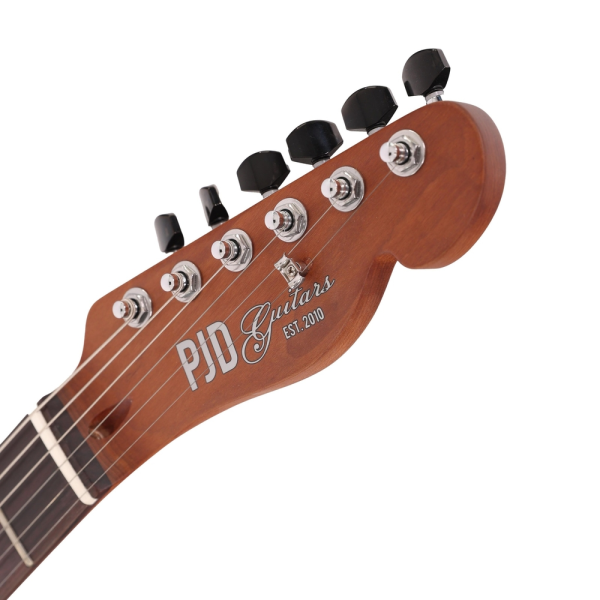
The Origin Pro's neck is constructed from roasted maple — maple that has been subjected to a thermal treatment process that removes residual moisture and alters the wood's cellular structure. The result is a neck that is substantially more dimensionally stable than unroasted maple: it responds less to changes in humidity and temperature, holds its relief and setup for longer, and is less susceptible to the seasonal swings in action and neck relief that affect standard maple instruments. Roasted maple also produces a more resonant neck with better sustain transmission — the reduction in moisture content makes the wood stiffer and more acoustically responsive — and the process produces a characteristic caramel-to-dark-brown colouration and a slightly drier, smoother tactile feel compared to the gloss-lacquered or raw satin surface of unroasted maple. On the Origin Pro, the roasted maple neck is a meaningful upgrade over the standard maple of the Origin Standard: it is more stable, more resonant, and more comfortable to handle.
Figured Maple Veneer Top — What a Veneer Is and What It Does
The Origin Pro's top is a figured flame maple veneer — a thin layer of figured maple applied over the mahogany body. It is important to understand that this is a veneer rather than a solid maple top. A solid maple top (as found on some higher-priced instruments) is a thick slab of maple that contributes measurably to the guitar's tonal character by adding brightness, sustain and attack to the mahogany body's warmth. A figured maple veneer is primarily an aesthetic addition: the layer is thin enough that its tonal contribution is relatively modest, but it presents the beauty of figured maple grain — the rippled, chatoyant pattern of flame maple — across the top of the guitar, and allows the Original Burst finish gradient to show through it in a way that flat-grained or non-figured wood cannot replicate. The cream binding around the perimeter of the top frames the burst and adds a clean, refined edge to the instrument's appearance. This is the same formula used by many established guitar makers for their mid-tier instruments: a figured veneer top over a solid mahogany body gives a visually striking result at a price that a solid figured maple top would not allow.
25.5-Inch Scale Length — Longer Than Gibson, What This Means
The Origin Pro's 25.5-inch (648mm) scale length is worth noting specifically. Most single-cut mahogany-bodied guitars of this style use a shorter scale — Gibson-standard instruments run at 24.75 inches. The Origin Pro's 25.5-inch scale is the Fender-standard length, and it produces a noticeably different playing and tonal experience even on a physically similar guitar. At a longer scale length, strings are under greater tension at standard pitch — the same gauge string at 25.5 inches is tighter than at 24.75 inches. This produces a brighter, more articulate tonal character with a tighter low-end response, a slightly firmer playing feel under the fingers, and often improved intonation consistency across the neck. Players switching from a shorter-scale instrument may prefer to drop one string gauge to compensate for the increased tension, or they may appreciate the additional definition the longer scale brings to the mahogany body's naturally warm low-end response.
Bone Nut and Locking Tuners — Why Hardware Details Matter
Two hardware specifications on the Origin Pro are worth understanding individually. The bone nut — approximately 42mm wide — is a denser and harder material than the synthetic plastics used on most production guitars. Bone transmits vibration more efficiently at the string's contact point with the nut, producing better sustain, clearer open string tone and more natural intonation at the first few frets. It also wears more slowly than soft synthetic materials and can be cut and filed with precision to produce a consistent, optimised action. The locking tuners grip the string mechanically with a locking mechanism rather than requiring the string to be wound around the post multiple times. The conventional wind around a tuner post creates a coil of string that can slip and settle during playing, causing detuning particularly after string bends. Locking tuners remove this as a variable — the string is gripped at the post and changes pitch only through turning the tuner. Combined with the bone nut, the Origin Pro's tuning stability is substantially better than a standard-hardware instrument of this type.
Original Burst Finish — The Finish Explained
Original Burst refers to a vintage sunburst finish applied over the figured maple veneer top. A sunburst is a graduated finish that transitions from a lighter colour at the centre of the guitar's body outward to a darker colour at the edges — in the Original Burst's case, a warm amber or honey centre graduating through brown and into a rich edge colour, with the figured flame maple grain visible through the burst gradient. The sunburst as a finish style traces directly to late 1950s American electric guitar manufacturing, where it was developed to show the natural grain of figured maple tops while protecting the wood and covering the join between body sections. On the Origin Pro, the figured maple veneer gives the burst gradient something to show: the flame pattern in the maple is visible through the colour layers, producing the shimmer and visual depth that makes a burst over figured maple one of the most recognisable and enduring finishes in electric guitar manufacturing. The satin poly finish with open grain back provides a contrasting feel between the bound figured top and the natural mahogany back — a practical and aesthetically considered combination.
Who Is the St John Origin Pro For?
- Players who want a professional-specification single-cut electric guitar at a price that reflects PJD's direct-to-player business model rather than a major brand's retail structure
- Guitarists whose preferred tonal range sits in the PAF humbucker tradition — clean to moderately driven, with warmth, clarity and dynamic response — and who want a guitar built specifically for that application
- Players who have considered the Origin Standard but want locking tuners, a bone nut and a roasted maple neck as baseline hardware specifications
- Anyone who wants a burst-over-figured-top single-cut guitar with the visual and playing character of a vintage-influenced instrument, at a price that does not require a vintage-instrument budget
- Live players who need tuning stability through full sets with regular string bending — the locking tuners and bone nut combination addresses this directly
- Players who prefer both pickups to be hum-cancelling humbuckers rather than the mixed P90/humbucker layout of the St John Origin Standard
Specifications
| SKU | 16220 |
| Brand | PJD Guitars |
| Model | St John Origin Pro |
| Finish | Original Burst — satin poly, open grain back |
| Body | Solid mahogany |
| Top | Figured flame maple veneer with cream binding |
| Neck | Roasted maple, bolt-on — PJD Standard profile |
| Fingerboard | Indian rosewood |
| Scale Length | 25.5" (648mm) |
| Fingerboard Radius | 10" |
| Frets | 22 medium |
| Nut | Bone (~42mm width) |
| Neck pickup | PJD Origin humbucker — Alnico V, vintage PAF-style output |
| Bridge pickup | PJD Origin humbucker — Alnico V, medium output |
| Controls | 1 volume, 1 tone, 3-way toggle switch |
| Bridge | Fixed hardtail |
| Tuners | Locking |
| Origin | Designed in the UK, manufactured in Indonesia |
Expert Advice at Angkor Music
At Angkor Music Melbourne we stock PJD Guitars including the St John Origin Standard and Origin Pro. If you want to compare the two in person, discuss which pickup configuration suits your playing, or check current stock in each finish and configuration, our team can help.
★★★★★
4.9 Stars — Read Our 1,600+ Google Reviews →
Frequently Asked Questions
What is the difference between the St John Origin Standard and the St John Origin Pro?
The Standard and Pro share a solid mahogany body and bolt-on neck configuration, but diverge at almost every other specification. The Pro uses a roasted maple neck (the Standard uses unroasted maple), a figured maple veneer top with cream binding (the Standard has no top), a bone nut (the Standard uses synthetic), locking tuners (the Standard uses conventional tuners), and a satin finish with open grain back rather than gloss. The pickups are also different: the Standard uses a P90 at the neck and a humbucker at the bridge; the Pro uses two PJD Origin humbuckers, with the neck voiced in the vintage PAF tradition and the bridge at medium output. The Pro is a more comprehensively specified instrument designed for players who want professional hardware as a baseline rather than a starting point.
What does "vintage PAF-style output" mean for the neck pickup?
PAF stands for Patent Applied For — the label used on Gibson's original humbuckers from the late 1950s, which are considered the benchmark for humbucker tone. PAF pickups were wound to relatively modest output levels with hand-scattered coils, producing a warm, clear, musically articulate tone that responds well to volume and tone adjustments and cleans up expressively when the guitar's volume is rolled back. "Vintage PAF-style output" in the context of the Origin Pro's neck pickup means it is voiced in this tradition: lower output than a modern or high-output humbucker, with warmth, detail and dynamics as priorities. It is not a replica of any specific PAF, but it operates in the same output range and tonal philosophy.
What is the practical difference between a roasted maple neck and a standard maple neck?
Roasted maple has had moisture thermally driven out of it, which makes the neck more dimensionally stable — it is less affected by changes in humidity and temperature than unroasted maple. In practical terms this means the setup holds for longer between adjustments. Roasted maple also feels different to play: the surface has a slightly drier, smoother texture than standard maple, and the colour is a warm caramel to brown rather than the pale cream of unroasted maple. Tonally, the reduced moisture content makes roasted maple slightly stiffer and more resonant, which contributes to improved sustain and a cleaner transmission of vibration through the neck joint.
Is 25.5 inches a standard scale length for a single-cut guitar?
Not for most single-cut guitars in this style. The majority of mahogany-bodied single-cut instruments follow Gibson's 24.75-inch scale length. PJD's 25.5-inch scale on the Origin Pro uses the Fender-standard measurement instead, which produces a noticeably different feel: strings are under more tension at standard pitch, giving a tighter, firmer response and a slightly brighter tonal character. Players used to 24.75-inch scale instruments may want to try a slightly lighter string gauge on the Origin Pro to maintain a similar tension feel, or they may prefer the added definition the longer scale brings. There is no right answer — it depends on your playing style and tonal preferences.
Is the figured maple top solid or a veneer?
The figured maple top on the Origin Pro is a veneer — a thin decorative layer of figured maple applied over the solid mahogany body. It is not a thick solid maple top. The veneer's primary contribution is aesthetic: it presents the flame figure and sunburst gradient of the Original Burst finish. Tonally, a thin veneer contributes less to the overall sound than a solid maple top would, so the Origin Pro's tonal character is primarily shaped by the solid mahogany body. This is common practice across mid-tier instruments from most established manufacturers, and the resulting guitar is no less capable or valuable for it — but if a solid maple top is a specific requirement, that should be confirmed before purchase.
Additional information
| Weight | 2.90 kg |
|---|---|
| Type | Electric Guitar |
Related Items & Accessories
Related products
-
35% OFF
RRP $3,399.00
Save $1,200.00
Sale!
 SKU: 041640
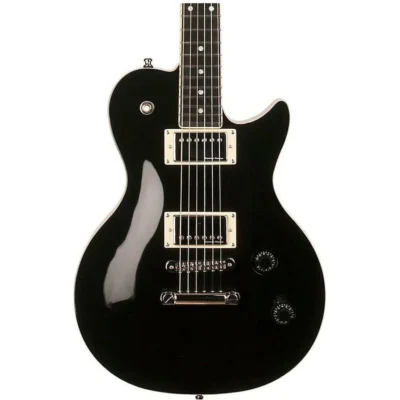
GODIN SUMMIT CLASSIC (CT) HB Black with Gig bag Seymour Duncan Humbuckers
Original price was: $3,399.00.$2,199.00Current price is: $2,199.00.Out of stock -
56% OFF
RRP $7,999.00
Save $4,500.00
Sale!
 SKU: 04135
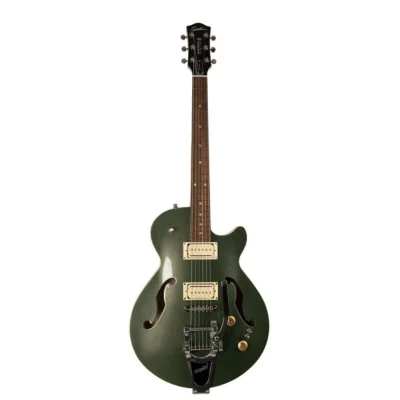
Godin Montreal Premiere Limited Desert Green w/Bigsby Archtop Electric Guitar
Original price was: $7,999.00.$3,499.00Current price is: $3,499.00.Out of stock -
8% OFF
RRP $92.00
Save $7.00
Sale!
 SKU: 14010601 – Ruthenium
Schaller New S Locks (Pair) Ruthenium 14010601 Strap Locks / security Locks
Original price was: $92.00.$85.00Current price is: $85.00.In Stock -
17% OFF
RRP $359.00
Save $60.00
Sale!
 SKU: 11102-21-Gc
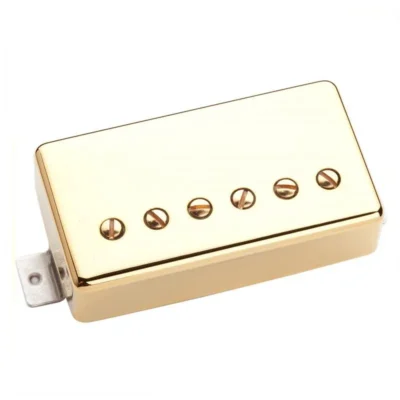
Seymour Duncan SH-6b Distortion Humbucker Gold Cover Bridge Pickup 11102-21-GC
Original price was: $359.00.$299.00Current price is: $299.00.In Stock -
 SKU: 11102-01-Gc
Seymour Duncan SH-2n Jazz Neck Model Humbucker Guitar Pickup Gold
$359.00In Stock