
Schecter Hellraiser C-1 – Electric Guitar – Black Cherry
★★★★★ 4.9 Stars — Over 1,500 Google Reviews
Original price was: $2,699.00.$2,199.00Current price is: $2,199.00.
FAST
Delivery
EASY
Returns
IN HOUSE
Repairs



Check AU Shipping Cost
Pick-up from store - FREE
Free pickup from our Melbourne Store at 4 Drake Boulevard, Altona VIC 3018. Your order will typically be ready by the next business day. We recommend calling us on (03) 8360 7799 beforehand to check it's ready for collection.
International Shipping
Please proceed to checkout to see international rates and avalability.
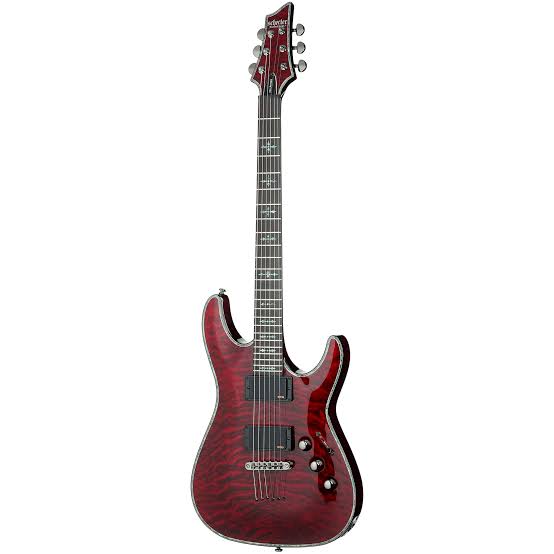
Schecter Hellraiser C-1 Electric Guitar — TonePros TOM & EMG Coil-Split — Black Cherry
The Schecter Hellraiser C-1 is the fixed-bridge configuration of the Hellraiser series — the same Mahogany body, arched Quilted Maple top, abalone Gothic Cross inlays, abalone binding and EMG coil-split electronics as the Floyd Rose variant, with the tremolo replaced by a TonePros T3BT Tune-O-Matic bridge with string-through-body anchoring. The result is a guitar optimised for maximum resonance, tuning stability and low maintenance. It covers the same tonal range as its FR counterpart via the EMG 81TW and 89R coil-split system, without the setup overhead and string-change complexity of a Floyd Rose.
★ Expert Insight — Why the TonePros Bridge Makes a Difference
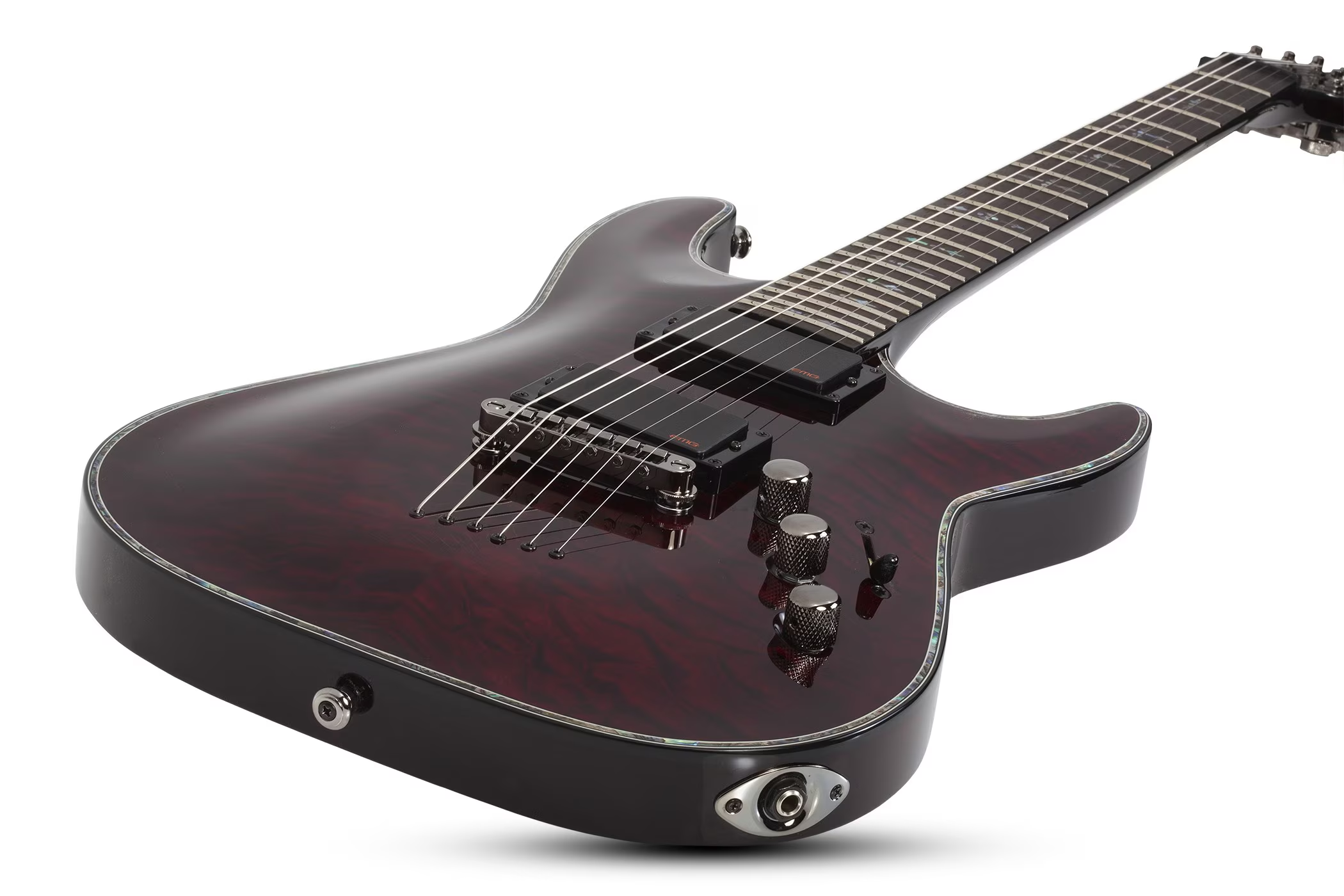
Most Tune-O-Matic bridges sit in their body studs loose — the posts are free to move slightly within the stud bushings, and the bridge itself sits on top of the posts with gravity and string tension as the only anchoring. This introduces micro-movement at the bridge that bleeds vibration away from the strings. TonePros addresses this with a locking system: the bridge posts lock into the body studs via a set screw that prevents any movement. The bridge's vibration is fully coupled to the body rather than partially lost in the joint.
Add string-through-body anchoring — where the strings pass through the body and the ball ends sit in ferrules on the rear — and the downward angle of the strings across the bridge saddles increases significantly compared to a stop-tail arrangement. This increases saddle contact pressure and contributes to the guitar's sustain and resonance. String-through-body is not a cosmetic feature; it changes how the string's energy transfers into the guitar body.
TonePros T3BT — Locking Tune-O-Matic with String-Through Body
The TonePros T3BT is a Tune-O-Matic style bridge built to metric post dimensions, suited to the metric hardware specification common on Schecter and other modern instruments. Its distinguishing feature is the TonePros locking system: a set screw on each bridge post locks the post into the body stud bushing, preventing any rotational or lateral movement under string tension and vibration. In a standard non-locking TOM, the posts can rotate or shift slightly in the bushing over time, which introduces inconsistency in intonation and bleeds resonance at the bridge interface. The TonePros lock eliminates this.
The individual bridge saddles are adjustable for both intonation and string height (action), following standard Tune-O-Matic geometry. Intonation is set by adjusting the saddle position fore and aft along the bridge; action is adjusted by raising or lowering the bridge posts. Both adjustments are made with straightforward hand tools.
On the Hellraiser C-1, the strings anchor at the rear of the guitar body rather than at a stop-tail anchored to the bridge posts. The strings pass through the body via individual holes and terminate in ferrules on the back. This string-through-body anchoring increases the break angle over the bridge saddles — the angle at which the string descends from the saddle toward the anchor point. A steeper break angle means greater downward pressure on the saddle, which improves contact between string and saddle and transfers more of the string's vibrational energy into the bridge and body. The practical result is more resonance and sustain than a floating stop-tail arrangement provides, along with a slightly firmer, more defined attack character.
The TonePros T3BT is a hardware-forward choice: it prioritises the transmission of the string's energy into the guitar body without compromise. Compared to a Floyd Rose tremolo, a fixed TOM bridge offers better raw resonance (no springs absorbing energy in the tremolo cavity), simpler string changes and setup, and zero ongoing tremolo maintenance. The trade-off is, of course, no pitch-bend capability via a tremolo arm.
EMG 81TW — Active Bridge Humbucker with Coil Split
The EMG 81TW is the coil-splitting variant of the EMG 81, one of the most widely used active bridge humbuckers in hard rock and metal. It uses ceramic magnets and an internal active preamp powered by the shared 9V battery, producing a high-output, low-impedance signal with tight, controlled low end and clear high-frequency articulation under heavy gain. The preamp eliminates the signal degradation from cable capacitance that passive pickups experience, keeping the tone consistent regardless of cable length or run.
The "TW" (Twin Coil) designation means the 81TW can be split to a single active coil via the push-pull bridge volume control. In split mode the tone shifts to a brighter, more open character with more pick attack and less low-mid weight — a meaningfully different voice for clean and light-gain passages while remaining active (and therefore higher-output and quieter than a passive single coil) in both modes.
EMG 89R — Active Neck Humbucker with Coil Split
The EMG 89R is EMG's neck-position active humbucker with built-in coil-split capability. In full humbucker mode it voices similarly to the EMG 85 — warmer and more open than the 81, suited to neck-position lead tones, clean chord work and the fuller, rounder register of the neck position. Activated via the push-pull neck volume control, it splits to a single-coil active voice.
The "R" indicates reverse-wound, reverse-polarity construction. When the 89R's single-coil split is combined with the 81TW's split (middle pickup selector position, both push-pulls engaged), the two voices hum-cancel. In the centre of the pickup selector with both pickups split, the Hellraiser C-1 produces a clean, noise-free blend of two active single-coil tones — bright, defined and hum-free — that is genuinely different from either full humbucker position and not commonly available on active-pickup guitars.
Mahogany Body, Arched Quilted Maple Top — Hellraiser Build
The Hellraiser C-1 uses a Mahogany body. Mahogany produces warm, sustaining tones with a pronounced midrange — a tonewood profile that pairs well with the EMG 81TW's ceramic magnet articulation, which leans toward high-end clarity and a scooped mid response. The two characteristics balance each other: the body's warmth fills in the midrange that the pickup's character leaves open, while the pickup's high-end definition cuts through the body's natural roundness.
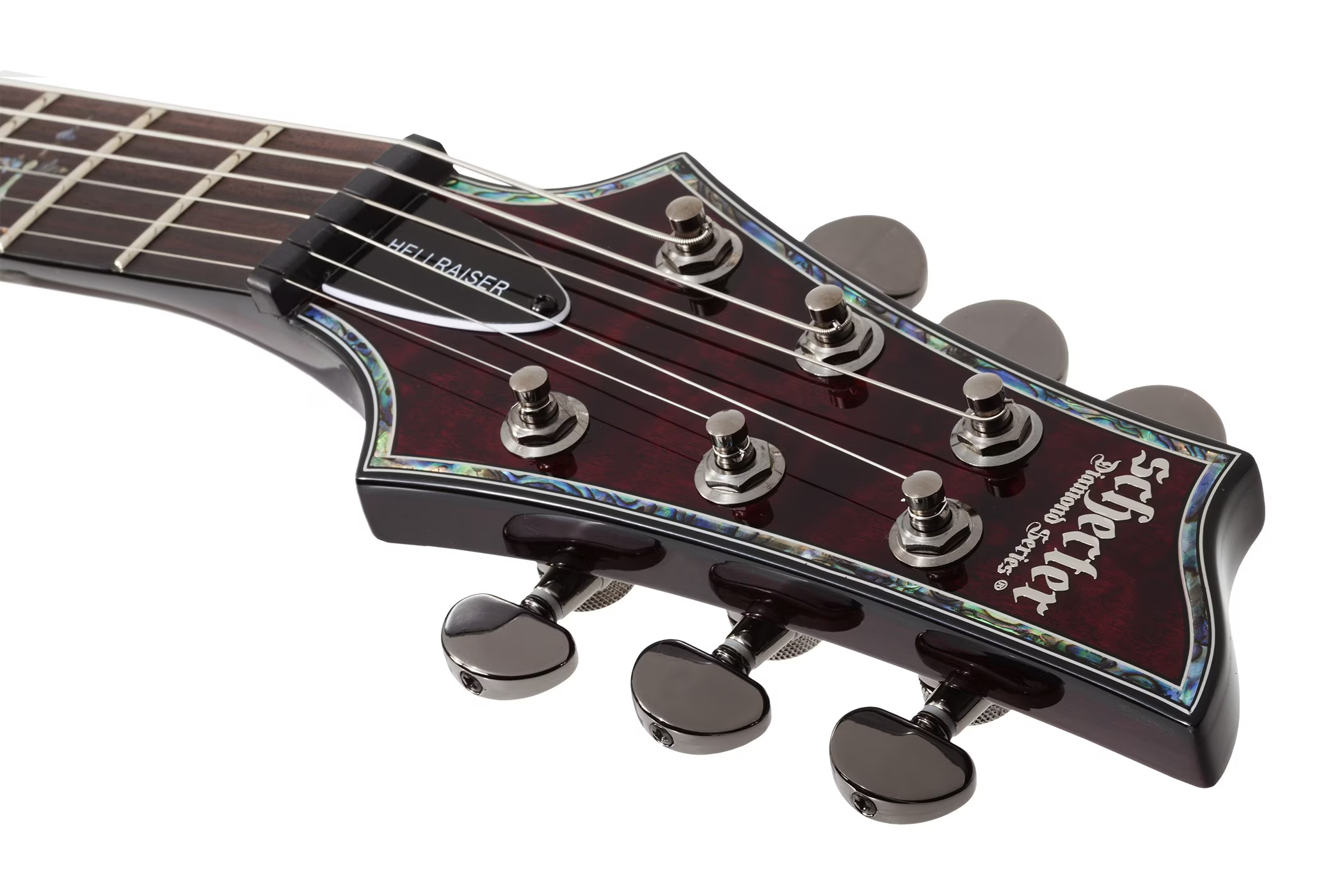
The body is topped with an arched Quilted Maple cap. Quilted maple shows three-dimensional figuring — a rippling, bubbling pattern in the grain that catches light at different angles — and in Black Cherry the visual effect is a deep translucent red with dark patterning. The arched contour adds physical dimension to the top rather than lying flat. Abalone binding frames the top and runs to the body edges, matched by the BLK/WHT/BLK multi-ply binding layer beneath it, and continued in the abalone Gothic Cross inlays on the fretboard.
3-Piece Mahogany Neck, Rosewood Fretboard, Gothic Cross Inlays
The 3-piece Mahogany neck uses a Thin C profile at 20mm depth at the first fret and 22mm at the twelfth. Three-piece neck construction laminate alternating grain sections for improved dimensional stability — the neck is less prone to warping or twisting from humidity and temperature changes than a single-piece alternative. The Graph Tech XL Black Tusq nut is a low-friction synthetic material that allows strings to pass cleanly over the nut during playing without binding, paired with Schecter locking tuners at the headstock that clamp the string at the tuning post to eliminate string wind slippage.
The rosewood fretboard has a 14-inch (355mm) radius — flat enough to minimise fretting-out on wide bends across 24 X-Jumbo frets. X-Jumbo wire is tall and wide, reducing the force needed to fret cleanly and extending the life of the frets before levelling is required. Set-neck construction with Ultra Access heel contouring allows full access to all 24 frets without the thumb catching the body edge.
Who Is the Hellraiser C-1 For?
The Hellraiser C-1 is for players who want the full Hellraiser build — active EMGs, abalone Gothic Cross inlays, arched Quilted Maple top, abalone binding, set-neck — without a tremolo. This is a guitar that prioritises resonance, sustain, tuning stability and low maintenance. Players who do not use a tremolo arm regularly will find a fixed TonePros bridge outperforms a floating Floyd Rose in every measure that doesn't involve pitch bending: better coupling of string energy to the body, no springs to manage, no setup drift from temperature changes, and string changes done in under two minutes.
Compared to the Hellraiser C-1 FR (SCH1794), this guitar is mechanically simpler and tonally more resonant at rest. Compared to the Hellraiser C-1 FR S (SKU 1826), it adds the 89R as a full active neck pickup in place of the Sustainiac. Players who want a guitar they can pick up and play at full performance spec with minimal maintenance, and who want genuine tonal range from coil splitting, will find the Hellraiser C-1 a compelling instrument.
Specifications
| Feature | Specification |
|---|---|
| SKU | SCH1788 |
| Model | Schecter Hellraiser C-1 |
| Colour | Black Cherry (BCH) |
| Construction | Set-neck with Ultra Access heel carve |
| Body | Mahogany |
| Top | Quilted Maple |
| Top Contour | Arched top |
| Binding | Abalone with BLK/WHT/BLK multi-ply |
| Neck | 3-piece Mahogany, Thin C profile |
| Neck Thickness | 20mm at 1st fret / 22mm at 12th fret |
| Fretboard | Rosewood |
| Scale Length | 25.5" (648mm) |
| Fretboard Radius | 14" (355mm) |
| Frets | 24 X-Jumbo |
| Inlays | Abalone Gothic Crosses |
| Nut | Graph Tech XL Black Tusq |
| Nut Width | 1.653" (42mm) |
| Truss Rod | 2-way adjustable, 5/32" (4mm) Allen key |
| Bridge | TonePros T3BT locking Tune-O-Matic, string-through-body |
| Tuners | Schecter locking tuners |
| Bridge Pickup | EMG 81TW (active humbucker / coil-split via push-pull volume) |
| Neck Pickup | EMG 89R (active humbucker / coil-split via push-pull volume, reverse-wound) |
| Controls | Volume (push-pull coil split) / Volume (push-pull coil split) / Tone / 3-way pickup selector |
| Hardware Colour | Black Chrome |
| Knobs | Metal knurled with set screw |
| Strings | Ernie Ball Regular Slinky #2221 (.010–.046) |
| Battery | 1 × 9V (shared by both EMG pickups) — clip-in compartment |
| Dexterity | Right-handed |
| Case | Not included — sold separately |
The fixed-bridge Hellraiser plays and responds differently from the Floyd Rose variants in ways that are easier to feel than to describe. If you want to compare the C-1, C-1 FR and C-1 FR S side by side — or just have questions about the TonePros bridge, the coil-split system, or which Hellraiser suits your playing — come in and our team will walk you through it.
Frequently Asked Questions
What does the TonePros locking bridge actually lock, and why does it matter?
On a conventional Tune-O-Matic setup, the bridge posts sit in bushings pressed into the body but are not fixed — they are free to rotate or shift slightly under string tension and vibration. TonePros adds a small set screw to each post that locks it into the bushing, preventing any movement. This keeps the bridge in firm, rigid contact with the body at all times. The practical result is more efficient transfer of the string's vibrational energy into the body — less energy is dissipated at the bridge joint — which contributes to sustain and tonal consistency. It also makes the bridge more stable under string bending and repeated playing, and removes the intonation drift that can occur when non-locking posts rotate slightly over time.
Does string-through-body affect how the guitar sounds compared to a stop-tail?
Yes, though the difference is subtle rather than dramatic. With string-through-body, the string passes through the guitar and the ball end anchors at the rear, which produces a steeper break angle over the bridge saddles than a stop-tail provides. This steeper angle increases the string's downward pressure on the saddle, improving contact between string and saddle and transferring more of the string's energy into the bridge. Most players describe string-through-body as producing slightly more sustain and a marginally firmer attack character compared to a stop-tail. The difference is most noticeable when playing single notes with clean or lightly driven tones — under heavy gain, the effect is less perceptible.
How does this compare to the Hellraiser C-1 FR (SCH1794)?
The SCH1788 and SCH1794 share the same electronics (EMG 81TW bridge, EMG 89R neck, push-pull coil-split volumes, 9V battery), the same neck, fretboard, nut, tuners, body and top. The only differences are the bridge and the absence of a tremolo. The SCH1788 has a TonePros T3BT locking TOM with string-through-body; the SCH1794 has a Floyd Rose 1000 Series tremolo with locking saddles (but no locking nut). Choose the SCH1788 if you don't use a tremolo arm and want better resonance, simpler string changes and zero tremolo maintenance. Choose the SCH1794 if you use the arm for vibrato and pitch effects. Neither is objectively better — they are different tools for different playing styles.
What does pulling the volume knobs do?
Each volume knob has a push-pull function that activates the coil split for its pickup. Pull the bridge volume up to split the EMG 81TW from a full active humbucker to a single active coil — the tone becomes brighter and more open, with more pick attack definition. Pull the neck volume up to split the EMG 89R the same way. In the middle pickup selector position with both push-pulls engaged, the reverse-wound EMG 89R coil hum-cancels with the bridge coil, producing a clean, noise-free blend of both split voices. All six tonal combinations (three selector positions × push-pulls engaged or not) are available independently and can be changed on the fly during performance.
Does a fixed bridge guitar sustain better than a Floyd Rose?
Generally yes, and the reason is mechanical. A Floyd Rose floats in a routed cavity supported by springs in a spring claw — there is a spring system absorbing some of the string's vibrational energy behind the bridge. A fixed bridge like the TonePros TOM transmits the string's energy directly into the body with no spring system in the signal path. Players who have compared the same guitar model in fixed-bridge and Floyd Rose configurations consistently report that the fixed bridge version sustains longer and feels more acoustically resonant. This is one reason many players choose a fixed-bridge guitar for their primary studio or recording instrument, even if they own a Floyd Rose guitar for live performance.
Playing the Hellraiser C-1? We'd love to hear about it.
Leave us a Google Review — it helps other musicians find quality gear.
Additional information
| Weight | 0.0000 kg |
|---|---|
| type | Electric Guitar |
| Body Type | Solid-body |
| Dexterity | Right-Handed |
Related Items & Accessories
Related products
-
15% OFF
RRP $299.00
Save $44.00
Sale!
 SKU: 11102-96-B
Seymour Duncan 11102-96-B Nazgul Bridge Black Guitar Pickup
Original price was: $299.00.$255.00Current price is: $255.00.In Stock -
40% OFF
RRP $4,699.00
Save $1,900.00
Sale!
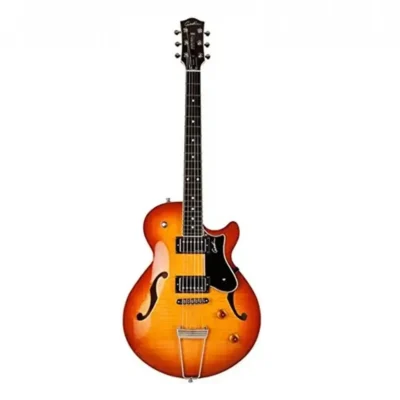 SKU: 039852
GODIN Montreal Premiere Supreme Lightburst Flame HG Supreme Semi Hollow
Original price was: $4,699.00.$2,799.00Current price is: $2,799.00.Out of stock -
36% OFF
RRP $4,199.00
Save $1,500.00
Sale!
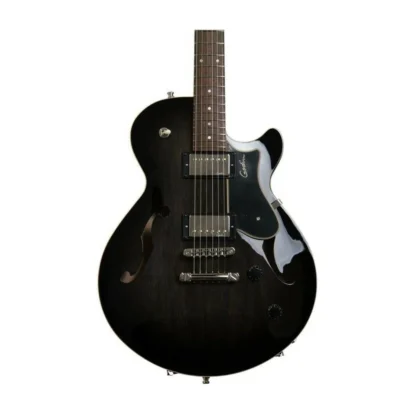 SKU: 036745
GODIN Montreal Premiere HG – Trans Black Semi Hollow Electric Guitar
Original price was: $4,199.00.$2,699.00Current price is: $2,699.00.In Stock -
18% OFF
RRP $3,299.00
Save $600.00
Sale!
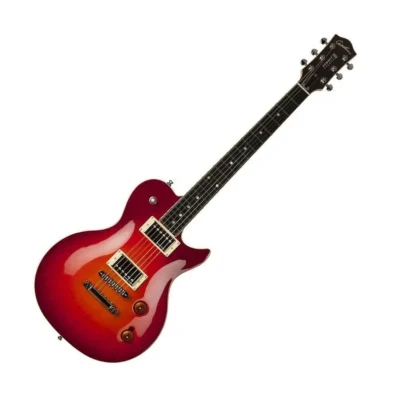 SKU: 041657
GODIN SUMMIT CLASSIC (CT) HB Cherryburst with Gig bag Seymour Duncan Humbuckers
Original price was: $3,299.00.$2,699.00Current price is: $2,699.00.Out of stock -
8% OFF
RRP $299.00
Save $24.00
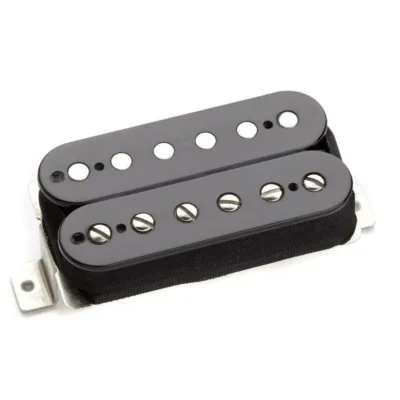 SKU: 1101-05-B4c
Seymour Duncan SH-1b ’59 Model 4-Conductor electric Guitar Pickup – Black Bridge
Original price was: $299.00.$275.00Current price is: $275.00.Out of stock