
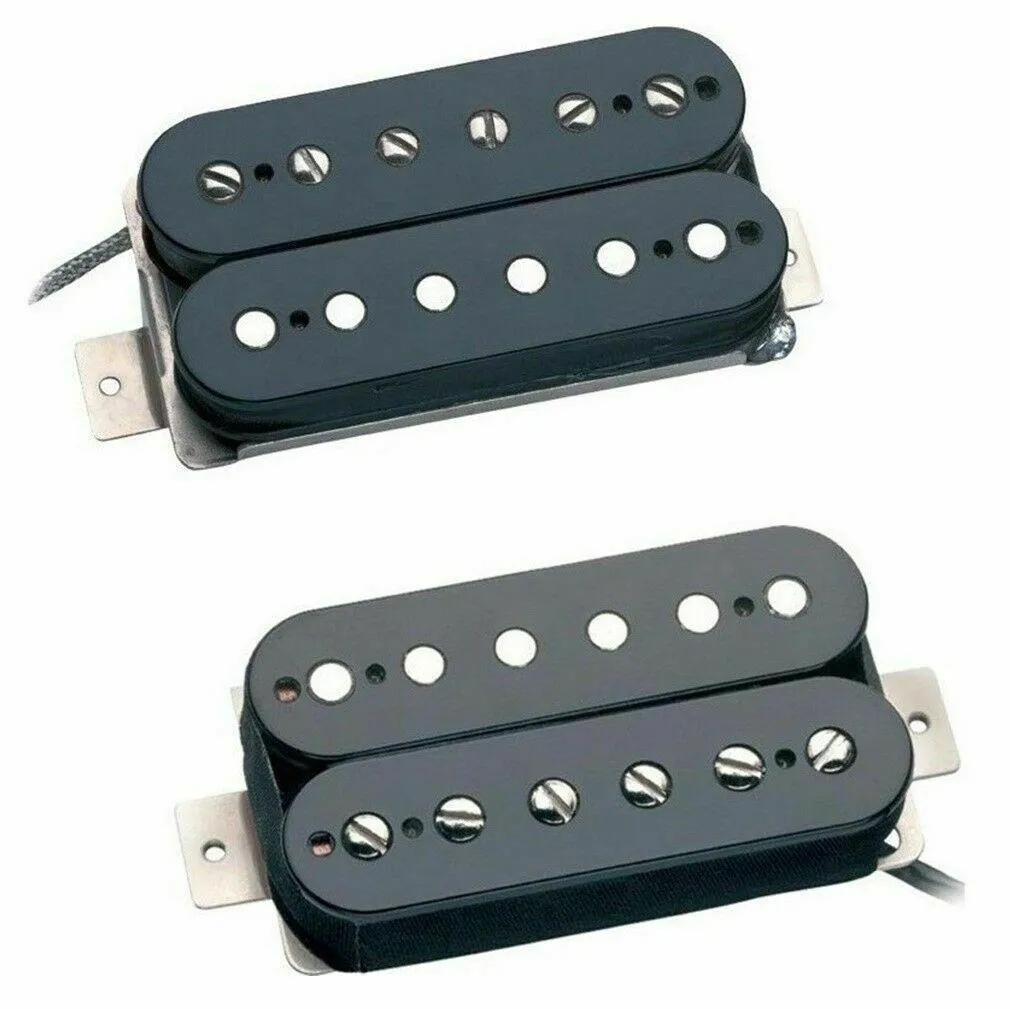
Seymour Duncan Vintage Blues ’59 Guitar Pickup Set SH1-B SH1-N Black
★★★★★ 4.9 Stars — Over 1,500 Google Reviews
Original price was: $529.00.$410.00Current price is: $410.00.
FAST
Delivery
EASY
Returns
IN HOUSE
Repairs



Pick-up from store - FREE
Free pickup from our Melbourne Store at 4 Drake Boulevard, Altona VIC 3018. Your order will typically be ready by the next business day. We recommend calling us on (03) 8360 7799 beforehand to check it's ready for collection.
International Shipping
Please proceed to checkout to see international rates and avalability.
Seymour Duncan Vintage Blues '59 Humbucker Set — Black (SH-1)
The Seymour Duncan Vintage Blues '59 Set (SKU: 11108-05-B) is a matched pair of SH-1 humbuckers — one calibrated for the neck position (7.43k DCR) and one for the bridge (8.13k DCR) — built to the same construction principles as the original PAF humbuckers of the late 1950s. Plain enamel wire, a long-legged bottom plate, Alnico V bar magnets and a single conductor braided shield cable reproduce the physical construction of the pickups that defined electric guitar tone in the late 1950s and remain the tonal reference point for classic rock, blues, jazz and country. The '59 is Seymour Duncan's most popular and most versatile humbucker — a pickup that rewards being understood rather than simply installed.
Angkor Music — Why the SH-1 '59 Is Seymour Duncan's Benchmark Pickup
The SH-1 '59 is the pickup Seymour Duncan built his reputation on — a faithful reconstruction of the original Gibson PAF humbucker, made by hand in Santa Barbara using the same wire, magnets and physical construction as the originals. Every Seymour Duncan pickup is understood in relation to the '59: more output, less output, brighter, warmer, higher-gain. If you're upgrading a Les Paul, an ES-335-style semi-hollow, or any double-humbucker guitar and you want the tonal character those guitars were designed around, the '59 set is the correct starting point. At Angkor Music we stock Seymour Duncan pickups including the SH-1 in individual neck and bridge configurations as well as sets. If you want advice on whether the '59 is the right choice for your specific guitar, amplifier and playing style, our team can help.
What Is a PAF? The History Behind the '59
PAF stands for Patent Applied For — the sticker Gibson applied to the underside of their humbucker pickups from 1957 until the patent was granted in 1959, at which point the stickers changed to read "Patent No." The PAF was designed by Seth Lover at Gibson and introduced in 1957 as a solution to the 60-cycle hum that afflicted the single-coil pickups of the era. A humbucker uses two coils wound in opposite directions and wired out of phase, which cancels the electromagnetic interference that single coils pick up. The tonal by-product — fuller, warmer, with a compressed midrange and reduced high-frequency content compared to a single coil — became the defining sound of the Gibson Les Paul and, through it, of an enormous range of popular music from the 1960s onwards.
The original PAF pickups were made between approximately 1957 and 1962. They varied slightly between units — different magnet charges, slightly different wind counts, variations in the scatter wind — which is why original PAFs can sound different from one another. The consistent elements were the construction materials: plain enamel wire, Alnico magnets, and the long-legged bottom plate. Seymour Duncan's SH-1 '59 is a reconstruction of the original PAF based on the study and rewinding of original specimens, aimed at capturing the consistent tonal character that made the originals legendary.
Construction Details — What Makes the '59 Different from a Generic Humbucker
Plain enamel wire: Original PAF pickups were wound with plain enamel copper wire — a single layer of enamel insulation applied directly to the copper conductor. Modern pickups are more commonly wound with polyurethane (poly) wire, which has a thicker, more consistent insulation coating. Enamel wire is thinner and less uniform, which affects how the windings stack and compress against each other within the bobbin. The result is a slight capacitance effect between adjacent windings that contributes to the softer, more compressed top-end character associated with vintage PAF tone. Plain enamel wire is more difficult to work with and more expensive than poly wire; it is a deliberate vintage specification choice.
Long-legged bottom plate: The bottom plate of a PAF humbucker has extended "legs" — the mounting frame extensions below the baseplate itself. This was the original PAF construction method, used consistently in the late 1950s before Gibson modified the design. The long-legged plate is structurally identical in function to later designs but is an accurate physical reproduction of the original construction. It affects mounting compatibility: long-legged bottom plates require the correct routing depth and may not fit flush in all retrofit situations. The SH-1 uses this construction because it is part of the original PAF specification.
Alnico V bar magnets: The '59 uses Alnico V — an aluminium-nickel-cobalt alloy with a higher coercive force than Alnico II or Alnico IV. Alnico V produces stronger magnetic field strength, which translates to a slightly higher output, better sustain, and a brighter top-end character than the softer Alnico II. Many original PAFs used Alnico II or a mix of Alnico grades; the '59's choice of Alnico V is a deliberate modern voicing decision within the vintage construction context. The result is a '59 that sounds vintage but responds with slightly more punch and definition than the softest Alnico II-wound originals.
Single conductor braided shield cable: Original PAF pickups used single conductor wiring — one signal wire plus a braided copper shield as the ground. Modern four-conductor wiring allows coil splitting, parallel wiring and other switching configurations; single conductor does not. The '59 uses single conductor as an accurate vintage specification. If you want coil-split capability from the '59, you would need to rewire the pickup internally to access both coil taps — this is possible but requires modification. The standard installation uses the single conductor as intended.
Neck vs Bridge — Why the Set Uses Different Output Levels
The SH-1 neck pickup measures 7.43k DCR; the bridge measures 8.13k DCR. This difference is intentional and is how professional pickup sets are designed. The bridge position on a guitar sits close to the saddle, where string vibration amplitude is naturally smaller and brighter. The neck position sits over the point of maximum string movement, where the signal is naturally fuller and louder. If both pickups had identical output, the neck pickup would be significantly louder and warmer than the bridge when switching between them.
By winding the bridge pickup slightly hotter than the neck, Seymour Duncan balances the output and perceived tone across both positions so the transition between neck and bridge feels even rather than jarring. The difference is calibrated — not simply "bridge is louder" — so both pickups sit within the same tonal register while accounting for the acoustic differences in each mounting position.
The resonant peak figures reflect this: the neck pickup peaks at 6.8kHz (brighter, which compensates for the neck's natural warmth) and the bridge at 6kHz (slightly warmer, which complements the bridge's natural brightness). Both sit well within the vintage humbucker range.
Tonal Character and Playing Styles
The EQ signature (Treble 8 / Mid 3 / Bass 6) indicates a pickup that is treble-forward, with a relatively scooped midrange and moderate bass response. This is the classic PAF voicing: clean notes ring with clarity and sustain, chords have definition without the fundamental overwhelming the overtones, and overdriven tones bloom with the kind of smooth, singing compression that vintage-voiced humbuckers produce.
The '59 set suits players who work across clean, edge-of-breakup and driven tones within a single session:
- Clean: Warm, crystalline, and touch-sensitive. Low-output pickups like the '59 respond to pick attack and playing dynamics in a way that higher-output modern pickups do not — dig in and the tone opens up, ease off and it cleans up without losing definition.
- Edge-of-breakup: The moderate output means the amp's preamp is doing the work at lower gain settings. The '59 produces the kind of responsive, harmonic-rich edge-of-breakup tone that is the reference point for classic rock and blues rhythm playing.
- Driven: The '59 drives into overdrive or distortion with a full, warm character. It does not tighten and compress in the modern high-gain manner; instead it saturates with a singing, sustaining quality better suited to classic rock, blues-rock and lead tone than to contemporary metal.
- Jazz and clean articulation: The neck pickup's lower output and brighter resonant peak make it well-suited to jazz and clean chord-melody work — full without being muddy, with good note separation on complex chord voicings.
Compatibility — What Guitars and Configurations
The SH-1b bridge pickup is designed for guitars with traditional string spacing of 1.925" (48.9mm) measured across the bridge pickup. This covers the standard Gibson humbucker spacing used on Les Paul, SG, ES-335 and most other double-humbucker Gibson-format guitars. It is not compatible with F-spaced (Fender tremolo) string spacing — players with Floyd Rose or other wide-spacing bridges should check the string spacing measurement before purchasing.
The set is intended for any double-humbucker instrument: Les Paul, SG, ES-335, PRS, and the wide range of Les Paul-format guitars from other manufacturers. The long-legged bottom plate requires adequate routing depth; this is standard on most Gibson-format instruments but worth confirming on non-standard bodies.
Specifications
| SKU | 11108-05-B |
| Brand | Seymour Duncan |
| Model | SH-1 '59 — matched neck and bridge set |
| Cover colour | Black |
| DC Resistance — Neck | 7.43kΩ |
| DC Resistance — Bridge | 8.13kΩ |
| Resonant Peak — Neck | 6.8kHz |
| Resonant Peak — Bridge | 6.0kHz |
| EQ (Treble / Mid / Bass) | 8 / 3 / 6 |
| Magnet | Alnico V bar |
| Wire | Plain enamel |
| Cable | Single conductor braided shield |
| Bottom plate | Long-legged |
| Bridge string spacing | 1.925" (48.9mm) — standard Gibson spacing |
| Output | Moderate |
| Type | Hum-cancelling (humbucker) |
| Construction | Hand-built — Santa Barbara, California |
| Includes | Wiring diagram, mounting hardware |
Expert Advice at Angkor Music
At Angkor Music Melbourne we stock Seymour Duncan pickups including the SH-1 '59 in individual neck, bridge and set configurations. If you want advice on whether the '59 is the right match for your guitar's existing electronics, which cover colour suits your instrument, or how the '59 compares to other Seymour Duncan humbucker models for your playing style, our team can help.
★★★★★
4.9 Stars — Read Our 1,600+ Google Reviews →
Frequently Asked Questions
What is the difference between the SH-1 '59 set and buying the neck and bridge pickups separately?
The set (SKU: 11108-05-B) is a matched pair — both pickups come from the same production run, verified to work together as a balanced set. Buying individually gives you more flexibility if you only need one position replaced or want a different combination (for example, the '59 neck with a hotter bridge pickup). If you're doing a full pickup replacement on a double-humbucker guitar and want the '59 character in both positions, the set is the correct purchase. Contact us to confirm individual part numbers for the neck-only or bridge-only versions.
Can the SH-1 '59 be coil-split?
Not in its standard single-conductor configuration. Single conductor pickups have only two wires (signal and ground) and do not expose the coil taps needed for splitting. To coil-split the '59, you would need to internally modify the pickup to expose all four connections — this is possible but requires disassembly and is beyond a standard installation. If coil-split capability is important to your setup, Seymour Duncan also offers the SH-1 '59 in a four-conductor version that supports splitting without modification. Contact us to discuss which version is right for you.
What is the difference between the '59 and the Seymour Duncan Pearly Gates?
Both the '59 and the Pearly Gates are vintage-voiced humbuckers based on late-1950s PAF construction, but they are voiced for different characters. The '59 is a direct PAF reference — moderate output, balanced and versatile. The Pearly Gates is based on Billy Gibbons' 1959 Les Paul "Pearly Gates" and is wound slightly hotter with a more aggressive mid-forward character better suited to blues-rock and harder classic rock tones. The '59 is more versatile and cleaner at low gain; the Pearly Gates is more assertive from the first note. Both use Alnico V magnets and plain enamel wire.
Is the '59 bridge pickup compatible with a Floyd Rose or Kahler tremolo?
The SH-1b bridge (part of this set) is designed for standard Gibson string spacing of 1.925" (48.9mm). Floyd Rose and many other double-locking trem systems use a wider string spacing, and Seymour Duncan's F-spaced (Trembucker) versions are designed for that format. Measure your string spacing across the bridge pickup before purchasing — if it is wider than 1.925", you need the F-spaced SH-1b (TB-1b). Contact us if you're unsure which spacing applies to your bridge.
What amplifiers and styles work best with the SH-1 '59?
The '59 is a moderate-output, vintage-voiced pickup that rewards being run into a responsive amplifier. It performs at its best through a valve amplifier with good clean headroom and natural breakup — a Marshall, Vox, Fender, or any amp in that lineage. The pickup drives the amp's preamp tubes rather than relying on the pickup's own output to push into distortion, which gives the player more control over gain staging through pick attack and amp volume. It is less well suited to modern high-gain preamp circuits where the amp is already saturated — in those setups, the '59's moderate output tends to get lost in the gain rather than adding to it. For clean, blues, classic rock and jazz, it is the benchmark against which other humbuckers are measured.
Additional information
| Weight | 0.0000 kg |
|---|---|
| To Fit | Electric Guitar |
| Type | Humbucker Pickup |
| To Fit Guitar | Electric Guitar |
Related Items & Accessories
Related products
-
10% OFF
RRP $379.00
Save $37.90
Sale!
 SKU: 11101-01-Gc4C
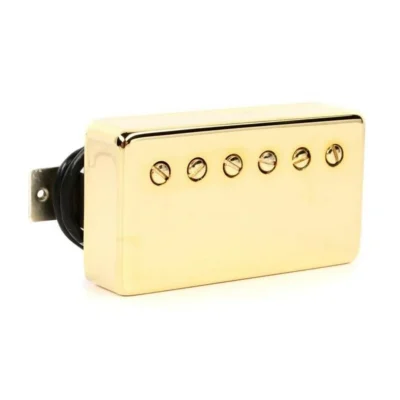
Seymour Duncan SH-1n ’59 Model 4-Conductor Pickup – Gold cover Neck Position
Original price was: $379.00.$341.10Current price is: $341.10.Out of stock -
10% OFF
RRP $439.00
Save $44.00
Sale!
 SKU: 11024-32
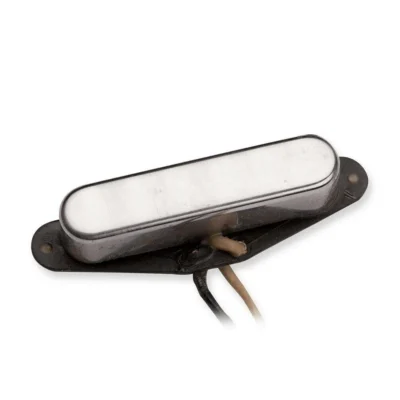
Seymour Duncan Antiquity II 60s Twang Telecaster Neck Tele Guitar Pickup
Original price was: $439.00.$395.00Current price is: $395.00.Out of stock -
10% OFF
RRP $359.00
Save $35.90
Sale!
 SKU: 11101-01-Gc
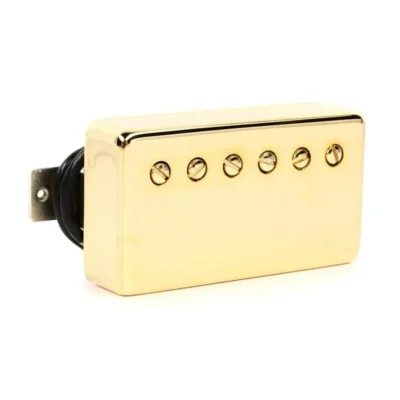
Seymour Duncan SH-1n ’59 Model Neck Humbucker Pickup Gold Cover
Original price was: $359.00.$323.10Current price is: $323.10.Out of stock -
10% OFF
RRP $439.00
Save $43.90
Sale!
 SKU: 11024-27
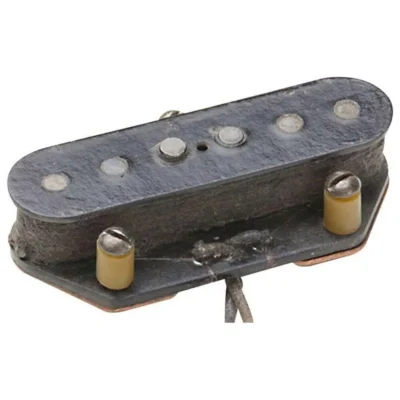
Seymour Duncan Antiquity Guitar Pickups for 1955 Tele Bridge Raised D/G 11024-27
Original price was: $439.00.$395.10Current price is: $395.10.Out of stock -
8% OFF
RRP $369.00
Save $30.00
 SKU: 11034-02
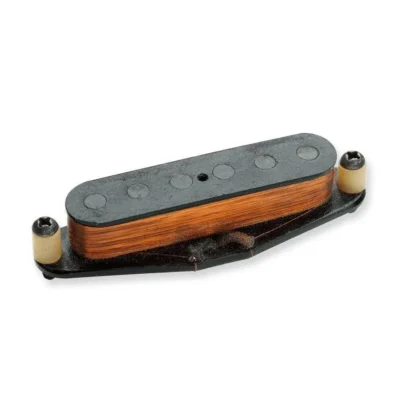
Seymour Duncan 11034-02 Duo Sonic Fender Replacement single coil Pickup – Bridge
Original price was: $369.00.$339.00Current price is: $339.00.In Stock