
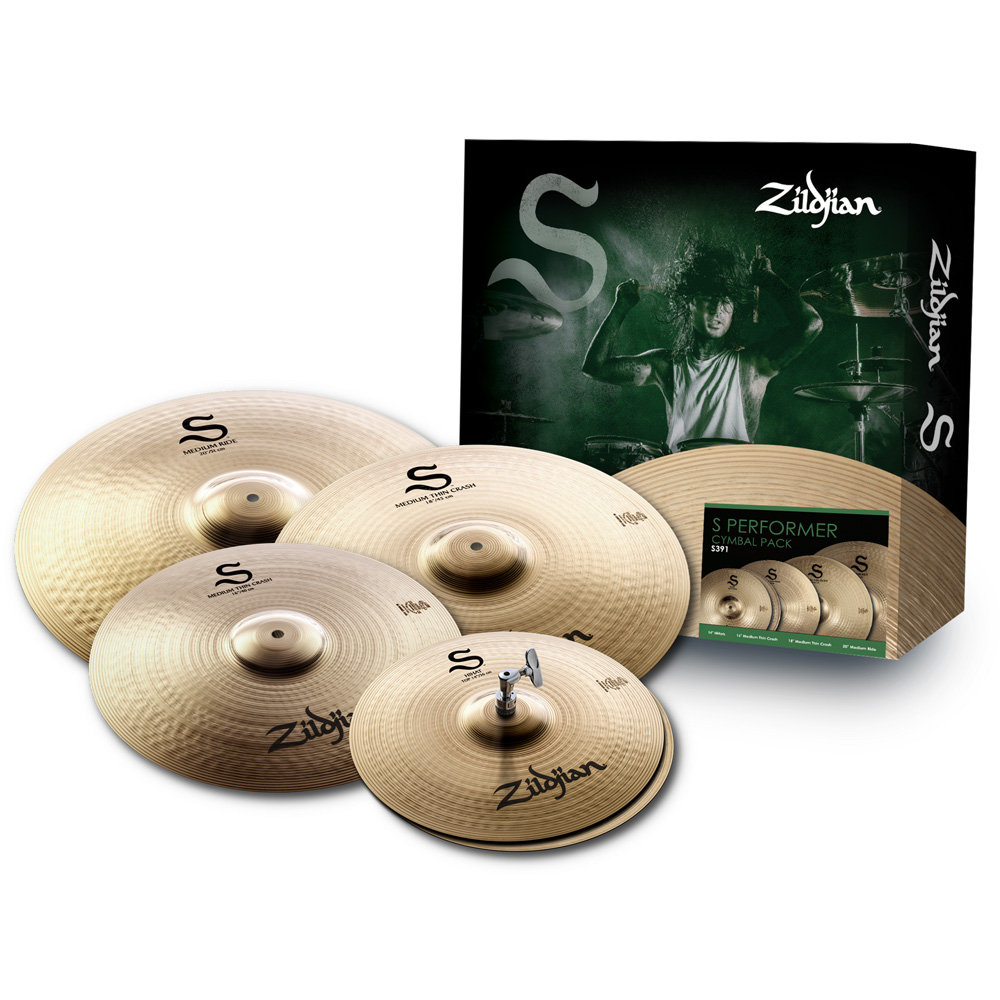
Zildjian S391 S series Performer B12 Cymbal Set 14/16/18/20 inch
★★★★★ 4.9 Stars — Over 1,500 Google Reviews
Original price was: $1,599.00.$1,099.00Current price is: $1,099.00.
FAST
Delivery
EASY
Returns
IN HOUSE
Repairs

Check AU Shipping Cost
Pick-up from store - FREE
Free pickup from our Melbourne Store at 4 Drake Boulevard, Altona VIC 3018. Your order will typically be ready by the next business day. We recommend calling us on (03) 8360 7799 beforehand to check it's ready for collection.
International Shipping
Please proceed to checkout to see international rates and avalability.
Zildjian S Family Cymbal Pack — 14" Hi-Hats, 16" & 18" Crash, 20" Ride
The Zildjian S Family Cymbal Pack (SKU: S391) brings together the full standard cymbal setup in one package: a pair of 14" hi-hats, 16" and 18" medium thin crash cymbals, and a 20" medium ride. All four cymbals are cast from Zildjian's B12 alloy — a bronze formulation that produces the bright, cutting, high-projection tonal character the S Family is built around — and finished with extensive hammering and lathing for complexity and control. The S Family is Zildjian's response to the market segment between beginner brass cymbals and professional B20 bronze: a genuinely crafted bronze cymbal series that delivers real projection and playability at an accessible price point. This pack equips a drummer with everything needed for a standard 5-piece gigging or rehearsal setup.
★ Expert Insight — B12 vs B20: What the Alloy Tells You About the Cymbal
The two most common bronze alloys in cymbal manufacturing are B20 and B12. B20 — 80% copper, 20% tin — is the professional standard. It is the alloy used in Zildjian's A, A Custom, and K series, and in the flagship lines of Sabian, Meinl, and Paiste. Higher tin content in a bronze alloy produces a warmer, richer, more complex sound with layered overtones, more sustain, and greater response to dynamic variation. B20 cymbals tend to open up beautifully at low volumes, produce complex washes at medium volume, and project powerfully when pushed hard. They are more expensive to produce because tin is costly and B20 alloy is more demanding to work with in the foundry.
B12 — 88% copper, 12% tin — produces a brighter, more direct sound with a cleaner initial attack and a faster decay. The reduced tin content means less tonal complexity and warmth, but more cutting projection: a B12 cymbal in a loud band context will often be heard more clearly than a B20 cymbal because the brightness sits prominently in the mix. This makes B12 a practical alloy for drummers who need their cymbals to cut through — in rehearsal rooms, pub stages, and mid-volume gigging situations. The S Family is not Zildjian pretending B12 is B20; it is Zildjian engineering B12 specifically for the character it produces, using extensive hammering and lathing to introduce tonal complexity and control that a simple stamped B12 cymbal would not have.
The practical question for a drummer is: at what point in your playing does a B20 cymbal become worth the premium? For serious studio work, high-level gigging, and playing where cymbal nuance matters significantly, B20 is the standard. For developing players, gigging drummers who need projection on a budget, and secondary or practice-room cymbal setups, B12 — particularly in a crafted series like the S Family — delivers real performance without the flagship price.
14" S Zildjian Hi-Hats — The Rhythmic Foundation
The 14" hi-hat is the most-used cymbal in the standard kit setup. It drives rhythm patterns, provides the timekeeping chick on beats two and four in most popular styles, and creates the tight closed sound and open washy sound that form the core rhythmic texture of the entire performance. The 14" diameter is the standard hi-hat size across rock, pop, funk, country, and contemporary styles — large enough to produce full tonal body, small enough to respond quickly and close cleanly. The S series 14" hi-hats produce a bright, cutting sound characteristic of B12 alloy: a sharp, defined chick when closed, and an open wash that projects clearly without excessive sustain. The hammering and lathing on the S Family hi-hats introduce the complexity needed to prevent the sound from being too thin or one-dimensional.
16" and 18" S Medium Thin Crashes — Two Sizes, Two Voices
Having two crash cymbals at different sizes is not just about having a backup — it gives the drummer two genuinely different voices within the mix. The 16" medium thin crash is the quicker of the two: it opens up faster on impact, produces a tighter, brighter crash with a relatively fast decay, and suits accents, quick phrase endings, and musical moments that need a sharp punctuation without a long, sustaining wash. The 18" medium thin crash is fuller and slower to develop: it produces more body in the initial crash, sustains longer, and suits bigger accents, the end of a phrase or section, and moments in the music where the crash needs to be felt as much as heard. Using both — 16" on the left for fast, frequent accents and 18" on the right for bigger moments — is the standard professional setup and gives a drummer a tonal range that a single-crash setup cannot replicate.
The "medium thin" weight designation is significant. Thinner cymbals respond at lower striking force — they open up with a fuller sound even when played lightly, which matters in dynamic music. A thicker crash requires more force to open fully and tends to sound choked or controlled when played softly. Medium thin is a practical choice for most playing contexts: enough weight to handle hard hitting without bottoming out or cracking quickly, light enough to respond freely to medium-force accents.
20" S Medium Ride — Definition, Bell, and Wash
The ride cymbal carries the rhythmic pattern in sections where the hi-hat is closed or the drummer moves the timekeeping pattern to the right side of the kit. A good ride cymbal needs to deliver three things: stick definition on the bow (the riding surface), a usable bell (the domed centre, which produces a bright, cutting ping), and a controlled amount of wash (the sustain that fills out the sound without becoming muddy). The 20" S Medium Ride balances these three characteristics at a medium weight: not so heavy that the bow sounds dead and the bell produces only a dull thud, not so thin that the ride washes out into an indistinct crash-like sustain when played continuously. The 20" diameter is the most common ride size across popular drumming styles — standard for rock, pop, and contemporary music — with enough surface area to produce a full riding pattern and a bell that cuts through a band mix.
Who Is This Pack For?
The Zildjian S391 pack suits two distinct buying situations. The first is a drummer stepping up from beginner brass cymbals — the flat-stamped or basic hammered brass cymbals that come bundled with entry-level kits. Brass alloy cymbals (not bronze) are significantly cheaper to produce and have a tonal character that experienced players and listeners quickly identify as entry-level. Moving to B12 bronze is a genuine upgrade in both sound and playability. The second situation is a gigging drummer who needs a complete, reliable cymbal setup at a mid-range budget — a setup that projects clearly in a live band context, handles regular use, and delivers consistent performance across venues. The S Family's design emphasis on brightness and projection through B12 alloy and extensive hammering makes it well-suited to live performance applications. The two-crash configuration (16" and 18") gives the drummer musical flexibility that a single-crash setup does not provide, without requiring multiple separate purchases to assemble the kit.
Specifications
| Cymbal | Size / Type |
|---|---|
| Hi-Hats | 14" S Zildjian Hi-Hats |
| Crash (1) | 16" S Zildjian Medium Thin Crash |
| Crash (2) | 18" S Zildjian Medium Thin Crash |
| Ride | 20" S Zildjian Medium Ride |
| Alloy | B12 Bronze (88% Copper, 12% Tin) |
| Manufacturing | Extensive Hammering and Lathing |
| Finish | Traditional (natural bronze) |
| Series | S Zildjian |
Not Included
| Cymbal Stands | Hi-hat stand and boom cymbal stands sold separately |
Not Sure Which Cymbal Pack Is Right for Your Kit?
Cymbal selection depends on your playing style, the volume level of your band, and what you're upgrading from. Our staff at Angkor Music in Altona are working drummers and can help you work out whether the S Family suits your situation, or whether a different configuration or series would serve you better. Visit us at 4–6 Drake Blvd, Altona.
Frequently Asked Questions
What is the difference between B12 and B20 bronze in a cymbal?
B20 bronze (80% copper, 20% tin) is the professional standard: more tin produces warmer, richer, more complex overtones with greater sustain and dynamic range. It is used in Zildjian's A, A Custom, and K series. B12 (88% copper, 12% tin) has less tin and produces a brighter, more direct sound with more cutting projection and a faster decay. B12 is not inferior — it has a tonal character that suits live performance and high-volume situations where projection and clarity matter more than complex warmth. The S Family is specifically designed around B12's characteristics and uses extensive hammering and lathing to build tonal complexity into the manufacturing process. For studio recording and high-level performance work, B20 is the standard; for gigging and step-up from brass beginners cymbals, B12 is a practical and genuinely capable choice.
Why does this pack include two crash cymbals at different sizes?
A 16" and an 18" crash cymbal are genuinely different instruments, not duplicates. The 16" is faster to open, brighter, and tighter — it suits quick accents, frequent crashes within a musical phrase, and situations where you want a punctuation mark without a long sustaining wash. The 18" is fuller, slower to develop, and sustains longer — it suits bigger musical moments, section endings, and accents that need more weight and presence. Using both together gives you a tonal range and a choice of musical emphasis that a single crash cannot provide. This two-crash configuration is the standard professional setup: one crash on each side of the kit, different sizes, used for different musical purposes within the same performance.
What does "medium thin" mean for a crash cymbal?
Cymbal weight classifications (thin, medium thin, medium, heavy) describe the weight of the bronze per unit of surface area. A thinner cymbal flexes more easily under impact, responds at lower striking force, opens up to a fuller crash sound even with moderate hits, and decays relatively quickly. A heavier cymbal requires more force to open fully, produces a louder and longer crash when struck hard, but can sound choked or controlled at lower volumes. Medium thin is the most versatile crash weight for most playing situations: responsive enough to open fully in a wide range of dynamic contexts, durable enough to handle regular hard hitting, with a sustain length that suits most musical styles. Players who regularly play at very high volumes sometimes prefer medium or heavy crashes; players in quieter, more dynamic contexts sometimes prefer thin.
Is the S Family suitable for recording as well as live performance?
The S Family is primarily designed for live performance: B12 alloy's bright, cutting character translates well to stage volumes and reinforced sound systems. For recording, B20 cymbals tend to be preferred because the microphone captures the full tonal complexity — the warmer overtones, longer sustain, and dynamic response of B20 bronze translate well to recorded sound. B12 cymbals recorded at close-mic distance can sound brighter and less complex than a B20 equivalent. That said, the S Family performs capably in home recording and rehearsal room recording situations, particularly for demos, practice recordings, and album work where the production style suits a bright, present cymbal sound. If you are primarily recording in a professional studio context and cymbal tone is critical to the production, B20 options would be worth considering.
How does the S Family compare to the brass cymbals bundled with beginner drum kits?
The difference is significant. Entry-level drum kits typically include flat-stamped or basic hammered brass cymbals — brass alloy (not bronze), with minimal manufacturing beyond the initial stamping. These cymbals have a noticeably cheap, trashy sound that experienced players identify immediately: limited overtone complexity, a sharp metallic attack without tonal body, and poor sustain. The S Family is a crafted bronze product: B12 bronze alloy (a real bronze, not brass), with extensive hammering and lathing that shapes the tonal character of each cymbal. The step from brass to B12 bronze is a genuine and audible upgrade in every aspect of cymbal sound and playability. If you are using the cymbals that came bundled with a beginner kit and are ready to hear the difference, the S Family is a natural and meaningful step up.
Playing the Zildjian S Family? We'd love to hear what you think.
Leave us a Google Review — it helps other drummers find the right cymbals.
Additional information
| Weight | 8.39 kg |
|---|
Related Items & Accessories
Related products
-
20% OFF
RRP $449.00
Save $92.00
 SKU: LV38
Zildjian L80 Low Volume LV38 Box Set – 13″ Hi-hats, 18″ Crash Ride
Original price was: $449.00.$357.00Current price is: $357.00.Out of stock -
23% OFF
RRP $1,359.00
Save $310.00
Sale!
 SKU: ZS390
Zildjian S390 S Family Series Performer B12 Cymbal Set 14/16/18/20 inch
Original price was: $1,359.00.$1,049.00Current price is: $1,049.00.Out of stock -
24% OFF
RRP $719.00
Save $170.00
Sale!
 SKU: LV348
Zildjian L80 Low Volume LV348 Box Set – 13″ Hi-hats, 14″ Crash, 18″ Crash Ride
Original price was: $719.00.$549.00Current price is: $549.00.Out of stock -
 SKU: ZKC0801W
Zildjian K Custom Hihats/Crashes/Ride Sound Worship Music Cymbals Pack
$2,299.00On backorder -
27% OFF
RRP $2,999.00
Save $800.00
Sale!
 SKU: KCD900
Zildjian K Custom Dark Cymbal Set – 14/16/18/20 inch
Original price was: $2,999.00.$2,199.00Current price is: $2,199.00.On backorder